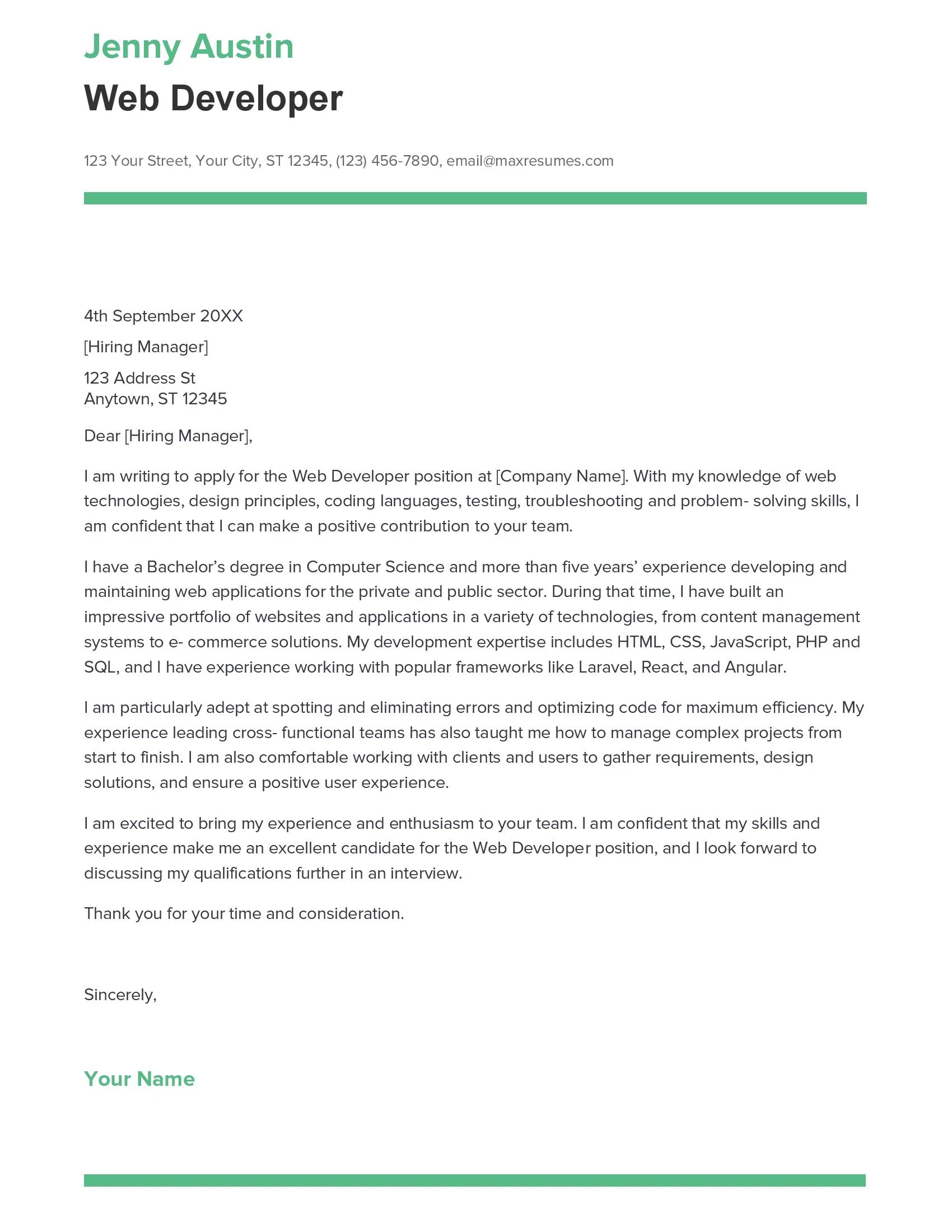
What is a Cover Letter for Web Developers
A cover letter is a crucial document accompanying your resume when applying for a web developer position. It serves as your introduction to the hiring manager, providing a snapshot of your skills, experience, and enthusiasm for the role. Unlike a resume, which offers a concise summary of your qualifications, a cover letter allows you to elaborate on your accomplishments and explain why you are a perfect fit for the company and the specific job. It gives you a chance to express your personality, demonstrate your communication skills, and show your genuine interest in the opportunity. Think of it as your personal sales pitch, designed to persuade the employer to invite you for an interview.
Why Cover Letters Matter for Web Developers
In the competitive field of web development, a cover letter can set you apart from other applicants. It allows you to personalize your application and highlight the aspects of your experience and skills that are most relevant to the specific job. A well-crafted cover letter shows that you have taken the time to understand the company’s needs and that you are genuinely interested in contributing to their projects. It also demonstrates your writing and communication skills, which are essential in a collaborative environment. Many hiring managers consider a cover letter as a key indicator of a candidate’s professionalism, attention to detail, and overall suitability for the role. In some cases, a compelling cover letter can even compensate for a less-than-perfect resume, by showcasing your passion and potential.
Highlighting Your Skills in Cover Letter

Your cover letter is your chance to showcase your relevant skills to the hiring manager. It’s not just about listing your skills; it’s about demonstrating how you’ve used them to achieve results. The key is to provide specific examples that illustrate your abilities and the value you bring to the table. Focus on the skills most important to the role, as mentioned in the job description. Whether you’re a frontend, backend, or full-stack developer, highlighting your technical and soft skills is vital for success in your application. Back up your claims with quantifiable achievements and describe your problem-solving approach, teamwork ability, and how you contribute to the success of previous projects.
Technical Skills Section
This section should include the specific technical skills the job posting requires. Focus on the technologies, languages, and frameworks you know best. Provide concrete examples of projects where you used these skills. This can include personal projects, work projects, and contributions to open-source projects. Describe the challenges you faced and how you overcame them using your technical expertise. For example, if you’re applying for a frontend developer role, highlight your proficiency in HTML, CSS, JavaScript, and relevant frameworks like React or Angular. If the job requires backend development, mention your experience with languages like Python, Java, or Node.js, and frameworks like Django or Spring.
Frontend Development
For frontend developers, focus on your proficiency in HTML, CSS, JavaScript, and any relevant frameworks like React, Angular, or Vue.js. Detail your experience with responsive design, user interface (UI) development, and user experience (UX) optimization. Mention any experience with version control systems like Git and any design tools used like Figma or Sketch. Describe projects where you built interactive and engaging user interfaces, focusing on challenges faced like cross-browser compatibility or performance optimization, and how you resolved them, perhaps by utilizing specific coding techniques, and achieving successful results, like increased user engagement.
Backend Development

Backend developers should emphasize their expertise in server-side languages such as Python, Java, or Node.js, and relevant frameworks like Django, Spring, or Express.js. Discuss your experience with API development, database management, and server-side optimization. Outline projects where you developed robust and scalable backend systems. If you have experience with cloud platforms like AWS, Azure, or Google Cloud, be sure to mention this, along with any security practices you implemented. Provide examples of how you handled tasks like data processing, security, and system optimization in a way that enhanced efficiency and minimized risks.
Database Management
Database management is a critical aspect of web development, so highlight your skills with SQL and NoSQL databases such as MySQL, PostgreSQL, MongoDB, or Cassandra. Detail your experience with database design, query optimization, and data modeling. Mention projects where you were responsible for database administration, data migration, or performance tuning. Provide examples of how you ensured data integrity, security, and scalability in your projects, focusing on the impact of your work on the overall application performance and efficiency. Show any experience you may have with database tools like phpMyAdmin or similar for your database system.
Soft Skills Section
In addition to technical skills, soft skills are incredibly important in web development. These include communication, problem-solving, teamwork, and adaptability. Demonstrate your ability to work collaboratively, communicate effectively, and approach challenges with a proactive mindset. Provide concrete examples of how you have used these skills in previous projects or work environments. These skills are essential for working in a team and are often the deciding factor in the hiring process. Be sure to focus on how these skills helped you contribute to previous projects. Remember to provide concrete examples of situations where these skills helped you achieve the expected results.
Communication Skills

Excellent communication skills are vital for web developers. This includes the ability to explain complex technical concepts to non-technical stakeholders, collaborate effectively with designers and other developers, and write clear and concise documentation. Mention your experience with technical documentation, presenting project updates, and participating in team meetings. Provide an example of a project where you successfully communicated technical requirements to a non-technical audience, leading to successful project completion. Demonstrate your capacity to listen, interpret, and respond to feedback effectively. It is critical to have clarity when sharing or receiving project details.
Problem-Solving Abilities
Web developers are constantly faced with challenges and need to be able to think critically and find solutions. Detail your experience with debugging, troubleshooting, and identifying the root causes of issues. Describe your problem-solving approach, including the tools and methodologies you use. Highlight projects where you successfully resolved complex technical problems, providing specific examples of the challenges faced, your approach, and the positive outcomes achieved. Show how you have utilized your problem-solving ability to improve performance, improve security, or make projects more efficient.
Teamwork and Collaboration
Web development is often a team effort, so demonstrating your ability to work collaboratively is crucial. Describe your experience with agile methodologies, version control systems (like Git), and communication tools (like Slack or Microsoft Teams). Highlight projects where you worked effectively with other developers, designers, and project managers. Mention any experience with code reviews, pair programming, or mentoring junior developers. Provide examples of how you contributed to a positive and productive team environment, and how the collaborative efforts you took part in led to positive outcomes. These skills are vital for any position in the tech industry.
Writing a Strong Cover Letter Introduction
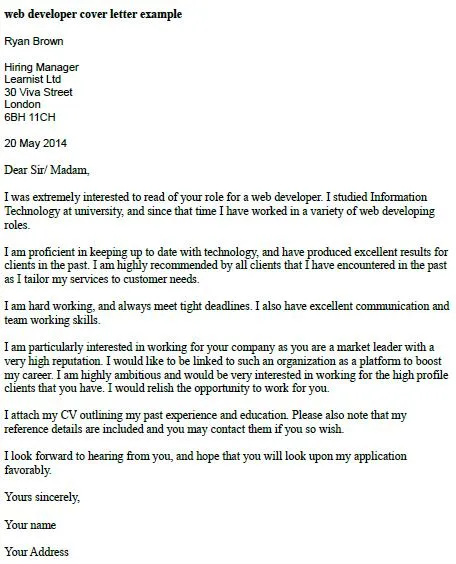
The introduction of your cover letter is your first chance to make a strong impression. It should immediately capture the reader’s attention and clearly state your objective. The best approach is to be enthusiastic, clear, and direct. Ensure your introduction tells the reader why you are applying for this specific position and why you are the right fit. You should also make sure to tailor your introduction to the specific company and job requirements. Avoid generic opening lines and instead use a personalized approach that reflects your knowledge of the company and your genuine interest in the role. This will help you stand out from other candidates. Your cover letter’s initial impression sets the tone for the rest of the document.
Address the Hiring Manager
Always address the hiring manager by name if possible. This shows that you have done your research and are genuinely interested in the position. If you can’t find the hiring manager’s name, use a professional greeting like ‘Dear Hiring Manager’ or ‘Dear [Company Name] Team’. Avoid generic greetings like ‘To Whom It May Concern,’ which can make your application seem impersonal and less appealing. Finding the hiring manager’s name may require a quick LinkedIn search or looking at the company’s website. Addressing the hiring manager directly instantly adds a personal touch and makes your application stand out.
State Your Objective
Clearly state the purpose of your cover letter and the specific position you are applying for. Be direct and concise. Instead of simply stating you are applying for the job, use language that conveys your enthusiasm and your understanding of the role. Show the reader you have a clear understanding of the role you are applying for. For example, ‘I am writing to express my interest in the Web Developer position at [Company Name], as advertised on [Platform].’ This approach helps the reader quickly understand your intentions.
Mention the Position

Make sure to explicitly mention the specific job title in your introduction. This confirms that you are applying for the correct position and that you understand the role. Include the job title as it is listed in the job posting. This helps the hiring manager quickly connect your application to the available position. If you found the job listing on a specific platform, you might also mention where you saw the advertisement, as it shows you’ve followed the company’s application process. This attention to detail highlights your interest and your understanding of the requirements.
Showcasing Your Experience
The body of your cover letter is where you showcase your experience and skills, aligning them with the job requirements. This section allows you to go beyond a simple list of skills and accomplishments. The goal is to demonstrate your value to the hiring manager by providing concrete examples of your achievements and how you have contributed to previous projects. Use this section to highlight how your experiences match the specific needs of the company. Tailor your content to reflect the job description and emphasize the relevant skills. Remember that your aim is to create a compelling narrative that convinces the hiring manager of your suitability for the role.
Quantify Your Accomplishments
Whenever possible, quantify your accomplishments to demonstrate the impact of your work. Use numbers, percentages, and data to showcase the results you have achieved in previous projects. For example, instead of saying ‘Improved website performance,’ say ‘Improved website loading speed by 30% by optimizing database queries.’ Quantifiable achievements add credibility to your claims and provide concrete evidence of your skills. This will show the hiring manager the real-world impact you have. They can also compare different candidates more effectively based on the quantitative data.
Use Action Verbs

Start your sentences with strong action verbs to create a dynamic and engaging cover letter. Action verbs add energy and make your accomplishments more impactful. Examples include ‘Developed,’ ‘Implemented,’ ‘Managed,’ ‘Optimized,’ ‘Created,’ and ‘Led.’ Using action verbs helps to showcase what you did and the role you played. These are more effective than passive phrases. By using these, you make your cover letter more engaging and show a clear narrative of your career progression. It also gives the reader a clear idea of what your role was and what you brought to the project.
Tailor Your Letter
Customize your cover letter for each job application. Generic cover letters are easily identified and often discarded. Show that you have taken the time to research the company and understand their specific needs. Review the job description carefully and highlight the skills and experiences that align with the requirements. Tailoring your letter demonstrates your genuine interest in the position and your understanding of the company’s values. Mention specific projects or initiatives that resonate with the company’s mission, and explain how your skills and experiences make you a good fit for their team. This customization makes your application more relevant and increases your chances of getting noticed.
Cover Letter Formatting and Style
The formatting and style of your cover letter are just as important as the content. A well-formatted and easy-to-read letter demonstrates your attention to detail and professionalism. You want to make sure your cover letter presents you in the best possible light and is visually appealing. Clean design and proper layout are key components to getting a good impression, and the format affects readability. Poor formatting can distract from the content and make it harder for the hiring manager to focus on your qualifications. Choose a professional font, use clear headings, and pay attention to spacing and margins. Consistency in formatting throughout your cover letter is important for a polished presentation. It will greatly help the reader’s experience.
Length and Structure
Keep your cover letter concise and to the point. Aim for one page, as hiring managers often have limited time to review applications. Use a clear and logical structure: Start with a compelling introduction, followed by the body where you highlight your skills and experience, and conclude with a strong closing statement. Use headings and subheadings to break up the text and make it easier to scan. Short paragraphs make the content more readable. Use white space effectively to avoid a cluttered look. Ensure that your letter is well-organized and easy to navigate, which enhances the overall readability and presentation. This will allow the hiring manager to quickly understand your value.
Proofread and Edit
Thoroughly proofread and edit your cover letter before submitting it. Typos, grammatical errors, and inconsistencies can undermine your professionalism and credibility. Check for any spelling errors, grammatical mistakes, and inconsistencies in formatting. Consider using a grammar checker tool to help identify any potential errors. Ask a friend or colleague to review your cover letter for a second opinion. Proofreading and editing demonstrates your attention to detail. Ensure the letter is free of errors and conveys a professional image. This is one of the most important steps in the application process.
Cover Letter Examples Web Developer
Reviewing cover letter examples can provide valuable insights into effective writing. The web offers many examples of cover letters tailored to various web developer roles, like frontend, backend, and full-stack developer positions. Look for examples that match your experience level and the types of positions you are targeting. Analyze the structure, language, and content to identify best practices. Consider how these samples showcase skills, experience, and accomplishments. Adapt examples to your own needs, ensuring the content is personalized to reflect your unique skills and experience. Using samples as a guide can help you tailor your cover letter to the requirements of the job and make it stand out from other candidates.
Web Developer Cover Letter Sample for Entry-Level
For entry-level web developers, a cover letter should emphasize educational background, projects, and any internships or volunteer experiences. Highlight any relevant coursework, coding boot camps, or personal projects that demonstrate your skills. Focus on your enthusiasm to learn and grow in the field and a willingness to take on new challenges. Illustrate how your skills align with the job requirements and explain your eagerness to contribute to the company’s success. Demonstrate the value you would bring to the company, even with limited professional experience. The key is to express your enthusiasm to the role and your willingness to grow.
Web Developer Cover Letter Sample for Experienced
Experienced web developers should focus on showcasing their professional accomplishments and quantifiable results. Provide specific examples of your projects, highlighting the impact of your contributions. Emphasize your skills and experience with relevant technologies and frameworks. Include information on the technical challenges faced and the solutions you implemented. Detail how you have contributed to team success, project efficiency, and revenue generation. Tailor your cover letter to the specific requirements of the role and show how your past achievements match the company’s current needs and goals. Demonstrate the value you bring by highlighting your past experience and the results of your expertise.
Common Mistakes to Avoid in Cover Letters
Avoiding common mistakes in cover letters is critical to ensure you present yourself in the best light. Paying attention to these errors can significantly increase your chances of success. The smallest errors can turn off a recruiter or hiring manager. Many cover letters are immediately dismissed due to issues that can be easily avoided. Knowing the common pitfalls is a must to ensure your application is effective and professional. Make sure to review these points before submitting your application.
Generic Content
Avoid using generic or pre-written cover letters that do not reflect your unique skills and experience. Generic content fails to engage the reader and suggests a lack of genuine interest in the position. Tailor your letter to each job application. Customize your cover letter to align with the job description and the company’s values. Always address the hiring manager by name. The letter must reflect your passion and understanding of the company and its culture. This personal touch makes your application stand out and demonstrates your attention to detail.
Typos and Grammatical Errors
Typos and grammatical errors can undermine your credibility and professionalism. Always proofread your cover letter multiple times. Use a grammar checker tool to identify errors you may have missed. Ask a friend or colleague to review the letter for a second opinion. A polished letter reflects your attention to detail. Ensure that the final version is free of any errors. This improves your chances of making a favorable impression.
Ignoring the Job Description
Failing to address the requirements outlined in the job description is a critical mistake. Carefully review the job description and ensure that your cover letter highlights the skills, experience, and qualifications needed for the role. The letter must showcase how your background aligns with the company’s needs. Include the key skills the job posting demands. This demonstrates your understanding of the role. Tailor your letter to match the specific requirements listed in the job description to increase your chances of success.
Web Developer Cover Letter Conclusion
The conclusion of your cover letter is your final opportunity to leave a lasting impression. It should summarize your key qualifications and express your enthusiasm for the role and the company. A strong conclusion encourages the hiring manager to take the next step and invites them to contact you for an interview. Make sure you end the cover letter professionally and with confidence. It should also reiterate your interest in the position, showing your eagerness to contribute to the team. The conclusion is a chance to reiterate your qualifications.
Express Enthusiasm
Reiterate your enthusiasm for the opportunity and the company. Show genuine interest in the role and express how excited you are about the prospect of joining their team. Use language that reflects your passion for web development and your eagerness to contribute to their projects. Be positive and convey your interest in the company and the role. Highlight your enthusiasm to make the reader believe in you and your capacity to do the job.
Call to Action
End your cover letter with a clear call to action. Encourage the hiring manager to contact you for an interview and provide your contact information. Thank the reader for their time and consideration. You can also mention your availability for an interview. A clear call to action helps the hiring manager to take the next step. Express your gratitude for their time and consideration, reinforcing your desire to be considered for the role.