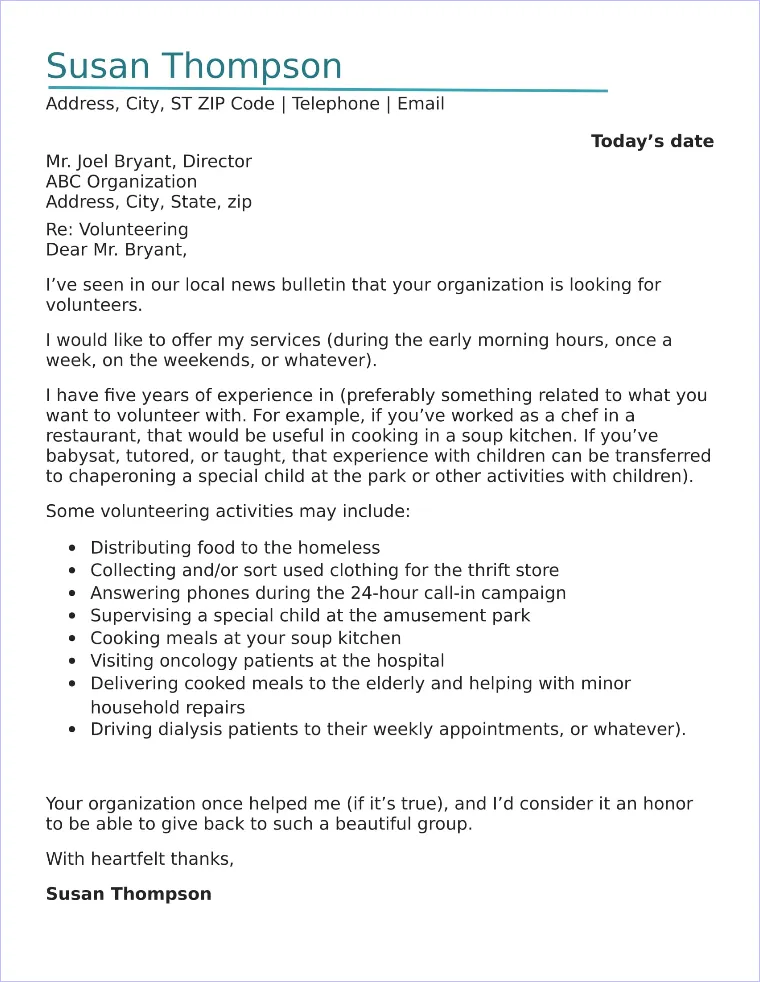
Understanding the Volunteer Cover Letter
A volunteer cover letter is a crucial document that accompanies your volunteer application. It serves as your introduction to the organization and provides an opportunity to showcase your skills, experience, and enthusiasm for the volunteer position. Unlike a resume, a cover letter allows you to express your personality and explain why you are the ideal candidate. It is a chance to make a strong first impression and demonstrate your genuine interest in contributing to their mission. Whether you are applying for a position at a local charity, a national non-profit, or an international organization, a well-crafted cover letter significantly increases your chances of being selected.
Purpose of a Volunteer Cover Letter
The primary purpose of a volunteer cover letter is to introduce yourself and highlight your suitability for the role. It helps the organization understand your motivations for volunteering and how your skills align with their needs. A strong cover letter demonstrates your commitment to the organization’s cause and shows that you have taken the time to research their mission and values. Moreover, it provides context to your resume and gives you the space to elaborate on specific experiences and skills that are relevant to the volunteer position. A compelling cover letter can set you apart from other applicants and increase your chances of getting an interview or being selected for the role.
Key Components to Include
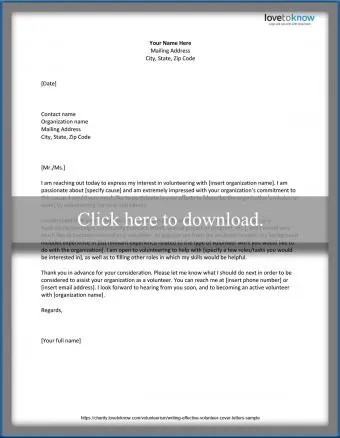
A well-structured volunteer cover letter typically includes several key components that work together to create a compelling narrative. These components ensure that your application is both informative and engaging. Each part plays a vital role in demonstrating your suitability for the role and your enthusiasm for the organization. By paying close attention to these components, you can significantly enhance the impact of your application and increase your chances of securing a volunteer position. Let’s break down the essential elements to include in your cover letter.
Header and Contact Information
Start with a professional header that includes your full name, address, phone number, and email address. This ensures that the organization can easily contact you. Also, include the date and the organization’s name, address, and the name of the hiring manager (if known). Proper formatting is essential; align your contact information to the left and the organization’s information to the right or center. Using a clear and readable font, such as Times New Roman or Arial, maintains a professional appearance. This section sets the stage for the rest of your letter, so ensure that the information is accurate and easy to find.
Personalized Salutation
Address the letter to a specific person whenever possible. Research the organization to find the name of the hiring manager or volunteer coordinator. Using a personalized salutation, such as “Dear Mr. Smith” or “Dear Ms. Johnson,” shows that you have taken the time to learn about the organization and its staff. If you cannot find a specific name, use a professional greeting like “Dear Volunteer Coordinator.” Avoid generic salutations such as “To Whom It May Concern,” as they can make your letter feel impersonal. A personalized greeting demonstrates your attention to detail and your genuine interest in the organization.
Opening Paragraph

The opening paragraph should immediately grab the reader’s attention. State the position you are applying for and where you saw the opportunity. Briefly mention why you are interested in volunteering with this particular organization. Express your enthusiasm and make a strong first impression. For example, you might start with a statement about your passion for the organization’s mission or your desire to contribute to their efforts. Keep this paragraph concise and focused, aiming to capture the reader’s interest and set the tone for the rest of the letter. A compelling opening paragraph is essential for making your application stand out.
Highlighting Your Skills and Experience
This is the core of your cover letter where you showcase your skills and experience. Provide examples of how your skills align with the volunteer position’s requirements. Use specific examples to demonstrate how you have used these skills in the past. Quantify your achievements whenever possible by using numbers and data to support your claims. Explain how your skills and experiences make you a valuable candidate. Focus on the skills and experiences that are most relevant to the volunteer role, and explain how they can benefit the organization. This section is an opportunity to highlight your unique qualifications and demonstrate your suitability for the position.
Relevant Skills and Abilities
Identify the skills and abilities that are most relevant to the volunteer position. These might include communication, teamwork, problem-solving, organization, or specific technical skills. Provide concrete examples of how you have used these skills in the past. For example, if the role requires strong communication skills, describe a situation where you effectively communicated with a diverse group of people. If the role requires teamwork, describe a project where you collaborated with others to achieve a common goal. Tailor your skills to the specific requirements of the volunteer position to demonstrate your understanding of the role and its responsibilities. Highlight any specialized skills that make you a particularly good fit for the organization’s needs.
Transferable Skills

Even if you lack direct experience in a specific area, highlight transferable skills that can benefit the organization. Transferable skills are those that you have developed in other contexts, such as previous jobs, volunteer experiences, or academic projects. Examples include leadership, time management, adaptability, and critical thinking. Explain how these skills can be applied to the volunteer role. For example, if you have experience in project management, explain how this skill can help you organize and manage tasks for the organization. Demonstrate that you can bring valuable skills to the role, even if your experience is not directly related to the volunteer position.
Addressing Gaps in Experience
If you have gaps in your experience or are new to volunteering, address these in a positive and proactive way. Explain why you are motivated to volunteer and how you plan to compensate for any lack of experience. Focus on your eagerness to learn and your willingness to contribute. For example, if you are a student, highlight your academic achievements and relevant coursework. If you are changing careers, explain your transferable skills and your passion for the organization’s mission. By addressing gaps in experience head-on, you show that you are self-aware and determined to make a positive impact.
Demonstrating Passion and Enthusiasm
Show genuine enthusiasm for the organization and its mission. Express your personal connection to the cause and explain why you are passionate about volunteering. Share any relevant personal experiences that have shaped your interest in the organization’s work. Demonstrate that you are not just looking for a way to spend your time, but that you are genuinely invested in supporting the organization’s goals. This section is your opportunity to let your personality shine and connect with the reader on an emotional level. A strong demonstration of passion can significantly increase your chances of being selected for the role.
Expressing Your Motivation

Clearly state your motivations for volunteering. Why do you want to contribute your time and effort to this particular organization? Discuss what you hope to gain from the experience and how you believe you can contribute to the organization’s success. Be specific about your goals and aspirations. Do you want to develop new skills, make a difference in the community, or support a cause you care about? Share your personal story and explain why you are drawn to the organization’s mission. Your motivation should align with the organization’s values, demonstrating that you are committed to its work.
Explaining Why You Chose This Organization
Explain why you chose to volunteer with this specific organization. Demonstrate that you have researched the organization and understand its mission, values, and activities. Highlight what resonates with you and what makes the organization unique. Mention any specific programs or initiatives that you are particularly interested in supporting. Showing that you have done your homework demonstrates your genuine interest and your commitment to the organization’s cause. Tailor your letter to each organization, showing that you understand their specific needs and how you can contribute.
Call to Action and Closing
Conclude your cover letter with a clear call to action. Express your availability for an interview or to discuss your application further. Thank the reader for their time and consideration. Reiterate your enthusiasm for the volunteer position and express your eagerness to contribute. This is your final opportunity to reinforce your interest and make a lasting impression. Ensure that you leave the reader with a positive impression of your skills and qualifications. A strong conclusion is crucial for securing the volunteer position.
Expressing Gratitude and Offering Availability

Thank the reader for considering your application and express your gratitude for their time. Offer your availability for an interview or to discuss your qualifications further. Provide your contact information again to ensure that they can easily reach you. Make it easy for the organization to take the next steps. Reiterate your enthusiasm for the volunteer opportunity and your willingness to contribute. A courteous and proactive closing shows your professionalism and your genuine interest in the position. Let the organization know that you are looking forward to hearing from them.
Professional Closing and Signature
Use a professional closing, such as “Sincerely” or “Best regards,” followed by your typed name. If you are submitting a physical copy, leave space for your handwritten signature above your typed name. A professional closing is a mark of respect and shows that you have taken the time to present yourself in a polished manner. Ensure that your signature is legible and professional. This final touch adds a sense of formality and underscores the importance of your application. A well-crafted signature is a sign of professionalism and attention to detail.
Formatting and Proofreading
Formatting and proofreading are essential for a professional and error-free cover letter. These ensure your application is clear, concise, and easy to read. Paying close attention to detail demonstrates your commitment to the organization and your ability to communicate effectively. By following these guidelines, you can create a cover letter that makes a positive impression and showcases your qualifications effectively. A well-formatted and error-free cover letter significantly increases your chances of being selected for the volunteer position.
Ensuring a Professional Appearance

Use a clear and professional font, such as Times New Roman or Arial, in a readable size (11 or 12 points). Use standard margins (1 inch on all sides) and single-spacing. Ensure that your letter is well-organized, with clear headings and paragraphs. Avoid using slang or informal language. Maintain a consistent style throughout the document. A professional appearance shows that you respect the organization and that you have taken the time to present yourself in the best possible light. Proper formatting makes your cover letter easy to read and highlights the key information.
Proofreading for Errors
Proofread your cover letter carefully for any grammatical errors, spelling mistakes, or typos. Ask a friend or family member to review your letter as well. Errors can undermine your credibility and make your application appear unprofessional. Ensure that all names, titles, and contact information are correct. Double-check the organization’s name and address. Pay close attention to sentence structure, punctuation, and word choice. A final proofread can catch any errors that you might have missed. Proofreading is essential for demonstrating your attention to detail and your commitment to quality.
Sample Cover Letter Template
Here is a sample cover letter template that you can adapt to your specific needs. Remember to customize this template with your own information, skills, and experiences. Tailor the template to each organization you apply to, highlighting your relevant skills and expressing your genuine interest in their mission. Use this template as a guide to help you create a compelling cover letter that will increase your chances of securing a volunteer position. This ensures you cover all the essential components while demonstrating your unique qualifications and passion.