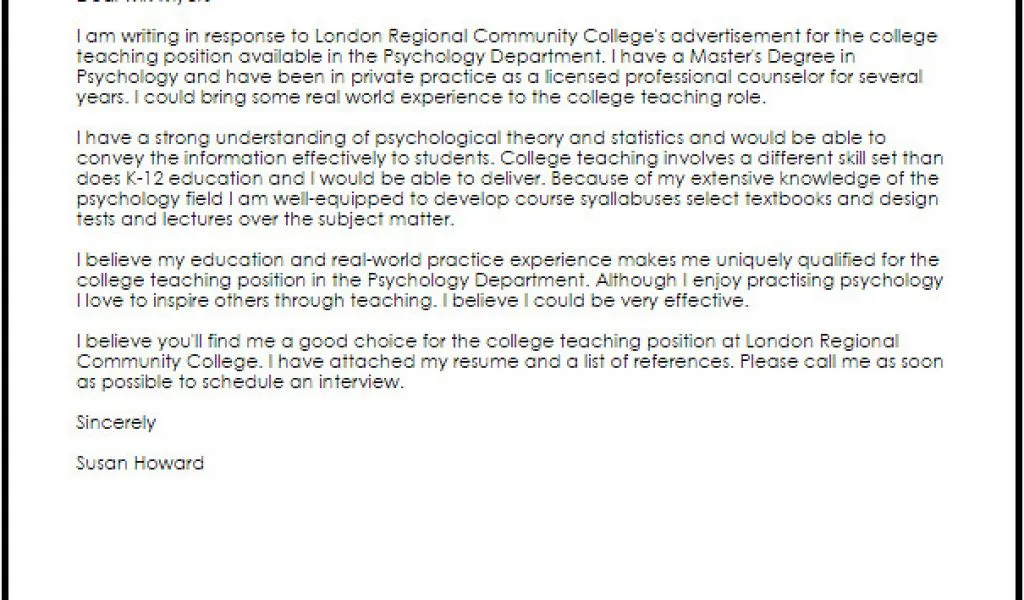
The Significance of a Strong Teaching Cover Letter
A well-crafted teaching cover letter is more than just a formality it’s your first opportunity to make a lasting impression on a potential employer. It serves as a crucial introduction, allowing you to showcase your personality, passion for education, and suitability for the role. Unlike a resume that simply lists qualifications, a cover letter provides a platform to articulate your teaching philosophy, explain your career goals, and demonstrate how your skills align with the specific needs of the school and the position. A compelling cover letter sets the stage for a successful application, encouraging the hiring manager to delve deeper into your qualifications and ultimately, invite you for an interview. Think of it as your personal sales pitch, highlighting what makes you the ideal candidate and why you deserve the opportunity.
Highlighting Your Skills and Experience
Showcasing Your Qualifications

Your teaching cover letter should effectively showcase your qualifications. Instead of merely restating your resume, focus on the skills and experiences most relevant to the specific teaching position. This might involve highlighting your expertise in a particular subject area, your experience with specific teaching methodologies (like project-based learning or differentiated instruction), or your familiarity with educational technologies. Tailor your language to match the job description using keywords and phrases that demonstrate how you meet the employer’s needs. When describing your qualifications, provide concrete examples that illustrate your abilities rather than making generalized statements. For instance, if you have experience in classroom management, describe a specific strategy you used to create a positive and productive learning environment.
Tailoring Your Letter to the School
One of the most effective ways to stand out is to personalize your cover letter to the specific school. Generic cover letters that are sent out en masse often fall flat. Demonstrate your genuine interest in the school by showing that you’ve researched their mission, values, and unique programs. This shows you care and helps you connect with the school’s culture, demonstrating that you are a suitable candidate. Addressing the letter to the hiring manager by name also makes a strong impact. Avoid using general salutations like “Dear Hiring Manager” if possible, take the time to find out the name of the person in charge of hiring. This small effort signals your attention to detail and your investment in the application process, making a great impression.
Researching the School’s Mission and Values
Before you start writing your cover letter, take the time to research the school. Visit their website, read their mission statement, and explore their programs. Understand the school’s values and how they relate to your own teaching philosophy. This will help you tailor your letter to the specific needs of the school. Showing a genuine interest by highlighting some of the schools strengths will catch the attention of the reader. Look for keywords in the job posting and try to use similar language in your cover letter. This will help you demonstrate how your skills and experience align with the school’s needs.
Emphasizing Relevant Experiences

When describing your experience, select the most relevant experiences to showcase in your cover letter. Think about the role you are applying for, and try to create a bridge between your skills and the job description. It’s important to show, rather than tell. Instead of saying you are a strong communicator, provide examples of how you’ve successfully communicated with students, parents, and colleagues. If you have experience working with diverse student populations or in specific educational settings (e.g., special education, early childhood), make sure to highlight these experiences. Furthermore, emphasize the skills and experiences that directly align with the needs of the school and the teaching position.
Demonstrating Your Passion for Teaching
Expressing Your Enthusiasm for Education
Your cover letter should convey your enthusiasm for education and your genuine passion for teaching. Use strong, positive language to demonstrate your excitement about the opportunity. Share what motivates you to be a teacher, be specific about what you love about teaching and the impact you hope to have on your students’ lives. This helps set the tone for the rest of your application. Show your commitment to the profession by expressing your belief in the importance of education and your desire to make a difference in the lives of children. If possible, include a brief anecdote that illustrates your passion for teaching and your commitment to creating a positive learning environment.
Including a Compelling Opening

Your opening paragraph is crucial; it’s your chance to immediately grab the reader’s attention. Start with a strong statement that highlights your key qualifications or expresses your enthusiasm for the position. Avoid generic opening lines; instead, tailor your introduction to the specific school and position. You might mention a program that interests you, or refer to a specific accomplishment or skill that aligns with the job requirements. Be clear about why you are interested in the position and what you bring to the table. Make sure you use a professional tone in your letter, as well as ensure that the reader knows you are the perfect candidate for the job.
Highlighting Achievements and Contributions
Quantifying Your Accomplishments
Instead of simply listing your responsibilities, focus on quantifying your achievements. Whenever possible, use numbers, data, and specific metrics to demonstrate the impact of your work. Did you improve student test scores? Mention the percentage increase. Did you implement a new program that led to a positive outcome? Provide evidence of its success. For instance, if you created a new reading program, you could write “Implemented a new reading program that resulted in a 15% increase in student reading comprehension scores.” This gives a clear picture of your contributions and showcases your ability to achieve tangible results. This approach makes your achievements more compelling and helps you stand out from other applicants.
Providing Specific Examples

Supporting your claims with specific examples is key. Instead of making broad generalizations, illustrate your skills and experience with concrete examples from your teaching career. When describing your classroom management skills, explain a specific strategy you used to address disruptive behavior and the positive outcome. If you have experience with curriculum development, share a specific project you worked on and the results you achieved. This will help you demonstrate the value that you could bring to the school. By providing evidence of your accomplishments, you make your cover letter more credible and memorable. It shows that you have not only the skills but also the ability to apply them effectively in a real-world setting, making you a more attractive candidate.
Proper Formatting and Proofreading
Formatting Guidelines for Cover Letters
Professional formatting is essential for a polished and professional cover letter. Start with a formal header that includes your contact information, the date, and the recipient’s information (if known). Use a clear, easy-to-read font like Times New Roman, Arial, or Calibri, and keep the font size between 10 and 12 points. Maintain consistent margins (typically one inch) and use single spacing within paragraphs and double spacing between paragraphs. Break up your text into logical paragraphs, using headings and bullet points to improve readability. Ensure your cover letter fits on one page, and always save your document as a PDF to preserve the formatting across different devices and platforms. Correct formatting will show the recruiter that you are a candidate that cares about the finer details.
Proofreading for Errors

Proofreading is a non-negotiable step in the cover letter writing process. Errors in grammar, spelling, and punctuation can undermine your credibility and create a negative impression. Before submitting your cover letter, carefully review it multiple times, preferably reading it aloud to catch any mistakes. Use a grammar and spell-checker, but don’t rely on it completely. Proofread your cover letter multiple times to ensure accuracy. If possible, have a friend, colleague, or family member proofread your letter as a fresh pair of eyes may be able to spot errors that you missed. Ensuring accuracy in your cover letter is a testament to your attention to detail and commitment to professionalism.
In conclusion, a strong teaching cover letter is a vital tool in your job search. By focusing on your skills, experiences, and your enthusiasm for education, and following the tips outlined in this article, you can create a compelling cover letter that will make a lasting impression. Remember to tailor your letter to each school, highlight your achievements, and proofread carefully for any errors. By investing time and effort in your cover letter, you increase your chances of landing an interview and ultimately, your dream teaching position.