The Importance of a Teacher Cover Letter
A well-crafted cover letter is your first opportunity to make a strong impression on a potential employer. It’s your chance to introduce yourself, showcase your skills, and explain why you’re the perfect fit for the teaching position. Unlike a resume, which provides a summary of your experience, the cover letter allows you to tell your story, demonstrating your passion, personality, and teaching philosophy. It bridges the gap between your qualifications and the specific needs of the school or district, personalizing your application and setting you apart from other candidates. Think of it as a personalized introduction, highlighting your most relevant experiences and expressing your genuine interest in the specific teaching opportunity. It’s not just about listing your qualifications; it’s about connecting your skills to the needs of the school and the students.
Highlight Your Skills and Experience
Your cover letter should act as a spotlight, illuminating your key skills and experiences that align with the job description. Begin by identifying the core requirements and desired qualities mentioned in the job posting. Then, select specific examples from your past experiences—whether teaching, volunteering, or other relevant roles—that demonstrate these skills. Focus on showcasing a blend of hard and soft skills, like classroom management, curriculum development, communication, and collaboration. Provide tangible evidence of your abilities, using specific examples of how you’ve successfully applied these skills. Emphasize your ability to create engaging lesson plans, assess student progress, and foster a positive learning environment. Remember, the goal is to convince the hiring manager that you possess the skills needed to excel in the role.
Tailor Your Cover Letter

Generic cover letters rarely impress. Take the time to tailor each letter to the specific school or district you are applying to. This demonstrates your genuine interest and shows you’ve done your homework. Personalization can be achieved by addressing the hiring manager by name (if possible), referencing the school’s mission or values, and highlighting how your skills align with their specific needs. This may involve customizing the examples you provide to directly address the requirements of the teaching position. Showing that you understand the school’s culture, student demographics, and educational goals can significantly boost your chances of getting noticed. Tailoring is about showing you’ve researched the school and are not sending a generic application to multiple places.
Research the School
Before you start writing, conduct thorough research on the school or district. Explore their website to understand their mission, values, and educational philosophy. Examine their curriculum, programs, and extracurricular activities. Understanding the school’s specific needs and goals will help you tailor your cover letter and highlight your relevant skills effectively. Look for any recent initiatives, awards, or community involvement the school is proud of. This information will give you context to reference the school’s values and explain how your experience and philosophy align with their vision. Demonstrate your interest by referencing specific programs, initiatives, or approaches used by the school, showing that you are genuinely interested in joining their community.
Showcase Your Accomplishments
Don’t just list your responsibilities; showcase your accomplishments. Instead of saying “I taught science,” mention the impact of your teaching. For example, “Developed and implemented a new science curriculum that increased student test scores by 15%.” Use specific examples to demonstrate your achievements and the positive outcomes you’ve achieved in previous teaching roles. This could include improved student performance, successful implementation of new teaching strategies, or positive contributions to the school community. Focus on highlighting your achievements and the tangible results you have produced. Quantifiable results are particularly persuasive, allowing the hiring manager to clearly understand your impact. Use concrete examples of your success to emphasize why you’re the ideal candidate.
Quantify Your Achievements

Whenever possible, quantify your achievements to make them more impactful. Instead of saying “Improved student engagement,” state “Increased student engagement by 20% through innovative lesson plans.” Use numbers and data to demonstrate the impact of your teaching strategies. Examples could include test scores, attendance rates, or the number of students who participated in extracurricular activities. Quantifying your accomplishments adds credibility to your claims and provides tangible evidence of your abilities. Even small details, like the number of projects you led or the amount of funding you secured for a school project, can significantly enhance your cover letter.
Use Action Verbs
Use strong action verbs to describe your skills and accomplishments. Instead of “Responsible for creating lesson plans,” use “Developed and implemented engaging lesson plans.” Action verbs make your cover letter more dynamic and engaging. Examples include “created,” “managed,” “implemented,” “collaborated,” “assessed,” and “motivated.” These verbs will make you come across as a proactive and effective teacher. Make sure you focus on what you have done and the impact you made. Using action verbs paints a more vivid picture of your experiences and skills and keeps the reader engaged.
Emphasize Your Passion for Teaching
Your cover letter should reflect your enthusiasm for teaching and your genuine passion for education. Share why you’re drawn to teaching and what motivates you to make a difference in students’ lives. This could include your love for the subject matter, your commitment to fostering a positive learning environment, or your dedication to helping students reach their full potential. Avoid sounding generic and express your enthusiasm. Convey your passion through specific examples. Showcase your teaching philosophy and what drives you to create a positive impact on the next generation. Let your passion shine through your words, showing the hiring manager that you’re not just looking for a job but a career.
Demonstrate Your Understanding of Child Development
Highlight your knowledge of child development and your ability to understand and cater to the diverse needs of students. Reference any coursework or training you’ve had in child psychology or developmental theories. Explain how your teaching methods are informed by these theories. Describe how you adapt your lessons to meet the individual needs of students with different learning styles and abilities. Show that you understand the importance of creating an inclusive and supportive classroom environment. This demonstrates to the hiring manager that you can effectively address the challenges and rewards of teaching. This shows that you understand students holistically.
Mention Relevant Certifications and Training
Include a brief mention of relevant certifications, licenses, and training you’ve completed. This could include teaching credentials, subject matter certifications, or professional development courses. Mention any special training, such as certifications in special education, ESL, or specific instructional methods. Highlight any specific skills that align with the school’s needs or priorities. List your qualifications in a clear and concise manner. Mentioning any specific training demonstrates that you are dedicated to continuous professional growth. Showing that you are committed to staying updated with best practices is a great way to impress a hiring manager.
Follow a Professional Format
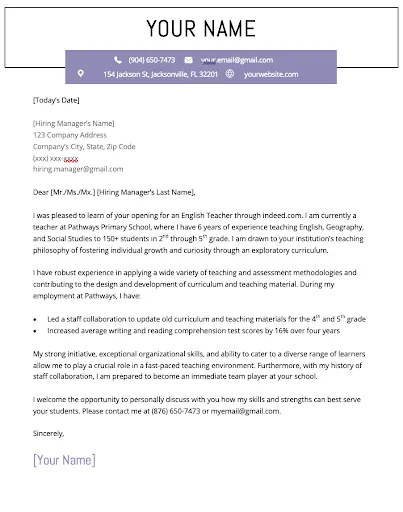
A professional format is essential for creating a positive impression. Use a clear and readable font like Times New Roman or Arial, with a font size between 10 and 12 points. Maintain consistent formatting throughout the document, including margins, spacing, and bullet points. Keep the letter concise, ideally no more than one page. The letter should be neatly organized and easy to read. Ensure the letter is properly structured, with a clear introduction, body paragraphs, and a concise conclusion. A well-formatted cover letter demonstrates attention to detail and professionalism, setting a good first impression with the hiring manager.
Formatting Basics
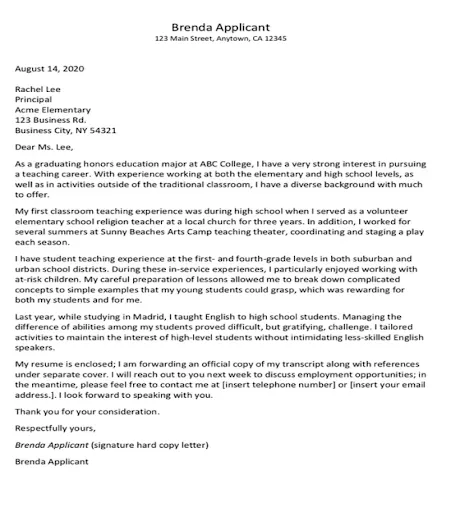
Start your cover letter with your contact information, the date, and the hiring manager’s name and address (if you have it). Use a standard business letter format, including a formal salutation (e.g., “Dear Mr. Smith”). Use clear paragraphs to separate ideas, and make sure the text is easily readable. Avoid using jargon or overly complex language. Keep the language simple and make your points clear. Proofread your cover letter carefully, checking for grammar, spelling, and punctuation errors.
Proofread Carefully
Proofreading is one of the most important steps. Errors can damage your credibility and make you seem careless. Carefully review your cover letter for any spelling, grammar, and punctuation errors. Read the letter aloud to catch awkward phrasing or inconsistencies. Have someone else proofread your letter to get a fresh perspective. A second pair of eyes can often spot mistakes that you might miss. Double-check your contact information to make sure it’s accurate. Ensuring that your cover letter is free of errors demonstrates professionalism and attention to detail.
Closing Your Cover Letter
The closing of your cover letter is your last opportunity to make a lasting impression. Your closing should express enthusiasm for the position and provide a clear call to action. Thank the hiring manager for their time and consideration, and reiterate your interest in the role. Keep your closing brief, professional, and enthusiastic. The closing should be positive and leave the hiring manager with a good impression of you.
Express Your Enthusiasm

Restate your interest in the position and express your excitement about the opportunity. Briefly summarize your key qualifications and why you’re a good fit for the role. End your letter with a statement that expresses your enthusiasm to learn more about the position. Consider ending with a statement such as “I am eager to learn more about this opportunity and discuss how my skills and experience can benefit your school.” This shows that you’re ready to proceed and that you’re genuinely interested in the position. Let the hiring manager know that you would like to have the opportunity to discuss your qualifications.
Provide Contact Information
Clearly state how the hiring manager can contact you. Include your phone number and email address in the closing. Make sure your contact information is up-to-date and easy to find. Be sure to let them know that you are available for an interview. Consider including a professional email signature with your name, contact information, and a link to your online portfolio or professional website. This makes it easy for the hiring manager to reach out and learn more about you.