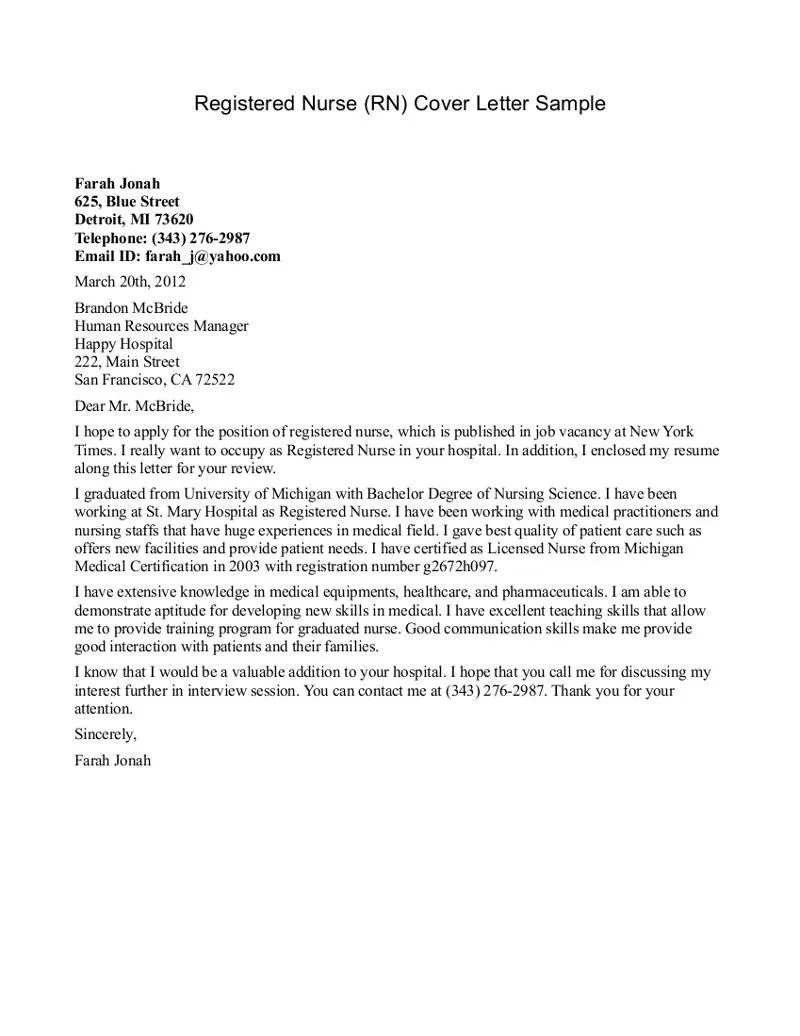
What is a Resume Cover Letter
A resume cover letter is a crucial document that accompanies your resume when applying for a job, especially in the competitive field of nursing, such as for a registered nurse (RN) position. It serves as an introduction to your qualifications, skills, and experience. Unlike a resume, which provides a factual overview, a cover letter allows you to express your personality, passion for nursing, and explain why you are the perfect fit for the role. It’s your chance to make a strong first impression and persuade the hiring manager to read your resume and consider you for an interview. A well-crafted cover letter can significantly increase your chances of landing an interview. Therefore, it is very important to create it wisely and effectively.
Why is a Resume Cover Letter Important
The importance of a resume cover letter cannot be overstated, particularly for registered nurses (RNs). It is your first opportunity to capture the attention of a hiring manager and differentiate yourself from other applicants. In a field where compassion, critical thinking, and clinical skills are paramount, your cover letter allows you to showcase these qualities beyond a list of credentials. It’s a space to explain your career goals, highlight relevant experiences, and articulate your understanding of the specific nursing role. In addition, a cover letter demonstrates your communication skills, attention to detail, and genuine interest in the position and the healthcare organization. It can also address any potential gaps in your resume, such as career changes or employment gaps, giving you a chance to proactively explain these situations. It allows you to show enthusiasm for a nursing position.
How to Write a Great Resume Cover Letter

Writing a compelling resume cover letter requires a strategic approach, especially for RNs aiming to secure their dream job. Begin by researching the healthcare facility and the specific nursing role. Tailor your letter to match the job description, highlighting the skills and experiences that align with the employer’s requirements. Clearly state the position you are applying for and where you found the job posting. In your opening paragraph, immediately capture the reader’s attention by expressing your enthusiasm and mentioning a key accomplishment or skill. The body of your letter should elaborate on your relevant experiences, quantify your achievements whenever possible, and demonstrate your understanding of the role and the facility’s mission. Conclude by reiterating your interest, expressing your eagerness for an interview, and providing your contact information. Make sure the resume cover letter showcases your nursing credentials and expertise.
Formatting Your Resume Cover Letter
Proper formatting is crucial for making your resume cover letter easy to read and professional-looking. Choose a clean, readable font such as Arial, Times New Roman, or Calibri, and use a font size between 10 and 12 points. Set consistent margins, typically one inch on all sides. Ensure your letter is single-spaced, with a double space between paragraphs. Include a professional heading with your contact information (name, phone number, email address, and optionally, your LinkedIn profile URL). Address the hiring manager by name if possible; otherwise, use a general salutation such as “Dear Hiring Manager.” Keep the letter concise, ideally no longer than one page. Proofread carefully for any grammar, spelling, or punctuation errors. A well-formatted cover letter demonstrates your attention to detail and professionalism, which are essential qualities for any RN.
Opening Paragraph
The opening paragraph of your resume cover letter is your first and perhaps only chance to grab the reader’s attention. Start with a strong, engaging statement that immediately captures their interest. Clearly state the specific nursing position you are applying for and how you found the job posting. Briefly mention your key qualifications or a notable accomplishment that aligns with the job requirements. Showing enthusiasm for the position is key; express your excitement about the opportunity and the healthcare facility. Tailor your opening to the specific job and the organization’s mission. The goal is to create an immediate positive impression and entice the hiring manager to read further, making the RN resume stand out from the crowd of candidates.
Body Paragraphs

The body paragraphs are where you elaborate on your qualifications and demonstrate how your skills and experiences align with the job requirements, for the RN position. Each paragraph should focus on a specific aspect of your qualifications, such as clinical skills, experience with a particular patient population, or any leadership roles you’ve held. Provide specific examples that highlight your achievements and quantify your results whenever possible, such as the number of patients you’ve cared for, improvements in patient outcomes, or any initiatives you’ve led. Tailor each paragraph to the specific job description, ensuring that you address the key requirements and highlight how your skills and experiences align with them. This is your opportunity to showcase your expertise as a registered nurse and demonstrate your value to the organization.
Closing Paragraph
The closing paragraph of your resume cover letter should leave a lasting positive impression. Reiterate your interest in the position and the healthcare facility. Summarize why you are a strong candidate and how your skills and experience make you an excellent fit for the role. Express your eagerness for an interview and provide your contact information, including your phone number and email address. Thank the hiring manager for their time and consideration. Proofread your closing paragraph carefully to ensure it is free of errors and reflects your professionalism. A well-crafted closing paragraph reinforces your enthusiasm and encourages the hiring manager to take the next step in the hiring process. It’s the final opportunity to leave a positive impact.
Key Elements to Include
Several key elements should be included in your resume cover letter to make it effective and increase your chances of getting hired as an RN. Begin with a strong opening that grabs the reader’s attention and clearly states the position you’re applying for. Highlight your relevant skills and experiences, focusing on those that align with the job description. Provide specific examples and quantify your accomplishments whenever possible. Demonstrate your understanding of the healthcare facility’s mission and values, and explain why you are a good fit for their team. Express your enthusiasm for the opportunity and your eagerness to contribute to the organization’s success. Proofread your letter carefully to ensure it is free of errors and reflects your professionalism. Include a call to action, inviting the hiring manager to contact you for an interview. Remember to make it a professional rn resume cover letter.
Skills and Experience

When writing your resume cover letter, it is essential to showcase your relevant skills and experience, especially for RN positions. Identify the key skills and experiences mentioned in the job description and highlight how your qualifications match their needs. Provide specific examples of your clinical skills, such as administering medications, performing assessments, or managing patient care. Mention any specialized skills or certifications you possess, such as experience with electronic medical records (EMRs), advanced cardiac life support (ACLS), or other relevant certifications. Quantify your achievements whenever possible, such as the number of patients you’ve cared for, improvements in patient outcomes, or any leadership roles you’ve held. Tailor your examples to the specific job description, and make sure to use action verbs to describe your responsibilities and accomplishments. Show your nursing expertise.
Show Enthusiasm and Interest
Demonstrating enthusiasm and interest in the position and the healthcare facility is crucial for making a positive impression with your resume cover letter. Start by expressing your excitement about the opportunity and why you are interested in the specific role. Research the healthcare facility and mention something that appeals to you about their mission, values, or culture. Highlight any personal connections you have to the facility or the healthcare profession, such as a family member who has been a patient there or a passion for a particular area of nursing. Explain why you are interested in the specific role, and what motivates you to work as a registered nurse. Showing genuine enthusiasm will make you stand out from other candidates, and create an excellent impression for the interviewer.
Proofread and Edit Your Resume Cover Letter
Proofreading and editing your resume cover letter is essential for ensuring it is free of errors and reflects your professionalism. Before submitting your cover letter, carefully review it for any spelling, grammar, punctuation, or formatting errors. Read your letter aloud to catch any awkward phrasing or run-on sentences. Have a trusted friend, colleague, or career counselor review your letter and provide feedback on its clarity, conciseness, and overall impact. Ensure your letter is tailored to the specific job description and that you have highlighted your relevant skills and experiences. Proofreading is a crucial part of the process to make your application perfect. Always proofread several times and correct any mistakes, since the cover letter is your first interaction with the recruiter.
Common Mistakes to Avoid

Several common mistakes can undermine the effectiveness of your resume cover letter. Avoid using generic language or a one-size-fits-all approach; instead, tailor each letter to the specific job and healthcare facility. Do not simply restate your resume; use your cover letter to elaborate on your qualifications and demonstrate your personality and passion for nursing. Avoid using clichés or overly formal language. Do not include irrelevant information or personal details that are not directly related to the job. Refrain from being negative or critical of previous employers or experiences. Finally, always proofread your letter carefully to eliminate any errors. By avoiding these common pitfalls, you can create a resume cover letter that truly showcases your skills and makes a positive impression on the hiring manager, which can help you get the RN job.
Using the Wrong Tone
The tone of your resume cover letter should be professional, enthusiastic, and respectful. Avoid using overly casual or informal language, such as slang or emojis. Do not be overly aggressive or demanding in your requests. Make sure to express your enthusiasm for the position and the healthcare facility. Tailor your tone to match the organization’s culture and values. Use a positive and confident tone throughout your letter, highlighting your strengths and accomplishments. Proofread your letter carefully to ensure that the tone is appropriate and that you are making a positive impression on the hiring manager. A well-written and appropriately-toned cover letter reflects your communication skills and professionalism, which are essential qualities for a registered nurse. Avoid sounding too desperate or entitled.
Focusing Too Much on Yourself
While it’s important to highlight your skills and experience, avoid focusing too much on yourself in your resume cover letter. The letter should primarily focus on how you can benefit the healthcare facility and contribute to their mission. Instead of simply listing your achievements, explain how your skills and experience align with the job requirements and how you can solve their problems. Demonstrate your understanding of the organization’s needs and how you can contribute to their success. Focus on the value you can bring to the role and the team. Tailor your letter to the specific job description and highlight the key skills and experiences that the employer is seeking. By focusing on their needs, you are more likely to make a positive impression and be considered for an interview.
Not Tailoring Your Resume Cover Letter

One of the most common mistakes is not tailoring your resume cover letter to each specific job and healthcare facility. Using a generic, one-size-fits-all cover letter will not make a strong impression on hiring managers. Instead, research the organization and the specific role to understand their mission, values, and requirements. Tailor your letter to match the job description, highlighting the skills and experiences that are most relevant to the position. Show how your qualifications align with the employer’s needs and how you can contribute to their success. Address the hiring manager by name if possible, and mention something specific about the organization that interests you. By tailoring your letter, you demonstrate that you have taken the time to understand their needs and that you are genuinely interested in the opportunity, which is very important to get the rn job.
Examples of Effective Resume Cover Letters
Reviewing examples of effective resume cover letters can provide valuable insights and inspiration for crafting your own. Look for examples that are tailored to the specific job and healthcare facility. Pay attention to the opening paragraph and how the writer captures the reader’s attention. Observe how the writer highlights their relevant skills and experiences, providing specific examples and quantifying their accomplishments. Notice how the writer demonstrates their understanding of the organization’s mission and values. Pay attention to the closing paragraph and how the writer reiterates their interest and expresses their eagerness for an interview. Adapt the strategies and techniques used in these examples to create your own compelling resume cover letter. Remember to tailor your letter to the specific job description and healthcare facility to maximize your chances of success. Consider seeking feedback from career counselors, friends, or colleagues.