Understanding the Research Assistant Role
A research assistant plays a crucial role in supporting research projects. Their responsibilities often include data collection, analysis, literature reviews, and administrative tasks. The specific duties vary depending on the field of research and the principal investigator’s needs. Understanding these expectations is the first step in crafting an effective cover letter. This role is a stepping stone for many aspiring researchers, offering invaluable experience in a professional setting. Research assistants work across various disciplines, from science and technology to humanities and social sciences, each demanding unique skill sets and knowledge bases. Consequently, successful applicants showcase their adaptability and eagerness to learn specific research methodologies.
Essential Components of a Research Assistant Cover Letter
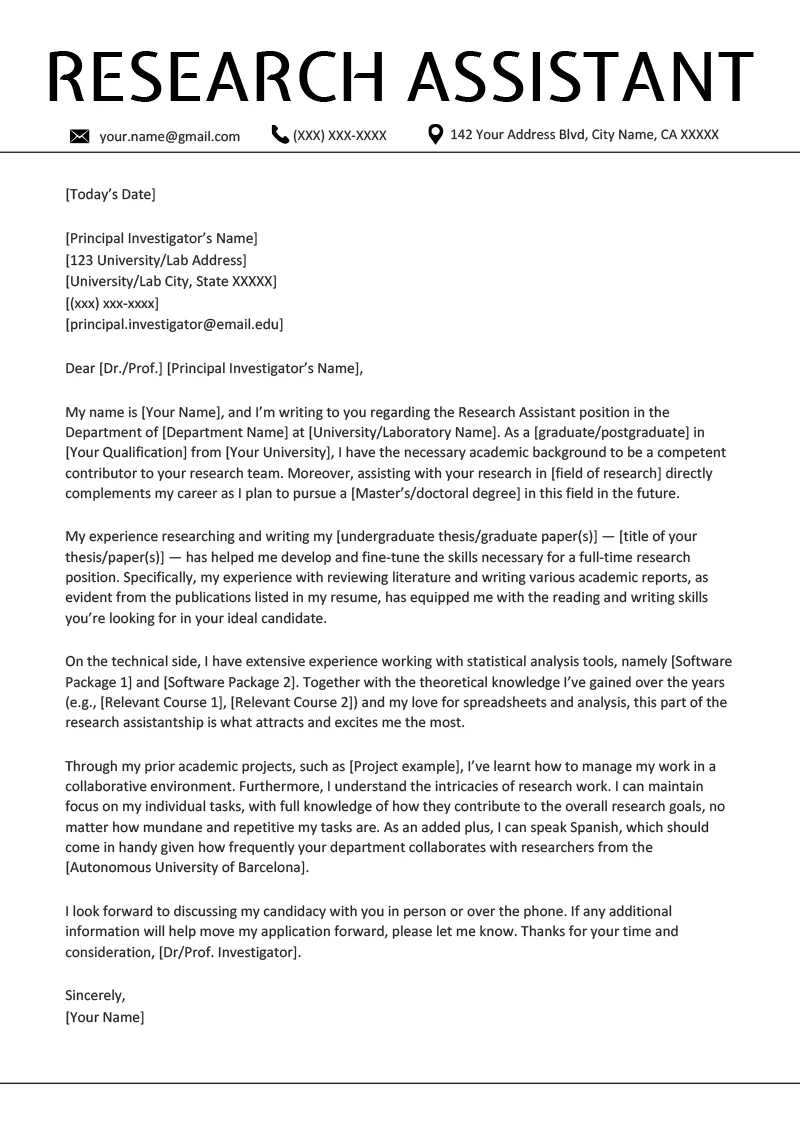
A well-structured cover letter is vital for highlighting your suitability for the role. It should contain a clear header with your contact information and the date, followed by the recipient’s information. The body of the letter should consist of an engaging opening, a persuasive middle section detailing your skills and experience (or potential), and a strong closing. Ensure your letter is well-formatted, free of grammatical errors, and easy to read. The use of professional language and a tone that reflects your enthusiasm for the position and the research area is essential. Tailoring your letter to the specific requirements mentioned in the job posting will greatly increase your chances of securing an interview.
Contact Information and Salutation

Begin your cover letter by including your full name, address, phone number, and email address at the top. Below this, add the date and the recipient’s name, title, and department. If you know the hiring manager’s name, address the letter to them directly; this adds a personal touch. If not, use a general salutation like “Dear Hiring Committee.” This attention to detail shows you are professional. Make sure that your email address sounds professional – avoid nicknames or casual phrases. Ensure that the formatting is consistent and easy to read. Accuracy in the contact information is critical, as this is how the potential employer will reach you.
Opening Paragraph Grabbing Attention
The opening paragraph is your first chance to make a strong impression. Start with a clear statement about the position you are applying for and how you learned about it. Briefly express your interest in the research area or the specific project. Highlight a key skill or experience that aligns with the job requirements, even if you lack direct research experience. Your goal is to show your genuine interest in the role. This section should be concise, enthusiastic, and tailored to the specific job. Try to capture the reader’s attention immediately by conveying your passion for research.
Highlighting Relevant Skills and Experiences
Even without direct research experience, you possess transferable skills. Focus on abilities like analytical thinking, problem-solving, attention to detail, organizational skills, and communication skills. Provide specific examples of how you have used these skills in academic projects, volunteer work, or extracurricular activities. If you have experience with data analysis software, laboratory techniques, or literature reviews, highlight these. Quantify your achievements whenever possible; for example, mention the number of reports you wrote, or projects you contributed to. Tailor your skills to match the job description and demonstrate your aptitude for the required tasks.
Emphasizing Academic Background and Coursework

Your academic background is a significant asset. Mention your major, relevant coursework, and any honors or awards you have received. Detail any research-related projects you have completed, even if they were part of your studies. Describe the research methodologies you learned, the data analysis techniques you used, and the results you achieved. If you’ve written a thesis or a significant research paper, be sure to highlight it. Focus on the coursework that aligns with the job requirements, and show how your academic foundation has prepared you for the role.
Showcasing Enthusiasm and Interest
Expressing your genuine enthusiasm for the research area and the specific project can make you stand out. Explain why you are interested in this particular research opportunity and what you hope to gain from it. Show that you have researched the principal investigator’s work and the research lab. Mention any specific aspects of the research that interest you. Your passion and curiosity will demonstrate your commitment and willingness to learn. Convey your enthusiasm by showing that you are not just looking for a job but are excited about contributing to the research.
Addressing the ‘No Experience’ Challenge
If you have no prior research experience, address this head-on in a positive way. Instead of apologizing for a lack of experience, emphasize your eagerness to learn, your strong work ethic, and your relevant transferable skills. Explain how your academic background and other experiences have prepared you for the role. Focus on your potential and your willingness to contribute. Highlight your ability to quickly learn new skills. Offer to take on additional responsibilities and demonstrate your commitment to making a positive impact. Frame the lack of experience as an opportunity for you to grow professionally.
Tailoring the Cover Letter to the Job

Customizing your cover letter to each job application is essential. Carefully review the job description and identify the key requirements and desired skills. Align your skills and experiences with those requirements, using the same keywords and phrases that are used in the job posting. Show how your qualifications and interests match the specific needs of the research project. Demonstrate that you understand the role and are the right fit for the lab’s culture. Generic cover letters often fail; showing that you’ve taken the time to tailor the letter for each position will significantly increase your chances of getting an interview.
Proofreading and Formatting the Cover Letter
Before submitting your cover letter, proofread it carefully for any grammatical errors, spelling mistakes, or typos. Ensure that your formatting is consistent and professional. Use a clear and easy-to-read font, such as Times New Roman, Arial, or Calibri, and maintain a consistent font size. Make sure the letter is well-spaced and easy on the eyes. Have someone else proofread your letter, as a fresh pair of eyes can often catch errors that you might miss. A polished, well-formatted cover letter shows your attention to detail, which is a critical skill for any research assistant.
The Closing and Call to Action
End your cover letter with a concise and professional closing paragraph. Reiterate your interest in the position and thank the hiring manager for their time and consideration. Include a call to action, such as expressing your availability for an interview and mentioning how you can be contacted. Include your contact information. Expressing your enthusiasm and availability leaves a strong positive impression. A well-crafted closing paragraph summarizes your key qualifications and reiterates your keenness to join the research team. Indicate that you have attached your resume for review.