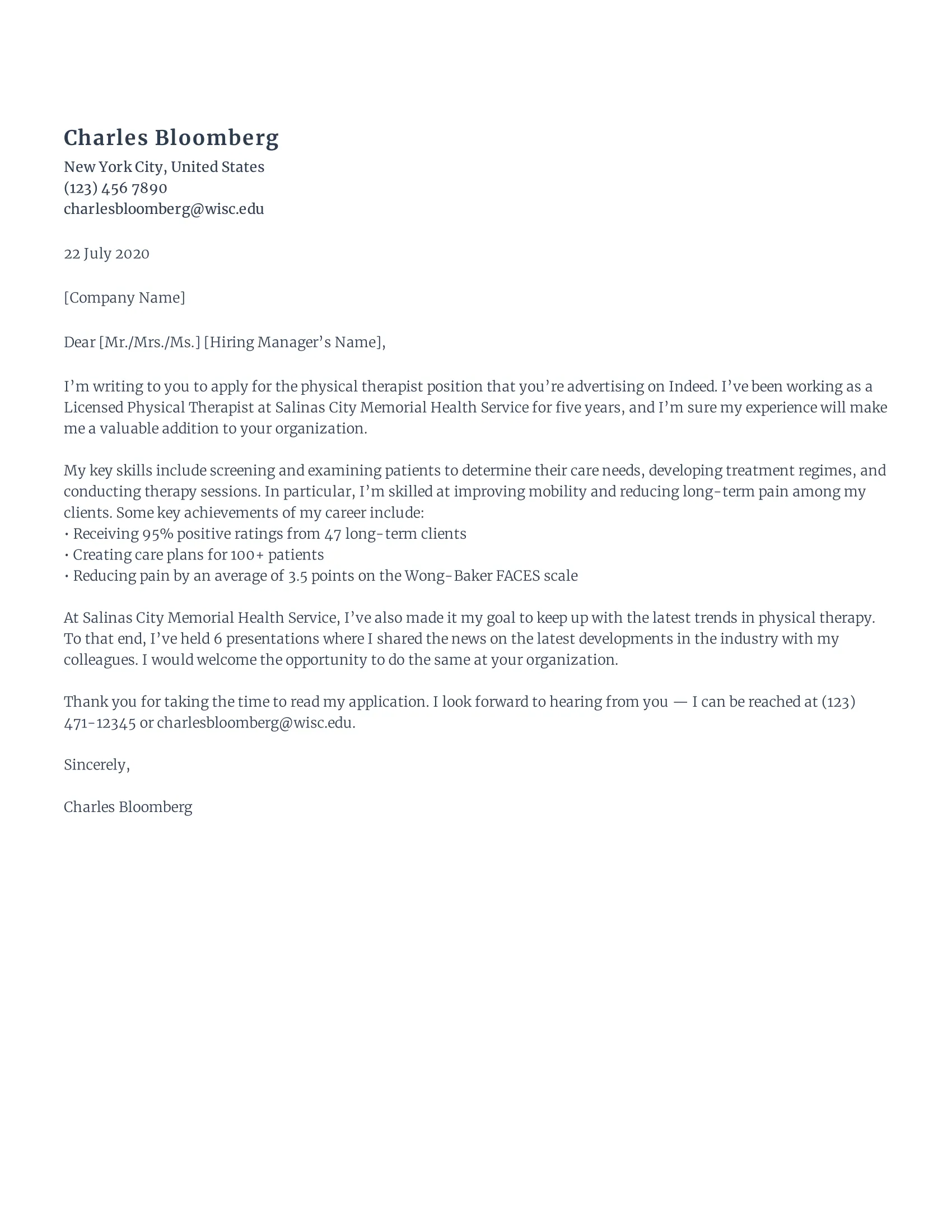
Crafting a Compelling Physical Therapist Cover Letter
A well-crafted physical therapist cover letter is your key to unlocking exciting career opportunities. It’s your first chance to make a positive impression on potential employers, showcasing your skills, experience, and personality. This document goes beyond the information provided in your resume, allowing you to explain why you’re the perfect fit for the role and the organization. A strong cover letter demonstrates your genuine interest in the position and highlights your understanding of the physical therapy field. It’s a vital tool in the job application process, so taking the time to perfect it is crucial for achieving your career goals.
Highlighting Your Qualifications
Your cover letter should effectively showcase your qualifications, making them easily accessible and understandable to the hiring manager. This involves highlighting relevant skills and experiences that align with the job requirements. Focus on aspects that set you apart from other candidates, such as specialized training, specific patient populations you’ve worked with, or unique treatment approaches you employ. Providing concrete examples of your achievements, such as successfully implementing new therapy techniques or improving patient outcomes, will further demonstrate your competence and value.
Education and Certifications

Clearly outline your educational background, including the name of your institution, the degree earned (Doctor of Physical Therapy, etc.), and the year of graduation. If you have any certifications, such as a board certification or a specialization in a particular area (e.g., geriatrics, orthopedics), list them prominently. Make sure the date of certification and issuing organization are easy to find. Mention any continuing education courses you’ve completed to show your commitment to staying current with the latest advancements in physical therapy. This section is your chance to demonstrate your foundational knowledge and ongoing professional development.
Experience and Clinical Skills
Provide a brief overview of your work experience, emphasizing relevant clinical skills. Include the names of previous employers, your job titles, and the dates of employment. Highlight your experience with different patient populations, such as geriatric patients, pediatric patients, or those with neurological conditions. Detail specific skills like manual therapy techniques, exercise prescription, gait training, or the use of specialized equipment. Quantify your achievements whenever possible; for instance, ‘Reduced patient pain scores by 30% through the implementation of a new treatment protocol.’ This section should clearly show your ability to provide effective and compassionate patient care.
Showcasing Your Soft Skills
While technical skills are essential, soft skills are equally important in physical therapy. These interpersonal and personal attributes contribute to your effectiveness as a therapist and your ability to connect with patients. Your cover letter should demonstrate these qualities by showcasing your ability to work well with others, communicate effectively, and solve problems creatively. Employers seek candidates who possess strong soft skills. By emphasizing these qualities, you can increase your chances of success.
Communication and Interpersonal Abilities

Physical therapists need exceptional communication skills to effectively interact with patients, families, and other healthcare professionals. In your cover letter, provide examples of situations where you successfully communicated complex medical information in a clear and empathetic manner. Highlight your ability to build rapport with patients, actively listen to their concerns, and motivate them to participate in their rehabilitation. Mention your experience working with diverse populations and your commitment to providing culturally sensitive care. This shows that you can connect with patients and provide the best care.
Teamwork and Collaboration
Physical therapy often involves working as part of a multidisciplinary team. Showcase your ability to collaborate effectively with physicians, nurses, and other healthcare professionals. Describe situations where you successfully coordinated patient care, shared information, and contributed to the overall well-being of the patient. Include examples of how you’ve participated in case conferences, contributed to treatment plans, and advocated for your patients. Your cover letter should demonstrate your understanding of teamwork and your ability to function as a collaborative healthcare provider.
Tailoring Your Cover Letter
Avoid sending a generic cover letter. Take the time to tailor your cover letter to each specific job application. Review the job description carefully and identify the key skills, experience, and qualifications the employer is seeking. Use this information to customize your letter, highlighting the aspects of your background that align with the requirements. Mention the specific clinic or hospital by name and show that you understand their mission, values, and patient population. This demonstrates that you’ve taken the time to learn about the opportunity and are genuinely interested in the position.
Researching the Clinic or Hospital

Before writing your cover letter, research the clinic or hospital where you’re applying. Visit their website, read about their mission, and learn about the services they provide. Look for information about their patient demographics, treatment philosophies, and any special programs they offer. Mentioning something specific that resonates with you can demonstrate your genuine interest in the opportunity. This will set you apart from applicants who send generic cover letters. By doing so, you convey your understanding of the organization and how you can contribute.
Addressing the Hiring Manager
Always address your cover letter to the hiring manager by name if possible. This personalizes your application and shows you’ve taken the time to find out who will be reading it. If you can’t find the hiring manager’s name, use a professional greeting, such as ‘Dear Hiring Manager’ or ‘Dear [Department Name] Team.’ Avoid generic greetings, such as ‘To Whom It May Concern.’ Personalizing the greeting makes a positive impression. Showing that you are willing to invest time to seek the correct person is a significant benefit.
Structuring Your Cover Letter
A well-structured cover letter is easy to read and understand. Use a clear and logical format, with distinct paragraphs for each section. Maintain a professional tone throughout the document. Organize your cover letter logically, and make sure it flows well. Following a standard structure will help you to convey your message efficiently and make it easy for the hiring manager to find the information they need.
The Opening Paragraph

Start with a strong opening paragraph that immediately grabs the reader’s attention. State the specific position you’re applying for and how you learned about the opportunity. Briefly mention your most relevant qualifications and express your enthusiasm for the role. This is your opportunity to make a great first impression, so keep it concise, and highlight why you are interested in working for this specific organization. Show that you’ve researched the company and are eager to contribute to their success.
The Body Paragraphs
The body paragraphs are where you provide detailed information about your qualifications, experience, and skills. Use separate paragraphs to address specific aspects of the job requirements, such as your education, clinical skills, and soft skills. Back up your claims with concrete examples and quantifiable achievements. Tailor each paragraph to the specific requirements outlined in the job description. Focus on the most relevant information to showcase your value as a candidate. Provide context for your examples to allow the hiring manager to gain a clear understanding of your skills and experiences.
The Closing Paragraph
In the closing paragraph, reiterate your interest in the position and thank the hiring manager for their time and consideration. Express your enthusiasm for the opportunity and mention that you’re available for an interview. Include your contact information and a professional closing, such as ‘Sincerely’ or ‘Best regards.’ This will leave a lasting positive impression. The closing paragraph should be as impactful as the opening paragraph. Provide a call to action and express your interest in moving forward with the interview process.
Proofreading and Editing

Proofreading and editing your cover letter is crucial to ensure it’s free of errors. Errors can create a negative impression, so take the time to review your document carefully. Review your letter multiple times, checking for grammar, spelling, punctuation, and formatting mistakes. Read your letter aloud to catch any awkward phrasing or grammatical errors. Ask a friend or colleague to proofread it for you. A fresh set of eyes can often catch mistakes you might have missed. This shows that you pay attention to detail and care about the quality of your work.
Common Mistakes to Avoid
Several common mistakes can undermine your physical therapist cover letter. Avoiding these pitfalls will help you make a stronger impression on potential employers and increase your chances of success. Focus on creating a document that showcases your unique qualifications and demonstrates your genuine interest in the position.
Generic Language
Avoid using generic phrases and clichés that could apply to any job. Instead, use specific language that reflects your unique skills, experience, and personality. Show enthusiasm and passion for the physical therapy field. Avoid phrases such as ‘I am a team player,’ without providing specific examples. Generic language can make your cover letter seem unoriginal and may not effectively convey your value.
Typos and Grammatical Errors

Typos and grammatical errors can create a negative impression, making you look unprofessional. Proofread your cover letter carefully before submitting it. Use a grammar checker, and ask someone else to review your document. Pay close attention to detail, and make sure your letter is polished and error-free. Errors can signal a lack of attention to detail and can hinder your chances of getting hired.
Ignoring the Job Description
Failing to tailor your cover letter to the specific job description is a common mistake. Carefully review the job description and highlight the skills and experience that match the requirements. Avoid sending a generic cover letter. Tailor your letter to reflect how your qualifications align with what the employer is looking for. Show that you’ve taken the time to understand the role and the organization’s needs. This will showcase your interest and attention to detail.
Formatting Your Cover Letter
The formatting of your cover letter can significantly impact its readability and overall presentation. Pay attention to formatting details to ensure your cover letter is easy to read and visually appealing. Properly formatted cover letters will impress the hiring manager. Formatting also shows professionalism and demonstrates attention to detail. A well-formatted cover letter demonstrates your commitment to creating a high-quality document.
Font and Readability
Choose a professional and easy-to-read font, such as Times New Roman, Arial, or Calibri. Use a font size between 10 and 12 points. Ensure the font is consistent throughout the document. Use appropriate spacing between paragraphs and sections to improve readability. Use bolding and italics sparingly to highlight key information. Aim for a clear, clean layout that is easy on the eyes. This will make your cover letter more enjoyable and professional.
Contact Information and Header
Include your contact information in the header, including your name, phone number, email address, and LinkedIn profile URL (optional). Make sure your contact information is up-to-date and accurate. Use a professional email address. Consider including the date and the hiring manager’s name and title. This creates a professional and well-organized look and helps the hiring manager easily contact you.
Examples of Successful Cover Letters
Reviewing successful physical therapist cover letter examples can provide valuable insights into structure, content, and tone. Look for examples tailored to physical therapy positions, and study how the applicants highlight their skills, experience, and achievements. Pay attention to how the letters are formatted, how they address the hiring manager, and how they express their interest in the position. Use these examples as a guide, but make sure to customize your cover letter to reflect your unique qualifications and the specific job requirements.