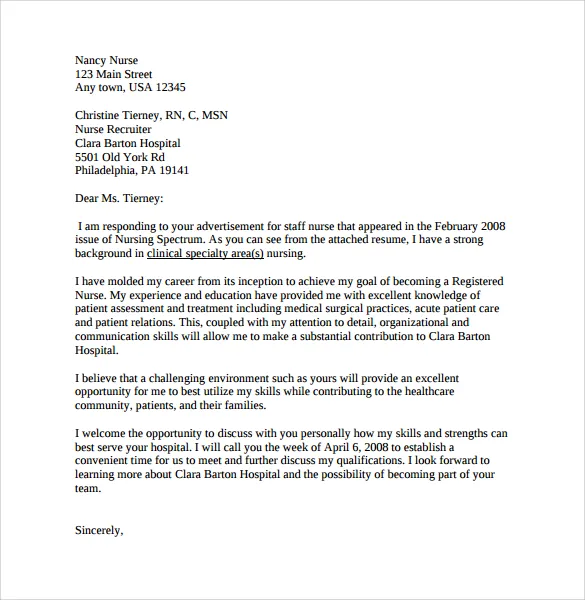
Understanding the Nursing Cover Letter
A nursing cover letter is a crucial document that accompanies your resume when applying for a nursing job. It serves as your first introduction to a potential employer and offers an opportunity to showcase your personality, skills, and qualifications. A well-crafted cover letter significantly increases your chances of landing an interview by highlighting your suitability for the specific role. It’s not merely a summary of your resume; it’s a chance to tell your story and demonstrate why you are the ideal candidate. A compelling cover letter demonstrates your communication skills and attention to detail, both critical attributes for any nursing position. By taking the time to create a strong cover letter, you are investing in your career and setting yourself apart from other applicants. Remember, a generic or poorly written letter can easily lead to your application being overlooked.
Importance of a Nursing Cover Letter
The importance of a nursing cover letter lies in its ability to provide context and depth to your resume. While your resume lists your qualifications and experience, the cover letter allows you to explain how these qualifications align with the specific requirements of the job. It’s your chance to connect with the hiring manager on a personal level and express your genuine interest in the position and the healthcare organization. In a competitive job market, a well-written cover letter is essential to make a positive first impression and differentiate yourself from other candidates. It allows you to expand on your skills and experiences, providing specific examples that demonstrate your abilities. This is particularly important for nursing positions, where soft skills such as compassion, communication, and teamwork are as crucial as technical expertise. A well-crafted cover letter underscores your understanding of the role and your commitment to providing quality patient care, making it an indispensable component of your job application.
Key Elements of a Nursing Cover Letter

A strong nursing cover letter comprises several key elements that work together to create a compelling narrative. These elements include the correct format, clear and concise language, and a personalized approach that reflects your understanding of the job requirements. Make sure you follow these elements to make a strong cover letter.
Contact Information
At the top of your cover letter, include your full name, address, phone number, and professional email address. Ensure this information is accurate and up-to-date. It should match the contact information on your resume. This helps the employer easily reach out to you for interviews or further inquiries. It establishes professionalism and attention to detail from the start.
Professional Greeting
Always address your cover letter to a specific person whenever possible. Research the hiring manager’s name and use it in your greeting (e.g., “Dear Ms. Smith”). If you cannot find a specific name, use a professional greeting such as “Dear Hiring Manager.” Avoid generic greetings like “To Whom It May Concern,” as they indicate a lack of effort and personalization.
Opening Paragraph

Start with a strong opening that immediately captures the reader’s attention. State the position you are applying for and where you saw the job posting. Briefly mention why you are interested in the role and the organization. Highlight your most relevant qualification or a key achievement to make a positive first impression.
Highlighting Relevant Skills and Experience
The body of your cover letter should showcase your skills and experience that align with the job requirements. Provide specific examples of how you have demonstrated these skills in past roles. Use action verbs to describe your accomplishments and quantify your achievements whenever possible. Tailor this section to match the key responsibilities outlined in the job description.
Quantifiable Achievements
Quantify your achievements whenever possible. Use numbers to illustrate your impact in previous roles. For example, mention the percentage of patient satisfaction you improved or the number of lives you helped save. These quantifiable results provide tangible evidence of your abilities and make a stronger case for your candidacy. Be sure these numbers are accurate and verifiable.
Tailoring the Letter to the Job

Customize your cover letter for each job application. Review the job description carefully and address the specific requirements outlined. Highlight the skills and experiences that match the employer’s needs. This demonstrates your genuine interest in the position and your understanding of the organization’s goals. A generic cover letter is easy to spot, so take the time to personalize each application.
Expressing Enthusiasm and Passion
Express your enthusiasm for the nursing profession and your passion for patient care. Explain what attracts you to the organization and the specific role. This adds a personal touch to your letter and shows that you are genuinely interested in the opportunity. Let your personality shine through and demonstrate why you are the right fit for the team.
Closing the Letter
Conclude your letter with a strong closing paragraph. Reiterate your interest in the position and thank the hiring manager for their time and consideration. Express your eagerness to discuss your qualifications further and provide your contact information for follow-up.
Proper Salutation

Use a professional closing such as “Sincerely” or “Respectfully” followed by your full name. Avoid informal closings like “Best” or “Regards.” Maintain a formal and professional tone throughout your letter.
Call to Action
End your letter with a clear call to action. State that you are available for an interview and provide your contact information. This encourages the hiring manager to take the next step and consider your application. Make it easy for them to reach you.
Review and Edit Your Letter
Before submitting your cover letter, carefully review and edit it for any errors. Ensure that your letter is well-organized, easy to read, and free of grammatical mistakes. Proofread it multiple times to catch any typos or inconsistencies. Consider asking a friend or colleague to review your letter for feedback.
Proofreading for Errors

Proofreading is a critical step in ensuring your cover letter makes a positive impression. Carefully check for any spelling, grammar, and punctuation errors. Errors can undermine your credibility and make you appear unprofessional. Use a grammar checker tool, but also read your letter aloud to catch any awkward phrasing or inconsistencies.
Using Cover Letter Examples
Cover letter samples can be a valuable resource when writing your own. They provide a framework for formatting and content, helping you understand the different elements of a successful cover letter. However, it’s essential to customize the samples to reflect your unique skills, experiences, and the specific job you are applying for. Don’t just copy and paste from a sample; use it as a guide and adapt it to fit your qualifications and the job requirements.
Sample Cover Letter 1 RN with Experience
A cover letter for an experienced Registered Nurse (RN) should highlight years of experience, specialized skills, and specific achievements. Emphasize your ability to manage patient care, collaborate with healthcare teams, and your expertise in particular areas such as critical care, emergency medicine, or geriatrics. Provide quantifiable results of your impact, such as improved patient outcomes or streamlined processes. Tailor the letter to the specific requirements of the job and the healthcare organization.
Sample Cover Letter 2 New Grad Nurse

For a new graduate nurse, the cover letter should focus on academic achievements, clinical rotations, and any relevant volunteer or extracurricular activities. Highlight your strong foundation in nursing theory, clinical skills, and your eagerness to learn and grow. Express your passion for patient care and your commitment to providing compassionate support. Showcase any experiences or skills that align with the job description, such as proficiency in electronic health records or experience with specific patient populations. Tailor the letter to show how your skills will benefit their team.
Sample Cover Letter 3 Nurse Practitioner
A cover letter for a Nurse Practitioner (NP) should emphasize advanced clinical skills, patient management abilities, and any specialized certifications. Highlight your ability to diagnose and treat patients, order and interpret diagnostic tests, and develop treatment plans. Mention your experience in specific areas of practice, such as family medicine, cardiology, or mental health. Showcase your leadership skills, ability to collaborate with other healthcare professionals, and your commitment to providing high-quality patient care. Customize the letter to show your impact in the field.
Common Mistakes to Avoid
Avoiding common mistakes can significantly improve the effectiveness of your nursing cover letter. Be aware of the pitfalls that can undermine your application and make adjustments to increase your chances of success.
Overly Generic Content
Avoid using a generic cover letter that is not tailored to the specific job or organization. Generic content indicates a lack of effort and shows that you are not genuinely interested in the opportunity. Customize your letter to address the specific requirements of the role and highlight your relevant skills and experiences. Show that you understand the organization’s mission and values.
Typos and Grammatical Errors
Typos and grammatical errors can create a negative impression and make you appear unprofessional. Always proofread your cover letter carefully for any errors. Use a grammar checker and ask a friend or colleague to review your letter. Ensure your writing is clear, concise, and free of mistakes.
Ignoring the Job Description
Failing to address the specific requirements of the job description is a common mistake. Carefully review the job posting and tailor your cover letter to highlight the skills and experiences that match the employer’s needs. Show that you understand the role and can meet the expectations. Demonstrating that you’ve read and understood the job description is crucial.
Additional Tips for a Strong Cover Letter
Enhance your cover letter with additional tips for a stronger impact.
Formatting and Design
Use a clean and professional format for your cover letter. Choose an easy-to-read font and use standard margins and spacing. Keep the letter concise, typically one page, unless otherwise specified. Ensure the formatting is consistent with your resume.
Keywords and SEO
Incorporate relevant keywords from the job description into your cover letter. This helps ensure that your application is noticed by applicant tracking systems (ATS). Use these keywords naturally throughout the text. Research keywords relevant to the nursing field to boost visibility.
Following Up
Follow up on your application after a week or two, unless otherwise instructed in the job posting. Send a brief email to the hiring manager expressing your continued interest in the position. This demonstrates your enthusiasm and initiative.
Conclusion
Writing a strong nursing cover letter is essential for showcasing your qualifications and securing a job interview. By following these guidelines, you can create a compelling cover letter that effectively highlights your skills, experiences, and passion for nursing. Remember to tailor your letter to each job, proofread carefully, and express your genuine interest in the opportunity. A well-crafted cover letter can significantly increase your chances of landing your dream nursing job. Start writing your cover letter today and take the next step toward a successful career.