Highlighting Your Skills
Crafting a compelling medical assistant cover letter without prior experience can feel daunting, but it’s completely achievable. The key lies in highlighting your transferable skills and demonstrating your enthusiasm for the role and the field of medicine. This is your opportunity to showcase what makes you a strong candidate, even if you lack direct experience in a clinical setting. Think about the skills you’ve acquired in other areas of your life, such as volunteering, education, or previous jobs, and how they relate to the responsibilities of a medical assistant. Focus on the abilities you possess that align with the job description, emphasizing how these skills can contribute to the clinic’s success and patient care. By focusing on these aspects, you will not only capture the reader’s attention but also increase your chances of being called for an interview.
Transferable Skills for Medical Assistants
Medical assistants need various skills that can be transferred from different experiences. Consider the situations where you’ve demonstrated abilities like communication, organization, or technical proficiency. These abilities play a huge role in the day-to-day operations of a medical office. Identifying these transferable skills is the first step in writing a strong cover letter. It’s important to explain not only the skills you have but also how you’ve used them and the results you achieved. By doing so, you’re showing the hiring manager that you have the potential to excel in the role, even if you haven’t worked in the medical field before. This approach allows you to present yourself as a well-rounded candidate capable of adapting and learning new skills quickly. The right kind of medical assistant is someone who can adjust quickly and pick up information without prior training, so use your cover letter to help paint that picture.
Communication Skills

Effective communication is essential for medical assistants. Think about instances where you’ve had to communicate clearly, concisely, and empathetically. This might include resolving conflicts, providing instructions, or explaining complex information in a way that others can understand. If you’ve volunteered at a crisis hotline, worked in customer service, or participated in a debate club, highlight these experiences. Mentioning that you’re good at listening to people or working in a group shows the hiring manager you can understand and act in a way that will help their patients feel more secure. You can also mention any situations in your education or training where you presented or taught information. When crafting this section of your cover letter, focus on the different methods you’ve used to communicate. This could include writing, speaking, and even non-verbal cues like body language.
Organization Skills
Organization is another vital skill for medical assistants. Consider any experiences where you’ve managed tasks, maintained records, or handled multiple responsibilities simultaneously. Did you organize an event, manage a project, or keep track of finances? These experiences showcase your ability to handle multiple tasks at once. Many medical assistants work in a high-pressure environment. So, any prior experience that required you to create schedules or take meticulous notes can be really helpful to convey. Be sure to mention any tools or techniques you used to organize and prioritize your work. These skills demonstrate to the employer that you’re capable of managing your workload efficiently. This could include software and organizational systems that you have used in the past. Any attention to detail is a great trait for a medical assistant to have.
Technical Skills
While you may lack direct experience, you might possess technical skills that are applicable to a medical assistant role. This could include proficiency in computer programs, experience with medical software, or knowledge of office equipment. For example, if you have experience with electronic health records, mention the specific software you’re familiar with. If you’ve worked in a customer service role where you used a database to keep track of customer information, highlight the skills you’ve gained. Include relevant computer skills and programs you know. Even if you don’t have experience with medical-specific software, you can emphasize your ability to learn new software quickly. Many clinics now depend on these types of programs to run their business and work as a medical office efficiently. Any technical skills you have, whether they’re related to medical work or not, can be added here.
Showcasing Your Passion

Your cover letter should not only demonstrate your skills but also convey your passion for the medical field. Show the hiring manager that you have genuine interest in healthcare and are excited about the opportunity to learn and grow. This can be done through a variety of methods, ranging from a personal anecdote to detailing your long-term career goals. This is your chance to set yourself apart from other candidates. You can show your level of care and dedication by mentioning why you’re drawn to the medical field. Showing your passion and interest can make a strong impression. Be genuine and let your enthusiasm shine through. This will go a long way in making a positive impression, especially when you lack experience.
Expressing Your Enthusiasm
Expressing your enthusiasm for the role and the medical field is essential. Use strong verbs and positive language to show your excitement. This is where you get to explain the specific things that attract you to the field. It’s a great way to show your appreciation for this type of work. Tell the reader why you find the role of a medical assistant interesting. If you’re passionate about helping people, providing patient care, or learning new medical procedures, then this is a great opportunity to express that. If you’ve done any volunteer work, research, or personal projects related to medicine, this is the place to mention them. This enthusiasm is infectious and can make a lasting impression, especially if you’re a good match for the clinic’s values.
Researching the Clinic
Before writing your cover letter, research the clinic or medical practice where you’re applying. Show that you’ve taken the time to understand their mission, values, and the services they provide. This demonstrates your genuine interest and commitment to the role and the organization. Visit their website, read testimonials, and, if possible, look at their social media pages. This shows a higher level of commitment. This information can then be integrated into your cover letter. Personalize your letter by mentioning specific aspects of the clinic that appeal to you. This could be their approach to patient care, their specialization, or their reputation in the community. Show the hiring manager that you’re not just sending out a generic cover letter but have tailored it to their specific needs and values. This demonstrates thoughtfulness and initiative.
Tailoring Your Cover Letter

Customizing your cover letter for each job application is crucial, even if you’re applying for similar positions. Generic cover letters don’t make a good impression on the hiring manager. This process is critical for maximizing your chances of success. It is necessary to tailor your letter to the specific job description and the clinic’s needs. Carefully review the job description and identify the key skills and qualifications they’re seeking. This allows you to address those requirements directly. Use the job description as a guide to structure your letter, highlighting how your skills and experiences align with their needs. Always tailor it to the requirements of the specific positions. This shows your commitment and will make you a more competitive candidate.
Formatting Your Cover Letter
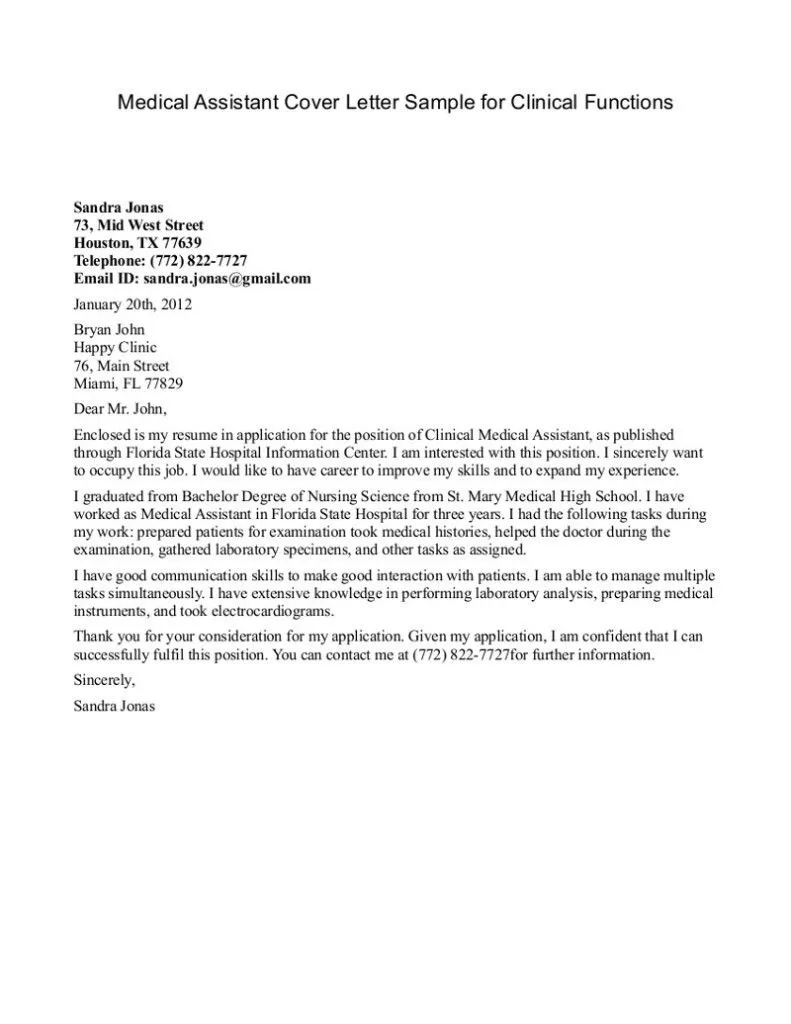
A well-formatted cover letter is essential for making a positive first impression. Formatting it correctly will make your application more readable. There are some key elements in the format, layout, and structure of your letter that you should follow. Choose a professional and readable font, such as Times New Roman, Arial, or Calibri. Keep the font size between 11 and 12 points. Use clear headings and concise paragraphs to improve readability. A clean and professional layout shows attention to detail and respect for the reader’s time. Proofread your cover letter carefully for any typos or grammatical errors. Make sure to use a professional tone. Make sure your letter is error-free. These small details make a big difference in the overall impression of your cover letter.
Opening Paragraph
Your opening paragraph should immediately grab the reader’s attention. The opening statement is incredibly important, so you want to use it well. Start by stating the position you’re applying for and where you saw the job posting. If you were referred by someone, mention their name. Then, provide a brief summary of your skills and qualifications. It is a great way to capture the reader’s interest right away. You want to hook the reader and convince them to keep reading. Show your enthusiasm for the role. Focus on your main selling point. It could be your passion for patient care or your ability to quickly learn new skills. Tailor your opening to the clinic. You might mention something specific that drew you to the opportunity, such as their focus on a particular area of medicine.
Body Paragraphs

Use your body paragraphs to elaborate on your skills and experiences. Back up your claims with specific examples, results, and achievements. Use this section to highlight how your skills and experiences align with the job requirements. Instead of just listing skills, tell a story. If you have a lot of relevant information, separate it into different paragraphs. In your first body paragraph, focus on highlighting your most relevant transferable skills. Be specific. Explain how you’ve used those skills in previous situations and what the outcomes were. In your second body paragraph, you can showcase your passion for the medical field. Talk about what motivates you and what you find exciting about the role of a medical assistant. You want to show the hiring manager that you are a great match for the position. For example, mention how your volunteer experience helped you grow and become a better candidate.
Closing Paragraph
Your closing paragraph should restate your interest in the position. Make a confident statement to restate your interest. Thank the hiring manager for their time and consideration. This is your chance to express your enthusiasm one more time. Be professional, and make sure that you show that you’re a great match for the company. Summarize why you are a good fit for the role and reiterate your desire to contribute to the clinic’s success.
Call to Action
Conclude your cover letter with a clear call to action. This step involves encouraging the reader to take the next step. Request an interview and state your availability. Mention that you are eager to discuss your qualifications in more detail. Provide your contact information. Be sure that you can be reached at any time. Always express your gratitude for the opportunity. Show your interest and let the hiring manager know you’re serious about the position. This shows you are engaged. This final step is about guiding them toward the next step and making it easy for them to contact you.
Writing an Effective Cover Letter Conclusion

The conclusion is where you summarize your main points and re-emphasize your interest in the medical assistant position. It is an opportunity to recap your qualifications. Begin by restating your enthusiasm. Briefly summarize your key skills and experiences, showing why you’re a great fit for the role. This could be your communication skills, attention to detail, or passion for helping people. End with a strong closing statement. Reiterate your interest. Thank the hiring manager for their time and consideration. Express your eagerness to learn more about the position. A well-written conclusion leaves a lasting positive impression. It encourages the employer to contact you for an interview. It shows that you have a true interest in the position. Using these tips will help you write an effective cover letter that stands out.