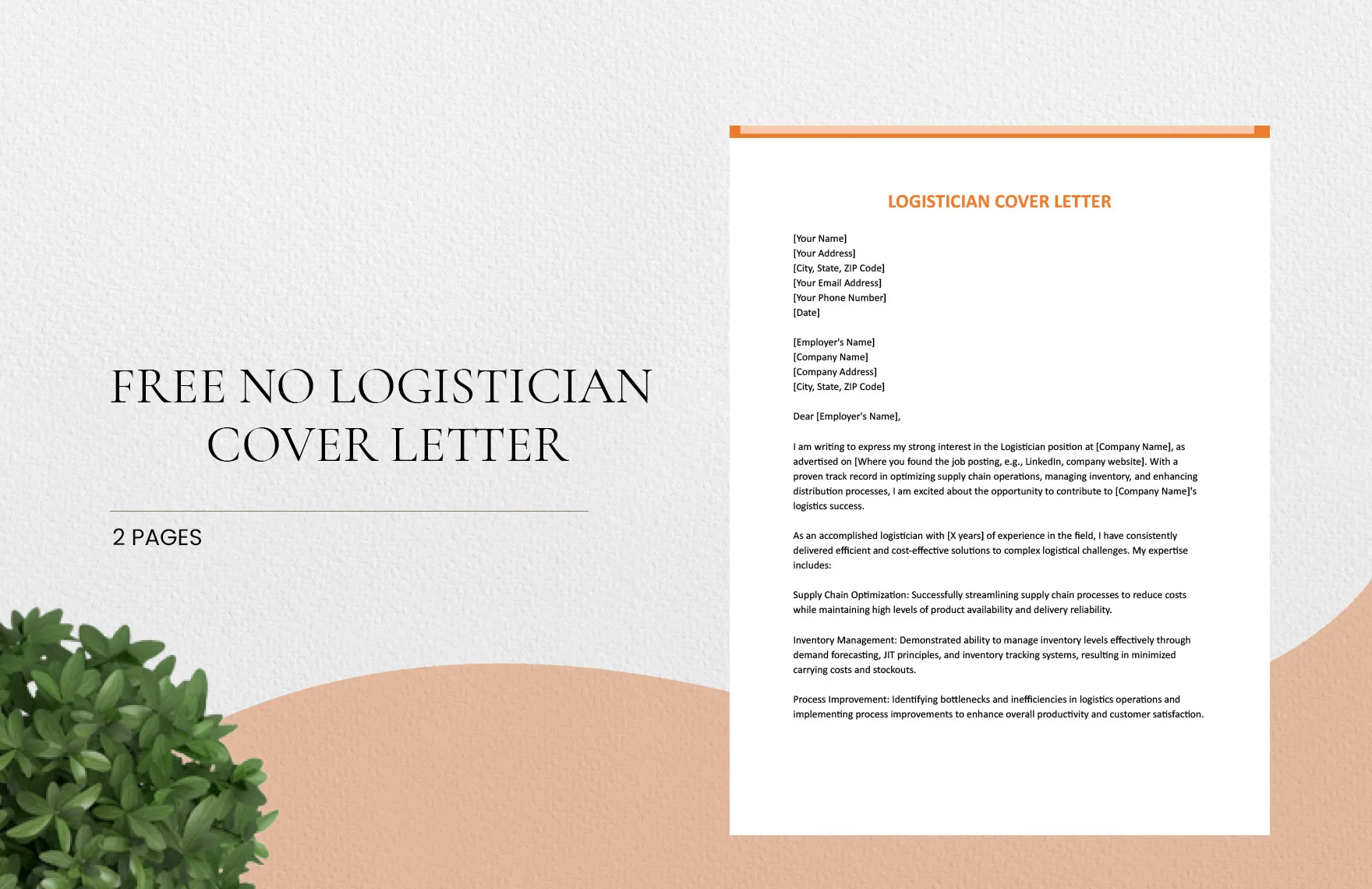
What is a Logistic Cover Letter
A logistic cover letter is a crucial document that accompanies your resume when applying for a job in the logistics field. It serves as your introduction to a potential employer, allowing you to highlight your relevant skills, experience, and qualifications in a personalized way. Unlike a resume, which provides a factual overview of your career, a cover letter allows you to tell your story, explain why you are a good fit for the specific role and the company, and express your enthusiasm for the opportunity. It is an opportunity to make a strong first impression and differentiate yourself from other candidates.
Why You Need a Strong Logistic Cover Letter
In the competitive field of logistics, a strong cover letter is essential for several reasons. Firstly, it demonstrates your communication skills, which are vital in this industry where clear and concise communication is key for coordinating complex operations. Secondly, a well-crafted cover letter showcases your understanding of the specific job requirements and the company’s values. It allows you to tailor your application to the role, emphasizing the skills and experiences most relevant to the position. Moreover, a compelling cover letter can help you stand out from other applicants who may have similar qualifications, by providing a glimpse into your personality and your genuine interest in the opportunity. Finally, it is an opportunity to address any potential weaknesses or gaps in your resume while highlighting your strengths.
Highlighting Your Skills

When highlighting your skills in a logistic cover letter, focus on the abilities most relevant to the job description. Logistics jobs often require a diverse range of skills, including problem-solving, communication, organization, and analytical skills. Provide specific examples of how you have utilized these skills in past roles. For example, if the job requires inventory management skills, describe how you have improved inventory accuracy or reduced carrying costs in previous positions. If the role involves managing transportation, highlight your experience with route optimization, carrier negotiation, or tracking and tracing shipments. Make sure to use keywords from the job description to demonstrate that you understand the employer’s needs.
Showcasing Relevant Experience
Your logistic cover letter is an ideal place to showcase your relevant experience, going beyond the bullet points in your resume. Provide context and details that bring your experience to life. Describe specific projects or tasks where you played a significant role. For example, if you worked on a supply chain optimization project, explain your role, the challenges you faced, the strategies you employed, and the results you achieved. When describing previous roles, emphasize your responsibilities, the scope of your work, and the impact you made on the company’s performance. This gives the hiring manager a clearer picture of what you can bring to their team.
Quantifying Achievements
One of the most effective ways to make your cover letter stand out is to quantify your achievements. Instead of simply stating that you improved efficiency, provide specific numbers and metrics. For instance, you could say, “I improved warehouse efficiency by 15% by implementing a new inventory management system.” Or, “I reduced transportation costs by 10% through strategic carrier negotiations.” Quantifying your accomplishments demonstrates your value and provides tangible evidence of your capabilities. Use data to back up your claims and show the impact you have made in previous roles, which illustrates your ability to drive positive outcomes.
Tailoring Your Cover Letter

Generic cover letters are easily recognized and often discarded. To make a strong impression, it’s essential to tailor each cover letter to the specific job and company. This involves researching the company, understanding the job requirements, and highlighting the skills and experiences that align with both.
Researching the Company
Before writing your cover letter, take the time to research the company thoroughly. Visit their website, read about their mission, values, and recent news. Understand their products or services, target market, and competitive landscape. This research will allow you to tailor your cover letter to demonstrate your understanding of the company’s needs and your enthusiasm for their mission. Mention specific projects, initiatives, or values that resonate with you. This shows you are genuinely interested and not just sending a generic application.
Matching Skills to Job Requirements
Carefully review the job description and identify the key skills, qualifications, and experience the employer is seeking. Then, in your cover letter, explicitly connect your skills and experiences to the specific requirements listed. Use the same keywords and phrases from the job description to show that you are a strong match for the role. Provide specific examples of how your skills and experiences have helped you succeed in previous roles. This ensures the hiring manager understands why you are a good fit for the position.
Formatting and Structure

A well-formatted and structured cover letter is easier to read and makes a better impression. Pay attention to the layout, font, and overall presentation of your letter.
Header and Contact Information
Your cover letter should begin with a professional header that includes your contact information, such as your name, phone number, email address, and optionally, your LinkedIn profile. Also, include the date and the hiring manager’s name and title (if known). This ensures the recruiter can easily contact you and shows your attention to detail.
Opening Paragraph
The opening paragraph should immediately grab the reader’s attention and state the purpose of your letter. Mention the specific job you are applying for and where you saw the job posting. Briefly explain why you are interested in the role and the company. This paragraph sets the tone for the rest of the letter and encourages the hiring manager to continue reading.
Body Paragraphs

The body paragraphs are where you elaborate on your skills, experience, and achievements. Typically, these paragraphs should be concise and focused, with each paragraph highlighting a key skill or experience relevant to the job. Use action verbs to describe your accomplishments and provide specific examples to support your claims. The main goal is to demonstrate the value you bring to the company.
Closing Paragraph
The closing paragraph should summarize your interest in the position and reiterate your enthusiasm. Thank the hiring manager for their time and consideration. Include a call to action, such as expressing your availability for an interview and providing your contact information. Reiterate your eagerness to discuss how your skills and experience align with the company’s needs.
Proofreading and Editing
Proofreading and editing are crucial steps in the cover letter writing process. Typos, grammatical errors, and unclear language can undermine your professionalism and credibility. Always proofread your cover letter multiple times. Ask a friend, family member, or career advisor to review it for errors and provide feedback. Ensure your letter is clear, concise, and free of any mistakes.
Common Mistakes to Avoid

Avoiding common mistakes can significantly improve your chances of getting hired. One of the most frequent errors is sending a generic cover letter that is not tailored to the specific job or company. Other mistakes include using overly formal language, rambling, or focusing too much on yourself rather than highlighting your value to the employer. Make sure to avoid using clichés and exaggerating your accomplishments, as this can damage your credibility. Finally, always ensure your cover letter is free of errors.