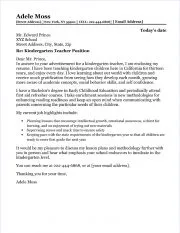
What is a Kindergarten Teacher Cover Letter?
A kindergarten teacher cover letter is a crucial document accompanying your resume when applying for teaching positions. It serves as your initial introduction to the hiring committee, providing an opportunity to showcase your personality, qualifications, and enthusiasm for the role. Unlike a resume, which provides a factual overview of your experience and skills, the cover letter allows you to elaborate on your passion for teaching, your teaching philosophy, and how you can contribute to the school’s mission. It’s your chance to make a memorable first impression and persuade the hiring manager to invite you for an interview.
Why is a Cover Letter Important
In a competitive job market, a well-crafted kindergarten teacher cover letter can set you apart from other applicants. It shows you’ve taken the time and effort to personalize your application and demonstrate genuine interest in the specific school and position. The cover letter allows you to connect with the hiring manager on a more personal level, highlighting your unique strengths and explaining why you’re the ideal candidate. A strong cover letter can also compensate for any perceived weaknesses in your resume, such as a lack of direct experience, by emphasizing your transferable skills and enthusiasm. Ultimately, a cover letter is an essential tool in securing an interview and ultimately, your dream teaching job.
Key Components of a Kindergarten Teacher Cover Letter

A compelling kindergarten teacher cover letter has several key components. Each section plays a vital role in conveying your qualifications and personality. These components, when combined effectively, create a cohesive and persuasive document that grabs the reader’s attention and encourages them to learn more about you. Understanding the structure and purpose of each part will help you craft a cover letter that stands out from the competition and secures you an interview.
Your Contact Information
Start your cover letter with your contact information in the header. This includes your full name, phone number, email address, and optionally, your LinkedIn profile or personal website. Make sure the information is accurate and up-to-date. Ensure your email address is professional. This makes it easy for the hiring manager to reach you. Placing this information at the top ensures that they can quickly contact you if they are interested in your application.
The Recipient’s Information
Below your contact information, include the recipient’s details. If possible, address the letter to a specific person, such as the principal or hiring manager. Research the school’s website or LinkedIn to find the correct name and title. If you can’t find a specific name, use a general title like “Hiring Committee” or “Human Resources Department.” Always use formal titles and accurate spellings. Personalizing the letter with the recipient’s name demonstrates your attention to detail and proactive approach.
The Salutation

Begin your cover letter with a professional salutation. “Dear Mr./Ms./Mx. [Last Name]” is appropriate if you know the recipient’s name. If you don’t know the name, “Dear Hiring Committee” or “Dear [School Name] Hiring Team” are acceptable alternatives. Avoid generic salutations like “To Whom It May Concern” or “Dear Sir/Madam,” as they can make your letter seem impersonal. Always double-check the spelling of the recipient’s name and title.
The Introduction
The introduction is your first chance to capture the reader’s attention. State the position you are applying for and how you learned about the opening (e.g., online job board, school website, referral). Briefly mention your key qualifications or a compelling reason why you’re interested in the school. Your introduction should be concise and enthusiastic, setting the tone for the rest of the letter. Make sure it immediately grabs the reader’s attention.
Highlight Your Qualifications
This section is where you showcase your qualifications. Connect your skills and experiences with the specific requirements of the kindergarten teacher position. Use specific examples from your past roles. If the job description emphasizes classroom management, for example, you might describe a time when you successfully managed a challenging classroom. Include your relevant certifications and degrees. Tailor this section to reflect the school’s needs and values. Mention specific skills such as lesson planning, assessment, and communication.
Relevant Experience

Provide details about your relevant experience, focusing on achievements and responsibilities. Describe your previous teaching roles, including the school’s name, your job title, and the dates of your employment. Highlight any specific achievements or contributions you made in your previous positions, using quantifiable results whenever possible (e.g., “Improved student reading scores by 15%”). Show how your experience aligns with the school’s needs. Include any experience working with young children. Ensure that your experience demonstrates your commitment and ability to work in a kindergarten setting.
Skills and Abilities
Detail your key skills and abilities relevant to a kindergarten teacher role. This includes both hard skills (e.g., lesson planning, curriculum development, classroom management) and soft skills (e.g., communication, teamwork, patience, creativity). Provide examples of how you’ve used these skills in the past. Demonstrate your ability to create engaging and effective lesson plans. Mention your experience using various teaching strategies and technologies. Show how these skills make you a good fit for the role. Always mention your experience with parents and guardians.
Show Your Passion for Teaching
Express your passion for teaching and working with young children. Share why you enjoy teaching kindergarten and what motivates you. Mention your teaching philosophy and how it aligns with the school’s values. Include specific examples that highlight your enthusiasm. Show your understanding of early childhood development. Express your dedication to fostering a positive and nurturing learning environment. This helps the hiring manager understand your passion and how you’ll contribute to the school’s culture.
Address the School’s Needs

Demonstrate that you’ve researched the school and understand its mission, values, and programs. Explain how your skills and experience align with the school’s specific needs and goals. Highlight any relevant experience or skills that are particularly valuable to that school. Tailor your cover letter to the school’s culture. This shows that you are genuinely interested in the specific opportunity and have taken the time to understand their requirements.
Tailor Your Letter
Customize your cover letter for each application. Avoid sending a generic letter to multiple schools. Review the job description carefully and use the keywords and phrases. Research the school’s website and social media to understand their values and programs. Customize your letter to reflect the specific requirements. This demonstrates your interest and attention to detail. Highlight any aspects of the school that appeal to you.
Use Keywords
Incorporate relevant keywords from the job description throughout your cover letter. This helps your application get noticed by applicant tracking systems (ATS). Use keywords naturally and authentically. Balance keyword usage with clear and engaging writing. Ensure that your cover letter is easy to read and understand. This helps ensure that your application meets the criteria for the role.
The Closing

Conclude your cover letter with a strong call to action. Express your interest in an interview and thank the hiring manager for their time and consideration. Reiterate your enthusiasm for the position. Provide your contact information again to ensure they can easily reach you. End on a positive and professional note.
Express Enthusiasm
Show your excitement and eagerness for the opportunity. Express genuine interest in the school and the position. Use enthusiastic language throughout your cover letter. Show your understanding of early childhood education. Demonstrating your enthusiasm will help you stand out. This is essential for any kindergarten teacher role.
Professional Closing
Use a professional closing to end your cover letter. “Sincerely,” “Best regards,” or “Thank you for your consideration” are appropriate options. Avoid casual closings. Double-check the closing and your signature. A professional closing reflects your attention to detail. This creates a strong impression.
Proofread and Edit

Thoroughly proofread and edit your cover letter before submitting it. Check for any grammatical errors, spelling mistakes, and typos. Ensure that the formatting is consistent and easy to read. Have someone else review your cover letter for a fresh perspective. Pay close attention to sentence structure, flow, and clarity. A polished cover letter demonstrates your professionalism and attention to detail.
Mistakes to Avoid
Avoid common mistakes that can undermine your cover letter and negatively impact your application. These mistakes can reduce your chances of being considered for an interview. Being aware of and avoiding common mistakes will increase the effectiveness of your cover letter. This demonstrates professionalism and attention to detail.
Common Errors
Avoid common errors, such as spelling mistakes, grammatical errors, and typos. Ensure your sentences are well-structured and easy to understand. Make sure all information is accurate and up-to-date. Avoid using jargon or slang. Proofread the entire document carefully.
Formatting Mistakes
Ensure your cover letter is properly formatted, including using a standard font (e.g., Times New Roman, Arial), consistent spacing, and appropriate margins. Use clear headings and bullet points to organize your content. Keep your cover letter concise and easy to read. Formatting mistakes can distract the reader. These mistakes can make it difficult to read and understand the document.
Dos and Don’ts
To create an effective kindergarten teacher cover letter, follow some clear guidelines. Knowing what to include and what to avoid will increase the effectiveness of your letter. These dos and don’ts will improve your chances of success. Adhering to these simple rules can significantly improve your cover letter.
Dos
- Do tailor your letter to each specific job application.
- Do highlight your qualifications and relevant experience.
- Do express your enthusiasm and passion for teaching.
- Do proofread carefully for any errors.
- Do use keywords from the job description.
Don’ts
- Don’t send a generic cover letter.
- Don’t include irrelevant information.
- Don’t use jargon or slang.
- Don’t make grammatical or spelling errors.
- Don’t exceed one page in length.
Final Thoughts
Writing a compelling kindergarten teacher cover letter is an essential step in the job application process. By following these guidelines, you can create a cover letter that highlights your qualifications, showcases your passion for teaching, and grabs the attention of the hiring manager. Remember to tailor your letter to each specific job and to always proofread carefully. Your cover letter is your chance to make a strong first impression and secure an interview, so invest the time and effort to create a document that reflects your professionalism and enthusiasm. Good luck with your job search!