Crafting a Compelling Journalism Cover Letter
In the competitive field of journalism, a well-crafted cover letter is your first opportunity to make a strong impression. It’s more than just a formality; it’s your chance to showcase your skills, personality, and passion for the craft. A compelling cover letter is a critical tool that can set you apart from other candidates, grab the attention of hiring managers, and increase your chances of landing an interview. Think of it as a concise, engaging narrative that complements your resume, offering a deeper dive into what makes you the ideal candidate. This guide will help you learn how to write a standout cover letter that gets noticed.
Understanding the Role of a Journalism Cover Letter
The primary function of a journalism cover letter is to introduce yourself, your skills, and your aspirations to a potential employer. It’s a bridge between your resume, a document that simply lists your experiences, and your personality. Your cover letter should explain why you’re interested in the specific role or publication and why you’re the best fit. It should also show your understanding of the media outlet, its audience, and the type of stories they cover. Essentially, it’s a chance to articulate your journalistic philosophy and demonstrate how you can contribute to their team.
Why a Cover Letter is Crucial

In the digital age, where everything is fast-paced, and information is abundant, a personalized cover letter remains an essential tool in the application process for aspiring journalists. A well-written cover letter adds personality to your resume, which helps you stand out from the crowd. It allows you to elaborate on your experience, highlighting specific projects, skills and accomplishments. Your cover letter allows you to explain any gaps in your resume, such as career changes, or personal projects. This gives the hiring manager context and paints a more complete picture of you.
Key Elements of a Standout Journalism Cover Letter
A standout journalism cover letter goes beyond simply stating your qualifications; it showcases your personality, writing skills, and understanding of the media landscape. It should be concise, engaging, and tailored to each specific job application. Remember, this is your opportunity to leave a lasting impression. Let’s look at some key elements.
Personalizing Your Cover Letter
Generic cover letters are easily discarded. A personalized letter demonstrates that you’ve done your research and are genuinely interested in the specific role and publication. Address the hiring manager by name if possible (researching the contact person is a good first step). Refer to specific articles, projects, or initiatives by the publication that resonate with you, and explain why. This shows you’re not just sending out a mass application, but that you have a genuine interest in contributing to their team.
Highlighting Relevant Skills and Experience

Identify the skills and experiences most relevant to the job description. Don’t just list them; provide examples of how you’ve utilized those skills in the past. This could include writing compelling news stories, conducting in-depth interviews, managing social media, or using specific software. Use action verbs to describe your accomplishments and quantify your results whenever possible. This approach will make your claims more believable and your application more compelling.
Showcasing Your Writing Style
Your cover letter is a sample of your writing abilities. Ensure your writing is clear, concise, and engaging. Use a professional tone, and avoid jargon or clichés. Pay attention to grammar, spelling, and punctuation. Proofread carefully and consider asking a friend or colleague to review your letter before you send it. A polished letter will enhance your credibility and demonstrate your attention to detail, which is essential in journalism.
Formatting Your Journalism Cover Letter
Effective formatting makes your cover letter easy to read and visually appealing. Use a clear and readable font, such as Times New Roman, Arial, or Calibri, with a font size between 11 and 12 points. Keep your paragraphs short and concise, and use bullet points or numbered lists to highlight key information. Leave sufficient white space to prevent the letter from appearing cluttered. The goal is to make it easy for the hiring manager to quickly grasp the key points.
Tips for the Perfect Opening Paragraph

The opening paragraph is crucial; it’s your first impression. Start with a strong hook that captures the reader’s attention. State the position you’re applying for and where you found the job posting. Briefly mention your most relevant skills or experience and express your enthusiasm for the opportunity. This paragraph should immediately convey why you’re a good fit for the job and entice the reader to continue reading.
Show, Don’t Tell
Instead of simply stating that you’re a strong writer, show it through your writing style. Instead of saying you have excellent interview skills, provide an example of a particularly successful interview you conducted. Instead of claiming to be a good storyteller, describe a story you wrote that resonated with your audience. Providing concrete examples will make your claims more credible and memorable.
Formatting Basics
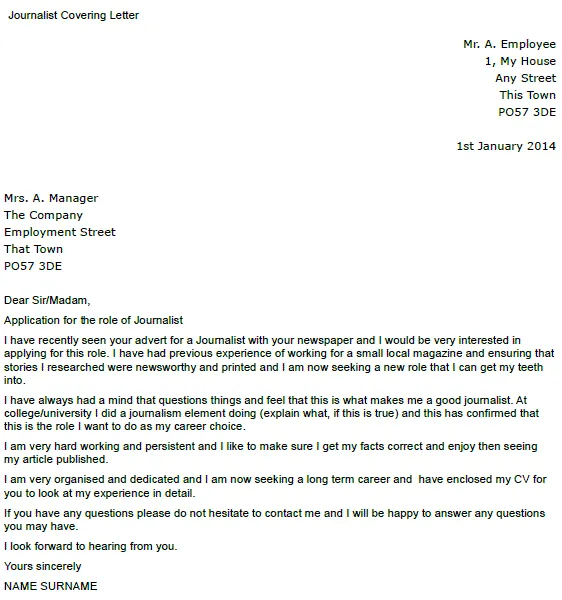
The basic structure of a cover letter includes your contact information, the date, the hiring manager’s contact information, a salutation, an introductory paragraph, a body paragraph or two highlighting your skills and experience, a concluding paragraph, a closing, and your signature (if printing). Always tailor your cover letter to match the formatting preferences of the publication or company.
Highlighting Your Achievements

Don’t be shy about showcasing your accomplishments; it’s what makes you stand out. Use your cover letter to highlight your successes, demonstrating the value you can bring to the organization.
Quantifying Your Accomplishments
Whenever possible, quantify your achievements. Instead of saying you increased readership, specify by how much. Instead of saying you managed social media, mention the number of followers you gained or the engagement rate you achieved. Numbers provide concrete evidence of your abilities and make your accomplishments more compelling. It is also a good strategy to illustrate your impact.
Providing Specific Examples
Use specific examples to illustrate your skills and experiences. Instead of saying you’re good at research, describe a time you uncovered a critical piece of information through diligent research. Instead of saying you’re a good team player, provide an example of a project where you collaborated effectively with others. Specific examples show how you’ve applied your skills in real-world situations.
Tailoring Your Letter to the Publication or Role

A generic cover letter is unlikely to impress a hiring manager. Tailor your letter to each specific job application, demonstrating that you understand the publication, the role, and what they’re looking for in a candidate.
Researching the Media Outlet
Before you start writing, research the publication or company. Read their recent articles, understand their editorial focus, and identify their target audience. This will enable you to tailor your letter to their specific needs and demonstrate your genuine interest in the role. Understanding the publication’s style and tone can also influence the way you structure and write your cover letter, making you a more relevant candidate.
Addressing the Hiring Manager Directly
If possible, address the hiring manager by name. This shows you’ve taken the time to identify the person responsible for hiring. If you can’t find a name, use a professional salutation like “Dear Hiring Manager.” Avoid generic greetings like “To Whom It May Concern,” which can make your letter feel impersonal.
Demonstrating Your Passion and Enthusiasm

Journalism requires passion. Let your enthusiasm shine through in your cover letter. Express your genuine interest in the role, the publication, and the field of journalism. Show how excited you are about the opportunity to contribute to their team and what makes you excited about telling stories. Your passion will be contagious and leave a positive impression.
Closing Your Cover Letter Effectively
The closing paragraph is your final chance to make an impact. End your cover letter with a strong call to action, reiterating your interest in the position and your enthusiasm for the opportunity. Thank the hiring manager for their time and consideration, and provide your contact information. Always proofread your closing carefully to make sure it is polished and professional.
Proofreading and Editing
Typos, grammatical errors, and poor formatting can undermine your credibility and suggest a lack of attention to detail. Proofread your cover letter carefully before submitting it. Check for spelling mistakes, grammatical errors, and punctuation errors. Read your letter aloud to catch any awkward phrasing or sentence structures. Consider asking a friend, family member, or career counselor to review your cover letter for a fresh perspective.
Expressing Gratitude and Following Up

In your closing paragraph, express your gratitude for the hiring manager’s time and consideration. Reiterate your enthusiasm for the position and provide your contact information. After submitting your application, follow up with a brief email or phone call to confirm that your application was received and reiterate your interest in the role. Following up demonstrates your initiative and continued interest in the opportunity. If the hiring process takes time, be patient, but don’t be afraid to follow up a few weeks after the initial submission.
By following these guidelines, you can craft a compelling journalism cover letter that grabs the attention of hiring managers, showcases your skills and experience, and helps you land your dream job. Remember, the cover letter is your chance to make a great first impression, so make it count.