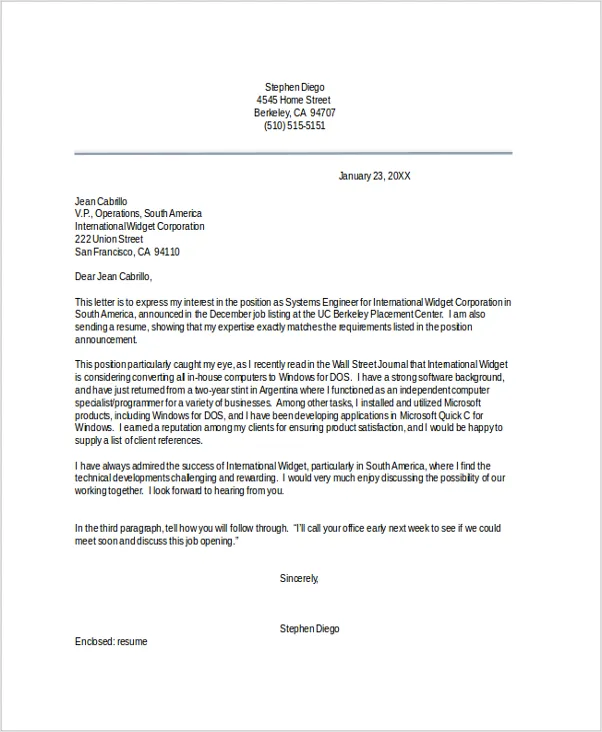
What is an IT Job Cover Letter
An IT job cover letter is a crucial document that accompanies your resume when applying for IT positions. It serves as a personal introduction, allowing you to highlight your skills, experiences, and enthusiasm for the role. Unlike your resume, which provides a factual overview of your qualifications, a cover letter gives you the opportunity to express your personality, explain why you’re a good fit for the specific job, and showcase your communication skills. In the competitive field of IT, a well-crafted cover letter can significantly increase your chances of getting noticed by hiring managers and securing an interview. It’s your chance to make a strong first impression and demonstrate that you’re not just qualified but also a great fit for the company culture.
IT Job Cover Letter Essentials
Creating a compelling IT job cover letter requires attention to detail and a strategic approach. Begin by addressing the hiring manager or recruiter by name, if possible; this personal touch shows that you’ve done your research and are genuinely interested in the position. Clearly state the job you’re applying for and where you found the listing. The body of your letter should be concise and focused, highlighting the most relevant skills and experiences that align with the job description. Use specific examples to illustrate your accomplishments and quantify your achievements whenever possible. Always proofread your cover letter carefully for any grammatical errors or typos, as these can undermine your credibility.
Formatting and Structure

Proper formatting and structure are essential for an IT job cover letter. Use a professional and easy-to-read font like Arial or Times New Roman, with a font size between 10 and 12 points. Maintain consistent spacing and use clear headings and subheadings to break up large blocks of text and improve readability. Start with a strong opening paragraph that grabs the reader’s attention and clearly states your purpose. The body of your letter should be divided into concise paragraphs, each addressing a specific point or skill. Conclude with a strong closing paragraph that reiterates your interest in the position and includes a call to action, such as inviting the hiring manager to contact you for an interview.
Keywords and Skills
Keywords and skills are critical components of your IT job cover letter. Carefully review the job description and identify the key skills and qualifications the employer is seeking. Integrate these keywords naturally throughout your letter, highlighting your relevant experience and abilities. For example, if the job description mentions proficiency in Python, make sure to mention your experience with Python and how you’ve used it in previous projects. List your technical skills, such as programming languages, software, and hardware expertise. Additionally, emphasize soft skills like problem-solving, communication, and teamwork, as these are highly valued in the IT industry. Make sure your IT cover letter is tailored to the specific IT job.
Tailoring Your Cover Letter
A generic cover letter is unlikely to impress hiring managers. To stand out from the competition, you must tailor your cover letter to each specific job you apply for. This involves carefully reviewing the job description, identifying the key requirements, and highlighting the skills and experiences that align with those requirements. Avoid simply restating your resume; instead, use the cover letter to elaborate on specific achievements and explain how your qualifications make you the ideal candidate. Demonstrate your understanding of the company and its needs by mentioning how your skills can contribute to its success. This personalized approach shows that you’ve invested time and effort in the application and are genuinely interested in the position.
Researching the Company

Before writing your cover letter, thoroughly research the company and the specific role you’re applying for. Visit the company’s website to learn about its mission, values, and recent projects. Explore its social media profiles to understand its culture and get a sense of its employees. Identify the company’s needs and challenges and consider how your skills and experience can help address them. This research will allow you to tailor your cover letter to the company’s specific requirements and demonstrate your genuine interest in the opportunity. Mentioning specific projects or initiatives the company is involved in shows that you’ve taken the time to learn about the organization and are enthusiastic about contributing to its goals.
Highlighting Relevant Experience
When highlighting your relevant experience, focus on the accomplishments that demonstrate your ability to excel in the IT job. Provide specific examples of projects you’ve worked on, challenges you’ve overcome, and results you’ve achieved. Quantify your accomplishments whenever possible by using metrics and data to illustrate your impact. For instance, instead of saying you improved system performance, state that you improved system performance by 20%. Showcase your expertise in the technologies and tools mentioned in the job description. Use action verbs to describe your responsibilities and achievements, such as developed, implemented, managed, and optimized. This will help the hiring manager quickly understand your contributions and see how you can add value to their team.
Quantifying Achievements
Quantifying your achievements is a powerful way to demonstrate your value to potential employers. Instead of making vague statements about your skills and experience, use numbers and data to showcase your impact. For example, instead of saying you improved customer satisfaction, state that you increased customer satisfaction scores by 15% through implementing a new support system. If you streamlined a process, mention how much time or money you saved the company. Highlighting quantifiable results makes your accomplishments more tangible and allows the hiring manager to see the direct benefits of hiring you. This approach provides concrete evidence of your capabilities and helps you stand out from other candidates who may only provide general descriptions of their experience.
Top 7 Strategies for a Winning IT Cover Letter

Showcasing Technical Skills
Highlighting your technical skills is crucial for an IT cover letter. Be specific about the programming languages, software, hardware, and other technical tools you are proficient in. List these skills clearly and concisely, making sure to align them with the requirements of the job. Briefly describe your experience with each skill, providing examples of how you’ve used them in previous projects or roles. If you have any certifications or specialized training, be sure to mention those as well. This demonstrates your commitment to professional development and enhances your credibility as a qualified candidate. By showcasing your technical skills effectively, you can quickly grab the attention of hiring managers and increase your chances of securing an interview.
Demonstrating Soft Skills
While technical skills are essential in IT, demonstrating soft skills is equally important. These skills encompass your interpersonal and communication abilities, which are vital for working effectively in a team and collaborating with colleagues and clients. Highlight soft skills like problem-solving, communication, teamwork, leadership, and time management. Provide examples of how you’ve utilized these skills in past roles to resolve issues, communicate complex information, or lead projects successfully. These skills demonstrate your ability to contribute to a positive work environment and work effectively with others, making you a well-rounded and valuable candidate.
Highlighting Relevant Projects

Highlighting relevant projects is an excellent way to showcase your skills and experience. When writing your cover letter, briefly describe projects that align with the job requirements. Mention your role in each project, the technologies you used, and the outcomes you achieved. If possible, quantify your accomplishments by providing data or metrics. For example, if you worked on a project that improved website loading times, mention by what percentage. Highlighting projects that demonstrate your skills is essential for showing potential employers your ability to deliver results. Make sure the projects described are the ones that will impress the potential employer.
Emphasizing Problem-Solving Abilities
Emphasizing your problem-solving abilities is critical in an IT job cover letter. IT roles often involve troubleshooting complex technical issues and finding creative solutions. In your cover letter, provide examples of how you’ve successfully resolved technical challenges in previous roles. Describe the problem, the steps you took to address it, and the outcome. Showcase your ability to analyze situations, identify root causes, and implement effective solutions. Use action verbs like ‘troubleshooted,’ ‘diagnosed,’ ‘resolved,’ and ‘implemented’ to highlight your problem-solving skills. Demonstrate that you can think critically, learn quickly, and adapt to new challenges, making you a valuable asset to any IT team. Focus on the problems and what you did.
Expressing Enthusiasm and Interest
Expressing enthusiasm and genuine interest in the position and the company is essential. Show that you’re excited about the opportunity and eager to contribute to the team. Research the company’s mission, values, and recent projects to show that you understand its goals. Mention what specifically attracts you to the role or the organization. Demonstrate that you’re not just looking for a job, but that you’re genuinely interested in the company’s success. A well-crafted cover letter with this enthusiastic tone will convey that you are a strong candidate and would be a great fit.
Using a Professional Tone

Maintaining a professional tone throughout your cover letter is crucial. Use clear and concise language, avoiding slang, jargon, and overly casual phrasing. Proofread your letter carefully for grammatical errors and typos. Avoid using an overly formal tone. Your cover letter should reflect your professionalism and attention to detail. Be respectful, enthusiastic, and avoid negativity. Show that you are a well-rounded professional.
Proofreading and Editing
Before submitting your cover letter, proofread and edit it thoroughly. Check for grammatical errors, typos, and inconsistencies in formatting. Ensure that your language is clear, concise, and professional. It’s often helpful to have a friend or colleague review your letter for a fresh perspective. A polished and error-free cover letter demonstrates your attention to detail and commitment to excellence. A cover letter is your first impression; make sure it reflects the best you.
Common Mistakes to Avoid in Your IT Cover Letter
Generic Language

Avoid using generic language that could apply to any job. Your cover letter should be specific to the role and the company. Instead of using clichés or vague statements, use clear and concise language. Highlight your unique skills and experiences and show how they align with the job requirements. A generic cover letter will make it difficult to grab a hiring manager’s attention. To make the letter stand out, showcase your accomplishments and tailor your letter to the specific job.
Typos and Grammatical Errors
Typos and grammatical errors can undermine your credibility and make you appear unprofessional. Always proofread your cover letter carefully before submitting it. Use a spell-checker and grammar-checker tool, but don’t rely on them entirely. Read your letter aloud to catch any errors that you might miss when reading silently. Proofread your letter multiple times. Ensure that all sentences are clear and that you have chosen the right words.
Focusing on ‘I’ Instead of ‘You’
Avoid focusing too much on yourself and your accomplishments; instead, focus on how you can contribute to the company. While it’s important to highlight your skills and experience, tailor your cover letter to the company’s needs. Focus on the value you can bring to the role. Use the cover letter to address the hiring manager’s needs, concerns, and aspirations. Make the cover letter all about the person, department, and organization.
Not Tailoring to the Job
Failing to tailor your cover letter to the specific job is a common mistake. Generic cover letters that are not tailored to the role will not impress hiring managers. Review the job description carefully and highlight the skills and experiences that align with the requirements. Mention how your skills and experiences address the company’s specific needs. Avoid sending out a mass-produced cover letter; show that you have researched the role and understand the company’s requirements. Tailor your cover letter to the role.
Closing Strong
Your closing is an important part of your cover letter. Summarize your key qualifications and reiterate your interest in the position. Clearly state your availability for an interview and provide your contact information. End with a strong call to action, inviting the hiring manager to contact you. The closing is your final chance to make a positive impression, so make it count. Conclude your letter in a professional and enthusiastic way.
Expressing Gratitude
Express your gratitude to the hiring manager for their time and consideration. A simple ‘Thank you for your time and consideration’ is a polite way to close your letter. Avoid sounding too casual and express your gratitude for the opportunity. This shows respect for the hiring process and helps to make a positive impression.
Providing Contact Information
Make sure to provide your contact information, including your email address and phone number. Ensure that your contact information is accurate and up-to-date. A well-written cover letter that includes all the necessary contact information will make it easy for the hiring manager to reach you if they choose to invite you for an interview.