Why a Strong Internship Cover Letter Matters
In the competitive landscape of internships, a well-crafted cover letter is your secret weapon. It’s not just a formality; it’s your first impression, a chance to showcase your personality, enthusiasm, and suitability for the role. A strong cover letter grabs the attention of hiring managers, setting you apart from other applicants. It allows you to elaborate on your resume, providing context to your experiences and highlighting the specific skills and qualities that make you the perfect fit for the internship. Unlike your resume, a cover letter provides a platform to articulate your passion for the company and the industry, demonstrating your genuine interest beyond simply ticking the boxes of required qualifications. Ultimately, a compelling cover letter significantly increases your chances of landing an interview and securing your dream internship.
Researching the Internship and Company
Before you even begin writing, thorough research is paramount. This involves understanding the company’s mission, values, and recent achievements. Explore their website, social media, and any news articles or publications related to the organization. Delve into the internship description to fully grasp the responsibilities, required skills, and expectations. Tailor your cover letter to demonstrate that you understand their specific needs and that you’ve taken the time to learn about the company’s culture. Mention specific projects, initiatives, or aspects of their work that resonate with you. Showing that you’ve gone the extra mile to understand the company will make your application stand out and impress the hiring manager. This initial investment in research will pay off significantly when you can authentically express your alignment with their values and goals.
Understanding the Internship Role and Requirements

A crucial step in crafting your cover letter is carefully analyzing the internship description. Identify the key skills and qualifications the employer is seeking. This could include technical skills, such as proficiency in specific software or programming languages, or soft skills like communication, teamwork, and problem-solving abilities. Make a list of these requirements and carefully consider how your experiences and skills align with them. Provide concrete examples of how you’ve demonstrated these skills in the past. This could involve describing relevant projects, coursework, or extracurricular activities where you successfully applied these skills. When writing your cover letter, use the same language and keywords from the job description. This will make it easier for the hiring manager to see how well you match their needs and requirements.
Formatting Your Internship Cover Letter
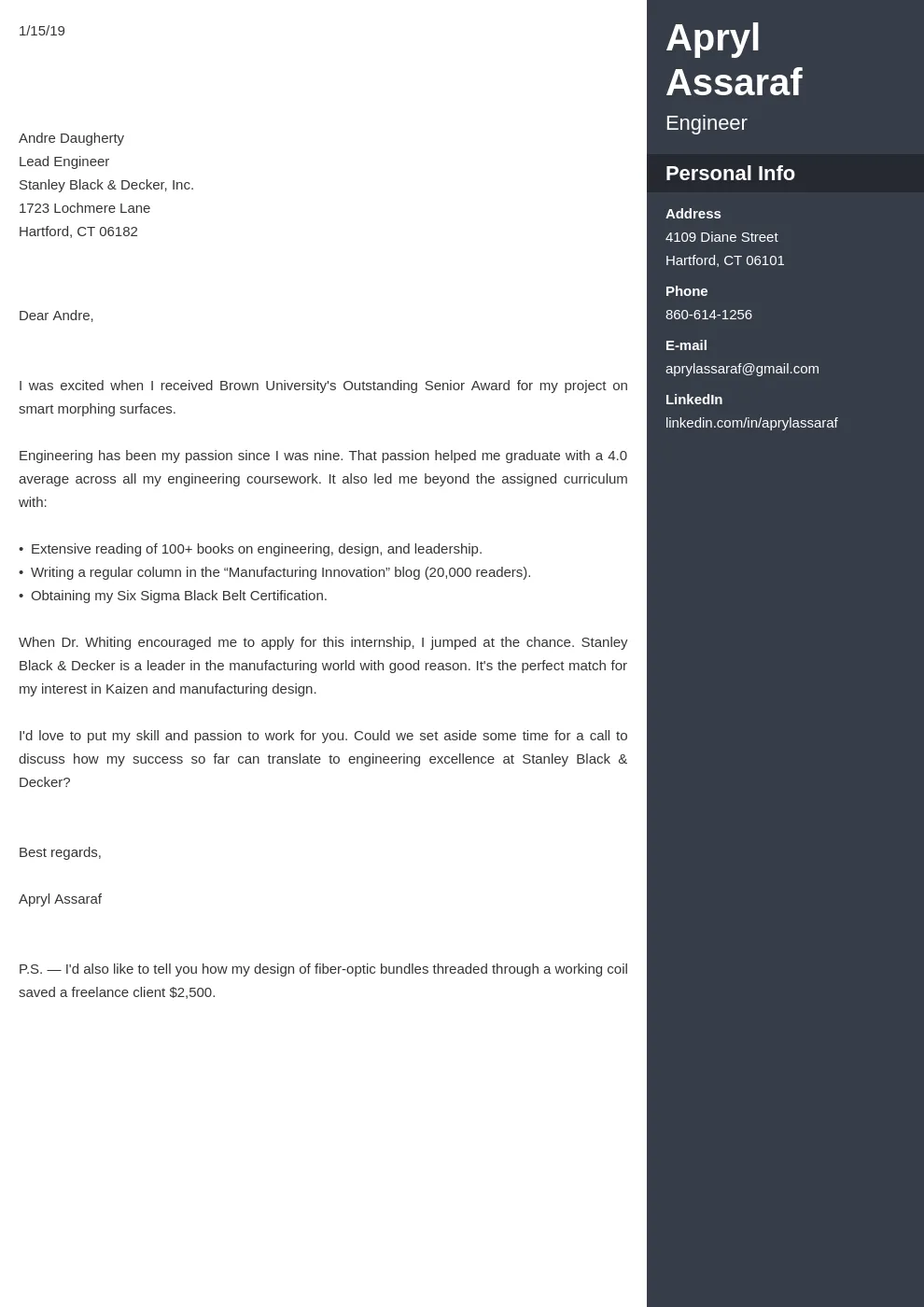
Formatting your cover letter correctly is essential for a professional and polished presentation. Use a clear and readable font, such as Arial or Times New Roman, in a size between 10 and 12 points. Maintain consistent margins (typically one inch on all sides). Keep your cover letter concise, ideally one page long. Ensure that your cover letter is well-organized with a clear structure, including a header, salutation, body paragraphs, and closing. Proper formatting demonstrates attention to detail, which is highly valued by employers. Proofread your letter meticulously for any typos, grammatical errors, or inconsistencies. A well-formatted cover letter showcases your professionalism and enhances the readability of your application, making it easier for the hiring manager to understand your qualifications and enthusiasm.
Header and Contact Information
Your cover letter should start with a clear header that includes your contact information. This allows the hiring manager to easily contact you if they’re interested in your application. The header should typically include your full name, phone number, email address, and optionally, your LinkedIn profile URL. Be sure to use a professional email address. Include the date and the hiring manager’s name and title (if known), and the company’s name and address. Ensure that the contact information is accurate and up-to-date to avoid any delays in the application process. This essential component of your cover letter helps potential employers quickly access the information needed to reach out and schedule an interview.
Professional Salutation

The salutation sets the tone for your cover letter. If possible, address the hiring manager by name (e.g., “Dear Mr. Smith”). This shows that you’ve taken the time to research the company and personalize your application. If you don’t know the hiring manager’s name, use a professional greeting like “Dear Hiring Manager” or “Dear [Company Name] Recruitment Team.” Avoid generic salutations like “To Whom It May Concern” or “Dear Sir/Madam.” The salutation should be followed by a colon. Keep your tone professional and enthusiastic throughout your cover letter, conveying your interest in the internship opportunity.
Body Paragraphs for Internship Cover Letter
The body paragraphs are the heart of your cover letter, where you make your case for why you’re the ideal candidate for the internship. Each paragraph should have a clear purpose and build upon the previous one. Use compelling language to showcase your skills, experiences, and enthusiasm. Maintain a professional tone and tailor your language to the specific internship and company. The body of your cover letter is your primary opportunity to demonstrate your qualifications and make a strong impression on the hiring manager, so ensure your writing is clear, concise, and engaging.
First Paragraph Introduce Yourself
The first paragraph is your introduction, aiming to grab the reader’s attention and state the purpose of your letter. Start by mentioning the specific internship you’re applying for and where you found the job posting. Briefly introduce yourself and mention your current academic status or previous relevant experiences. State your primary interest in the internship and why you are particularly drawn to this specific role or company. Make a strong opening statement that captures the reader’s interest and sets the stage for the rest of the letter. Your introduction should highlight your enthusiasm and make the hiring manager eager to learn more about your qualifications.
Second Paragraph Highlighting Skills

In the second paragraph, focus on highlighting your relevant skills and experiences. Refer to the job description and identify the key skills and qualifications the employer is seeking. Use concrete examples from your academic projects, coursework, extracurricular activities, or previous jobs to demonstrate how you’ve successfully applied these skills. Quantify your achievements whenever possible. For instance, if you have experience with social media marketing, you might mention the percentage increase in engagement you achieved. Be specific and avoid generic statements. Tailor this section to address the requirements listed in the job posting, ensuring that you clearly show your ability to meet the employer’s needs.
Third Paragraph Expressing Enthusiasm
The third paragraph allows you to express your enthusiasm for the company and the internship. Explain why you’re particularly interested in this specific opportunity and what you hope to gain from the experience. Highlight your knowledge of the company’s mission, values, or recent achievements. Show how your skills and goals align with the company’s culture. Mention specific projects or initiatives that resonate with you. Demonstrating your passion for the role and your genuine interest in the company will significantly boost your application. This paragraph is your opportunity to connect with the hiring manager on a personal level and make a memorable impression.
Concluding Your Internship Cover Letter
The conclusion is your last chance to leave a positive impression. It should include a call to action and a professional closing. It is important that you make the conclusion brief, strong, and memorable. Make sure to use language that conveys confidence, excitement, and a clear understanding of the internship’s requirements and expectations.
Call to Action and Closing

In your concluding paragraph, reiterate your interest in the internship and express your desire for an interview. Thank the hiring manager for their time and consideration. Include a clear call to action, such as “I look forward to hearing from you soon” or “Thank you for your time; I am available for an interview at your earliest convenience.” End with a professional closing, such as “Sincerely,” or “Best regards,” followed by your typed name. Ensure that you also include your contact information again in your closing. This will facilitate the hiring manager’s ability to reach out to you for the next step in the process.
Proofreading and Editing
Before submitting your cover letter, meticulously proofread and edit it. Check for any typos, grammatical errors, and inconsistencies in formatting. Read your cover letter aloud to identify awkward phrasing or sentences that don’t flow well. Have a friend, family member, or career counselor review your letter for feedback. Correct any errors and revise any sections that need improvement. A polished and error-free cover letter demonstrates your attention to detail and professionalism. Ensure that your letter is perfect before sending it. Proofreading can be the difference between getting an interview and getting your application rejected.
Key Elements to Include in Your Cover Letter
Several key elements should be present in your cover letter to maximize its impact. These elements work together to tell a compelling story and demonstrate your qualifications and enthusiasm for the internship. Each element supports the others, creating a strong and convincing argument for why you should be selected.
Showcasing Relevant Skills

Highlighting relevant skills is crucial. Identify the skills required in the internship description and provide concrete examples of how you’ve demonstrated these skills in the past. This might include technical skills like proficiency in a specific software or programming language, as well as soft skills such as communication, teamwork, or problem-solving. Describe specific projects, coursework, or extracurricular activities where you successfully applied these skills. Quantify your achievements whenever possible. Instead of merely saying that you have good communication skills, provide examples of how you’ve effectively communicated in various situations. The goal is to provide evidence that you possess the required skills.
Highlighting Academic Achievements
Academic achievements are a valuable addition to your cover letter. Mention your GPA, especially if it’s high, and list any relevant coursework or academic projects that align with the internship’s requirements. If you’ve received any academic awards, scholarships, or honors, be sure to include them. Showcase how your academic background has prepared you for the internship. By highlighting your academic achievements, you’re demonstrating your ability to succeed in a demanding environment and your commitment to learning and excelling in your field. This section helps the hiring manager understand your overall academic performance and abilities.
Emphasizing Previous Experience
If you have any previous work experience, even if it’s not directly related to the internship, it is important to showcase it. Describe your roles, responsibilities, and accomplishments in previous positions. Highlight any transferable skills you’ve gained, such as communication, teamwork, or problem-solving. Explain how your previous experiences have prepared you for the internship role. Even if the experience is in a different field, you can still demonstrate valuable skills. Focus on what you learned, how you contributed to the team, and how your experiences have shaped your work ethic. This section provides context to your overall experience, showing the hiring manager how you’ve developed your skills and prepared for the internship.
Tailoring the Cover Letter to the Internship

Tailoring your cover letter to each specific internship is essential for demonstrating your genuine interest and suitability. Generic cover letters are easily recognizable and often dismissed. A tailored cover letter shows that you’ve taken the time to understand the specific needs of the role and the company. When you tailor your cover letter, you increase the chances of making a strong first impression and getting an interview.
Using Keywords from the Job Description
Incorporating keywords from the job description into your cover letter is a smart strategy to capture the attention of the hiring manager and demonstrate that you meet the required qualifications. Identify the most important keywords related to skills, experience, and qualifications. Weave these keywords naturally into your sentences. By using the same language and terms from the job description, you make it easy for the hiring manager to see the alignment between your qualifications and the internship requirements. Be careful not to overdo it; your cover letter should read naturally. The goal is to make your application stand out to both the hiring manager and any automated systems that may be used to screen applications.
Demonstrating Your Understanding of the Company
Demonstrating your understanding of the company is essential for showing your genuine interest and making a memorable impression. Research the company’s mission, values, recent achievements, and current projects. Mention specific aspects of their work that appeal to you. Explain why you are excited about the opportunity to contribute to their goals. Demonstrate that you understand the company’s culture and values. This could involve referencing their commitment to innovation, sustainability, or social responsibility. By showcasing your knowledge of the company, you prove that you’ve done your homework and are truly interested in being a part of their team. This can set you apart from other applicants.