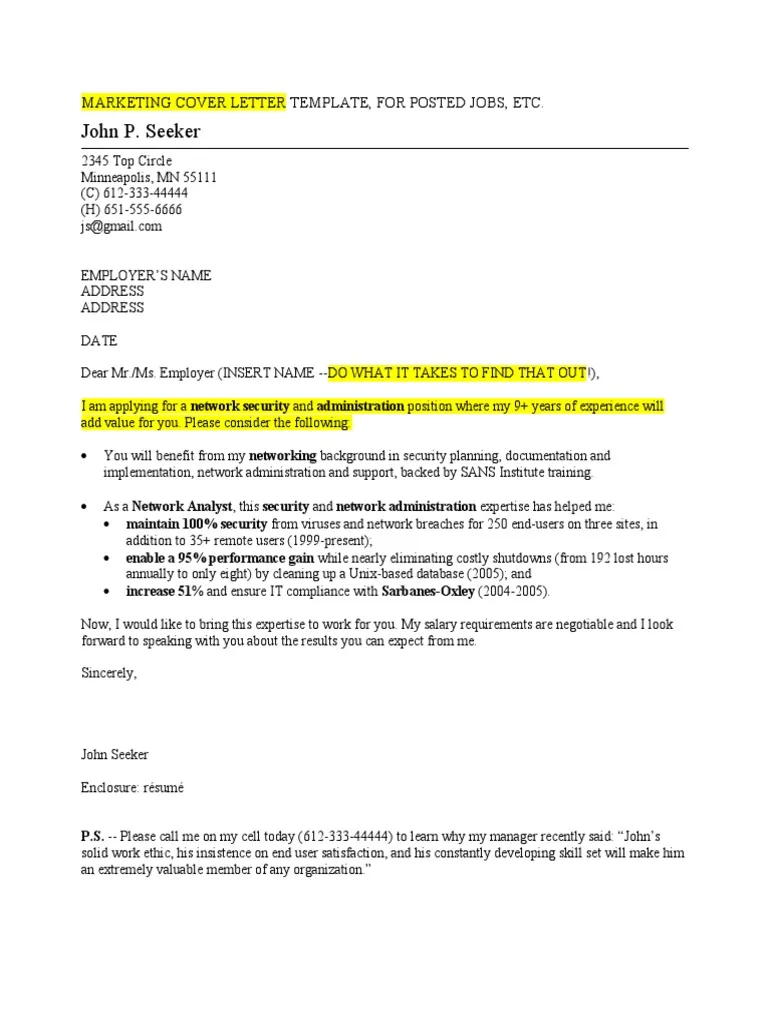
What Is a Marketing Cover Letter?
A marketing cover letter is a crucial document that accompanies your resume when applying for marketing positions. It serves as your first impression and provides an opportunity to showcase your personality, skills, and enthusiasm for the role. Unlike a resume, which provides a factual overview of your experience, a cover letter allows you to tell a story, highlighting why you are the perfect fit for the specific job and company. It’s a chance to connect with the hiring manager on a more personal level and demonstrate your understanding of the company’s needs and the marketing landscape. Essentially, a well-crafted marketing cover letter is your sales pitch, selling yourself to the potential employer.
Why Is a Marketing Cover Letter Important?
In the competitive world of marketing, a cover letter can significantly increase your chances of landing an interview. It demonstrates your communication skills, attention to detail, and genuine interest in the position. A cover letter provides context to your resume, allowing you to explain how your skills and experiences align with the job requirements. It shows that you’ve taken the time to research the company and understand their needs, setting you apart from candidates who submit generic applications. Moreover, it offers a platform to highlight your unique value proposition and explain any career gaps or unconventional experiences that might benefit your candidacy. A compelling cover letter is often the deciding factor that gets your resume noticed and secures you an interview.
Key Components of a Marketing Cover Letter

A strong marketing cover letter consists of several key components that work together to present a compelling case for your candidacy. Each element plays a vital role in conveying your qualifications, enthusiasm, and suitability for the position. From the contact information to the closing, every section should be carefully crafted to reflect your professionalism and marketing prowess. These components not only provide a clear overview of your abilities but also capture the reader’s attention and prompt them to learn more about you. Mastering these key components is essential for creating a cover letter that stands out and gets you noticed by potential employers.
Contact Information
At the top of your cover letter, include your full name, phone number, email address, and LinkedIn profile URL. Ensure that your email address is professional and your LinkedIn profile is up-to-date. This information makes it easy for the hiring manager to contact you. Also, include the date and the recipient’s contact information, including the name, title, and address of the hiring manager or the company’s HR department. If you can’t find a specific name, research the company’s website or LinkedIn to find the relevant contact person. Addressing the letter to a specific person shows that you’ve done your research and are genuinely interested in the opportunity.
Personalized Salutation
Avoid generic salutations like “To Whom It May Concern.” Instead, address the hiring manager by name. Research the name of the person who will be reviewing your application. If you’re unsure, try “Dear Hiring Manager” as a second option, but always try to find a specific name. A personalized salutation immediately grabs the reader’s attention and indicates that you’ve put effort into your application. It sets a positive tone and shows that you’re attentive to detail. This simple act demonstrates that you’re not just sending out a generic application, but that you have a genuine interest in the specific role and company.
Opening Paragraph Captivate the Reader

Your opening paragraph is your first chance to make a strong impression. Start with a captivating sentence that immediately grabs the reader’s attention. Briefly mention the position you’re applying for and where you saw the job posting. Then, use this space to highlight a key achievement, skill, or experience that aligns with the job requirements. Show enthusiasm for the role and express your understanding of the company’s mission or values. The goal is to create an immediate connection and encourage the reader to continue reading. A compelling opening paragraph sets the stage for the rest of your cover letter and encourages the hiring manager to delve deeper into your qualifications.
Highlight Your Relevant Skills
In the body of your cover letter, emphasize the marketing skills and experiences that are most relevant to the job description. Review the job posting carefully and identify the key skills and qualifications the employer is seeking. Then, provide specific examples of how you’ve demonstrated these skills in previous roles. This could include your experience with digital marketing, social media management, content creation, SEO, email marketing, or any other relevant area. Tailor your skills to match the specific requirements of the role, and explain how your past experiences have prepared you for this opportunity. Be concise and focused, providing concrete examples rather than vague statements.
Showcase Your Marketing Achievements
Don’t just list your responsibilities showcase your achievements. Use this section to highlight your successes and demonstrate the value you brought to previous employers. Describe specific projects you’ve worked on and the positive outcomes that resulted from your efforts. For example, you could mention campaigns that increased website traffic, generated leads, or boosted sales. Quantify your achievements whenever possible by providing specific metrics, such as percentages or dollar amounts. Providing quantifiable results will make your accomplishments more impactful and show the hiring manager that you’re results-oriented and capable of driving measurable success.
Quantify Your Accomplishments

Whenever possible, quantify your accomplishments to demonstrate the impact of your work. Use numbers, percentages, and data to illustrate your successes. For example, instead of saying, “Increased social media engagement,” say, “Increased social media engagement by 30% in six months.” Instead of saying, “Improved website traffic,” say, “Improved website traffic by 20,000 unique visitors per month.” Quantifying your achievements gives the hiring manager a clear understanding of the value you can bring to their company. It also shows that you pay attention to detail and can analyze and interpret data to drive marketing success. Specific numbers make your claims more credible and persuasive.
Demonstrate Your Knowledge of the Company
Show the hiring manager that you’ve researched the company and understand its mission, values, and marketing strategies. Mention specific campaigns, products, or services that have caught your attention. Explain why you’re interested in working for the company and how your skills and experiences align with their goals. This demonstrates your genuine interest and commitment. Referencing the company’s recent press releases, industry recognition, or even specific marketing initiatives shows that you’re attentive to the company’s activities and genuinely interested in contributing to its success. This level of personalization sets you apart from other candidates who submit generic applications.
Express Your Enthusiasm and Fit
Convey your enthusiasm for the role and the company throughout your cover letter. Express your excitement about the opportunity and explain why you’re a good fit for the company culture. Discuss how your personal values align with the company’s mission or how you can contribute to their team. This could involve mentioning specific projects, campaigns, or opportunities you’re excited to work on. Enthusiasm can set you apart from candidates with similar qualifications. It shows that you’re genuinely passionate about the role and eager to contribute to the company’s success, making a positive impression on the hiring manager.
Call to Action and Closing

End your cover letter with a clear call to action. Express your interest in an interview and make it easy for the hiring manager to contact you. Thank the hiring manager for their time and consideration. Provide your contact information again in your closing. Use a professional closing, such as “Sincerely” or “Best regards,” followed by your full name. A strong call to action shows initiative and reinforces your interest in the position. It encourages the hiring manager to take the next step and consider you for an interview. Be polite, professional, and leave a positive lasting impression.
Proofread and Edit Your Cover Letter
Before submitting your cover letter, carefully proofread and edit it for any grammatical errors, typos, or inconsistencies. Ensure that your writing is clear, concise, and error-free. Use a grammar checker, and if possible, have a friend or colleague review your letter for feedback. Pay attention to sentence structure, word choice, and overall flow. A polished and well-written cover letter demonstrates professionalism and attention to detail. Mistakes can create a negative impression and undermine your qualifications. Proofreading ensures that your cover letter is free of errors and presents you in the best possible light.
Formatting Your Marketing Cover Letter for Success
The formatting of your marketing cover letter can significantly impact its readability and overall appeal. Using a professional and easy-to-read format makes it easier for the hiring manager to scan the document and quickly grasp your key qualifications and experiences. Proper formatting highlights your attention to detail and demonstrates that you understand the importance of presenting a polished and professional image. Following formatting guidelines enhances the visual appeal of your cover letter and keeps the hiring manager engaged.
Use a Professional Font

Choose a professional and easy-to-read font, such as Arial, Calibri, or Times New Roman. Use a font size between 10 and 12 points to ensure readability. Avoid using overly decorative or unusual fonts, as they can be distracting. Stick to a consistent font throughout your cover letter. Using a clean, readable font makes it easier for the hiring manager to focus on your content rather than being distracted by the formatting. A professional font choice reflects well on your attention to detail and enhances the overall impression of your cover letter. Consistency in font choice creates a cohesive and polished look.
Keep It Concise and Readable
Keep your cover letter concise and focused. Aim for one page in length. Use clear and concise language, avoiding jargon or overly complex sentences. Use bullet points, headings, and white space to break up text and make your cover letter easier to scan. This is especially important for busy hiring managers who may have limited time to review applications. Concise writing ensures that your key qualifications and experiences are easily understood. Breaking up the text with headings, bullet points, and ample white space significantly improves the readability of your cover letter, making it more engaging and easier to digest.
Tailoring Your Cover Letter
Tailor your cover letter to each job application. Avoid sending generic cover letters; customize each letter to align with the specific requirements of the role and the company. Research the company, and use keywords from the job description to showcase your relevant skills and experiences. This personalization demonstrates that you’ve taken the time to understand the company’s needs and are genuinely interested in the position. Tailoring your cover letter increases your chances of standing out and making a positive impression on the hiring manager. This shows that you’re not just sending out a generic application, but that you’re genuinely interested in the specific opportunity.
Tips for Different Marketing Roles

Marketing roles vary, and tailoring your cover letter to match the specific requirements of each position is essential. Highlighting the skills and experiences most relevant to the job description significantly increases your chances of success. Consider what the employer is looking for and how your unique skills and achievements align with their needs. By tailoring your cover letter to each specific role, you demonstrate a deeper understanding of the position and a genuine interest in contributing to the company’s goals. This shows your adaptability and ability to focus on the most relevant information for each opportunity.
Entry-Level Marketing Positions
If you’re applying for entry-level marketing positions, emphasize your academic achievements, relevant coursework, internships, and any extracurricular activities that demonstrate your marketing skills. Highlight any projects you’ve worked on, such as social media campaigns, content creation, or market research. If you have limited professional experience, focus on your transferable skills, such as communication, problem-solving, and teamwork. Showcase your willingness to learn and contribute to the company’s success. Mention any certifications or training programs you’ve completed. Demonstrate a strong foundation and a proactive approach to building your marketing career.
Mid-Level Marketing Roles
For mid-level marketing roles, focus on your proven track record and the results you’ve achieved in previous positions. Highlight your experience in specific areas, such as digital marketing, content marketing, or email marketing. Quantify your accomplishments by providing metrics, such as increased website traffic, lead generation, or sales growth. Mention any leadership experience or management skills. Demonstrate your ability to work independently and contribute to the overall marketing strategy. Include details on your ability to collaborate effectively with other teams. Highlight your experience using marketing tools and platforms. Show that you are results-oriented and capable of driving measurable success.
Senior Marketing Positions
When applying for senior marketing positions, focus on your leadership skills, strategic thinking, and ability to drive marketing strategy. Highlight your experience in developing and implementing marketing plans, managing budgets, and leading marketing teams. Showcase your ability to align marketing efforts with business objectives. Quantify your accomplishments by providing metrics, such as revenue growth, market share gains, or brand awareness improvements. Demonstrate your ability to make data-driven decisions and adapt to changing market conditions. Emphasize your experience mentoring and developing marketing teams. Highlight your strategic approach and proven ability to drive significant business results.
Common Mistakes to Avoid in a Marketing Cover Letter
Avoiding common mistakes can significantly improve the effectiveness of your marketing cover letter. Errors in content, formatting, or tone can create a negative impression and undermine your chances of landing an interview. Proofreading and careful attention to detail are essential. Pay close attention to the content of your cover letter and ensure that it aligns with the job requirements. Avoid common pitfalls that can detract from your qualifications and reduce your chances of success. Addressing these common mistakes ensures that your cover letter showcases your abilities and professionalism.
Overusing Buzzwords and Clichés
Avoid using generic buzzwords and clichés that don’t provide any meaningful information about your skills and experiences. Phrases like “results-oriented,” “team player,” and “out-of-the-box thinker” are overused and lack impact. Instead, provide specific examples of your achievements and demonstrate your skills in a concrete way. Avoid using jargon unless it is directly relevant to the job description. Your cover letter should be clear, concise, and specific. Focus on providing tangible examples of your skills and achievements instead of relying on vague language.
Generic Cover Letter
Do not send a generic cover letter that is not tailored to the specific job and company. Generic cover letters show a lack of effort and interest, and they often fail to highlight your relevant skills and experiences. Research the company and customize your cover letter to align with their needs and values. Demonstrate that you’ve taken the time to understand the role and how your skills and experiences make you a great fit. Tailoring your cover letter to each application demonstrates your initiative and increases your chances of getting noticed by a hiring manager. Generic cover letters often end up in the trash pile.
Ignoring the Job Description
Always carefully review the job description and address the specific requirements in your cover letter. Highlight the skills and experiences that align with the job requirements and provide concrete examples of how you’ve demonstrated these skills in previous roles. Failure to address the job description shows a lack of attention to detail and may indicate that you are not a good fit for the position. Align your cover letter to the job requirements to increase your chances of getting noticed and securing an interview. Show the hiring manager how your skills and experiences directly meet their needs.
Sample Marketing Cover Letter Examples
Review sample marketing cover letter examples to get ideas and inspiration for your own cover letter. These examples can provide insights into how to structure your letter, highlight your skills, and showcase your achievements. However, remember to tailor the examples to your specific experience and the job you’re applying for. Customize each cover letter to align with the specific job requirements and the company’s values. Use sample marketing cover letter examples as a template, but personalize them to reflect your unique qualifications and experiences. Tailoring the samples will increase the effectiveness of your cover letter.
Marketing Cover Letter for a Digital Marketing Role
When writing a cover letter for a digital marketing role, emphasize your experience with digital channels and tools, such as SEO, SEM, social media, content marketing, and email marketing. Highlight your ability to analyze data and drive measurable results. Use data-driven language, like “increased website traffic by 20%” or “generated 500 leads through a specific campaign.” Show your understanding of digital marketing trends and best practices. Showcase your experience with analytics tools such as Google Analytics or other relevant tools. Ensure the letter demonstrates your proficiency in the digital landscape and ability to leverage digital channels to achieve marketing goals.
Marketing Cover Letter for a Social Media Manager
For a social media manager role, highlight your experience with social media platforms, content creation, and community management. Show your ability to develop and execute social media strategies that increase engagement, brand awareness, and follower growth. Provide examples of successful social media campaigns, and demonstrate your understanding of social media analytics. Use data-driven language to show the impact of your work, such as “increased follower engagement by 15% on Instagram.” Show your ability to manage social media effectively. Show your expertise with all aspects of social media. Show your ability to create engaging content and grow a loyal audience.
Marketing Cover Letter for a Marketing Manager
When writing a cover letter for a marketing manager role, emphasize your leadership skills, strategic thinking, and ability to develop and execute marketing plans. Highlight your experience in managing marketing budgets, leading marketing teams, and aligning marketing efforts with business objectives. Provide specific examples of your accomplishments, such as revenue growth, market share gains, or brand awareness improvements. Demonstrate your ability to make data-driven decisions and adapt to changing market conditions. Show your experience in managing and mentoring marketing teams. Showcase your ability to develop and implement effective marketing strategies that drive business results.