Understand the Purpose of a Cover Letter
A cover letter serves as your first introduction to a potential employer, providing an opportunity to showcase your personality, enthusiasm, and qualifications in a way that a resume alone cannot. It’s a chance to explain why you are the ideal candidate for a specific role, highlighting relevant skills and experiences and demonstrating your understanding of the company and the position. A well-crafted cover letter should capture the hiring manager’s attention, encourage them to read your resume, and ultimately, invite you for an interview. It sets the tone for your application and provides context for your qualifications, allowing you to connect your past experiences to the specific requirements of the job. Think of it as your personal sales pitch, designed to persuade the employer that you are worth considering.
Why Cover Letters Still Matter
Despite the rise of online applications and streamlined hiring processes, cover letters remain a crucial element in the job application process. They provide an opportunity to demonstrate your communication skills, attention to detail, and genuine interest in the role and the company. Many hiring managers still read cover letters carefully, using them as a key factor in evaluating candidates. A cover letter allows you to personalize your application and explain any gaps in your employment history or career changes. It shows that you’re willing to go the extra mile and take the time to tailor your application to the specific job. In a competitive job market, a strong cover letter can be the deciding factor that sets you apart from other qualified applicants.
Key Components of a Successful Cover Letter

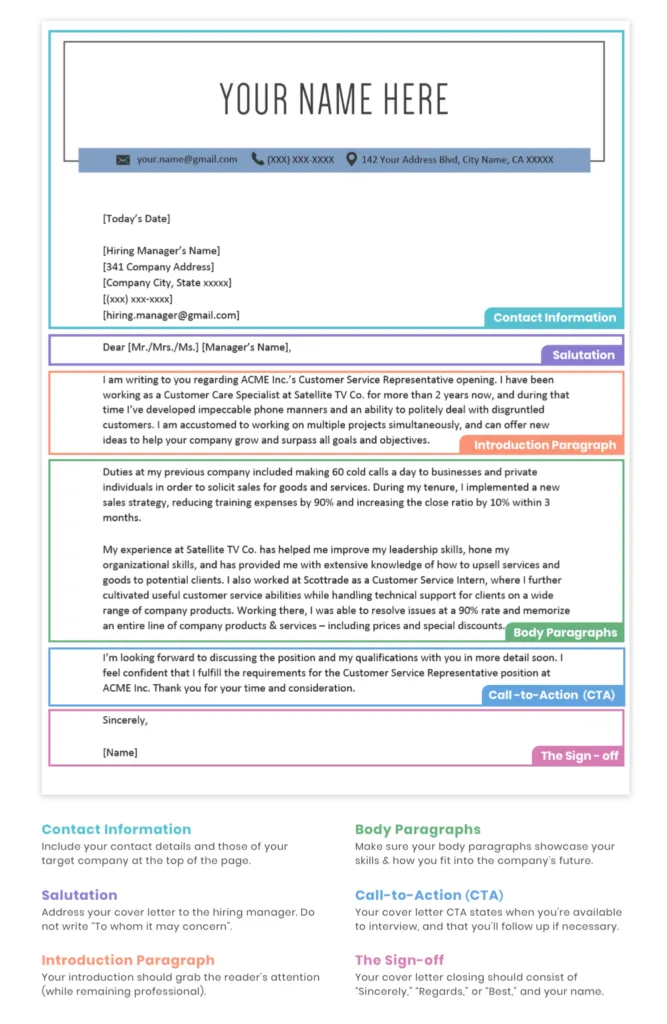
A successful cover letter is concise, compelling, and tailored to the specific job you are applying for. It should clearly articulate your skills, experience, and enthusiasm for the role. A well-structured cover letter follows a logical format, making it easy for the hiring manager to quickly grasp your qualifications and understand why you are a good fit for the position. The best cover letters show, rather than tell, by providing specific examples and quantifiable achievements. These examples demonstrate the impact you have made in previous roles and highlight your ability to perform the duties of the job.
Header and Contact Information
Begin your cover letter with a professional header that includes your full name, address, phone number, and email address. This information should be clearly formatted and easy to read. Include the date and the hiring manager’s name and title, if known, and the company’s name and address. If you’re submitting an electronic cover letter, ensure that your contact information is accurate and up-to-date. The header sets the stage for the rest of your letter and provides the necessary information for the employer to contact you. Be sure to use a professional email address, as this is a key factor in making a great impression. A professional header is a simple yet essential element of an effective cover letter.
The Salutation
The salutation is your first interaction with the hiring manager, so it’s important to make a good impression. If you know the hiring manager’s name, use a formal greeting like “Dear Mr./Ms./Mx. Last Name.” If you’re unsure of the name, use a general salutation like “Dear Hiring Manager” or “Dear [Company Name] Team.” Avoid generic greetings like “To Whom It May Concern,” which can come across as impersonal. Research the company website, LinkedIn, or the job posting to find the hiring manager’s name. A personalized salutation shows that you’ve taken the time to learn about the company and the position. Always ensure the salutation matches the tone and formality of the job and company.
The Opening Paragraph

Your opening paragraph should immediately grab the reader’s attention and state the purpose of your letter. Briefly mention the position you are applying for and where you saw the job posting. Highlight your enthusiasm for the role and the company. Use a strong opening sentence to capture the hiring manager’s interest and set the tone for the rest of your letter. Focus on what you can offer the company and why you are the best fit for the role. Avoid generic statements and instead show genuine interest in the specific opportunity. Make sure your opening paragraph is clear, concise, and compelling.
Highlighting Your Skills and Experience
This is the core of your cover letter, where you demonstrate how your skills and experience align with the job requirements. Use specific examples to showcase your accomplishments and illustrate how you’ve successfully performed similar tasks in the past. Select key skills and experiences that are most relevant to the position. Refer to the job description and tailor your examples to match the requirements. Use action verbs to describe your accomplishments and quantify your achievements whenever possible. Focus on the positive impact you made in previous roles and highlight the results you achieved. Demonstrate that you have the necessary skills and experience to excel in the position.
Quantify Your Achievements
Whenever possible, quantify your achievements to demonstrate the impact you have made in previous roles. Use numbers, percentages, and specific metrics to provide tangible evidence of your accomplishments. For example, instead of saying “Improved customer satisfaction,” say “Increased customer satisfaction by 15% through implementation of a new customer service strategy.” Quantifying your achievements helps the hiring manager understand the value you brought to your previous employers. It adds credibility to your claims and helps you stand out from other applicants. It provides a clear and concise picture of your capabilities and the positive results you can deliver.
Tailoring Your Cover Letter to the Job

A generic cover letter is unlikely to impress a hiring manager. Tailor your cover letter to each specific job you apply for. Carefully review the job description and identify the key skills, experiences, and qualifications the employer is seeking. Use the job description as a guide to highlight your most relevant skills and experiences. Personalize your letter by mentioning the company’s values, mission, or recent projects. Show that you understand the company’s needs and how you can contribute to their success. Tailoring your cover letter demonstrates that you’ve taken the time to research the company and the role, and that you genuinely want the job.
Expressing Enthusiasm and Showing Personality
Your cover letter is a chance to let your personality shine through and show your genuine enthusiasm for the role and the company. Use a confident and professional tone throughout your letter. Share your passion for the industry or the specific type of work. Show the hiring manager that you are excited about the opportunity and eager to contribute to the company’s success. Avoid sounding overly formal or robotic. Inject a bit of your personality to make your letter more memorable. Your enthusiasm can set you apart from other candidates and make you seem more approachable and likeable.
The Closing Paragraph and Call to Action
In your closing paragraph, restate your interest in the position and thank the hiring manager for their time and consideration. Reiterate your key qualifications and express your eagerness to discuss your application further in an interview. Include a call to action, such as stating that you look forward to hearing from them soon. End with a professional closing like “Sincerely” or “Best regards,” followed by your full name. The closing paragraph leaves a lasting impression and reinforces your desire for the job. Make sure your closing is professional and memorable.
Proofreading and Formatting

Before submitting your cover letter, carefully proofread it for any errors in grammar, spelling, and punctuation. Ensure that the formatting is clean and consistent throughout. Use a professional font and appropriate margins. Check the letter’s overall appearance and make sure it’s easy to read. Have a friend or family member proofread your letter as well. A polished and error-free cover letter demonstrates attention to detail and professionalism. Typos and grammatical errors can give the impression that you are careless or inattentive to detail, which can damage your chances of getting an interview. Take the time to proofread your cover letter carefully and ensure that it is flawless.
Common Mistakes to Avoid
Avoid common mistakes that can undermine your cover letter. Do not use generic or template language, as this makes your letter seem impersonal. Don’t simply repeat your resume; instead, provide additional details and context. Do not include irrelevant information or overly personal details. Avoid grammatical errors and typos. Do not exceed one page in length. Avoid a negative tone or complaining about previous employers. By avoiding these common mistakes, you can create a cover letter that showcases your strengths and significantly increases your chances of landing an interview. Remember that a well-written cover letter is an investment in your career.
In conclusion, a well-crafted cover letter is essential for making a strong first impression and increasing your chances of landing your dream job. By understanding its purpose, key components, and avoiding common mistakes, you can create a cover letter that showcases your skills and experience, expresses your enthusiasm, and sets you apart from the competition. Remember to always tailor your cover letter to the specific job and company and proofread it carefully before submitting it. With a compelling cover letter, you’ll be well on your way to advancing your career and achieving your professional goals. Good luck!