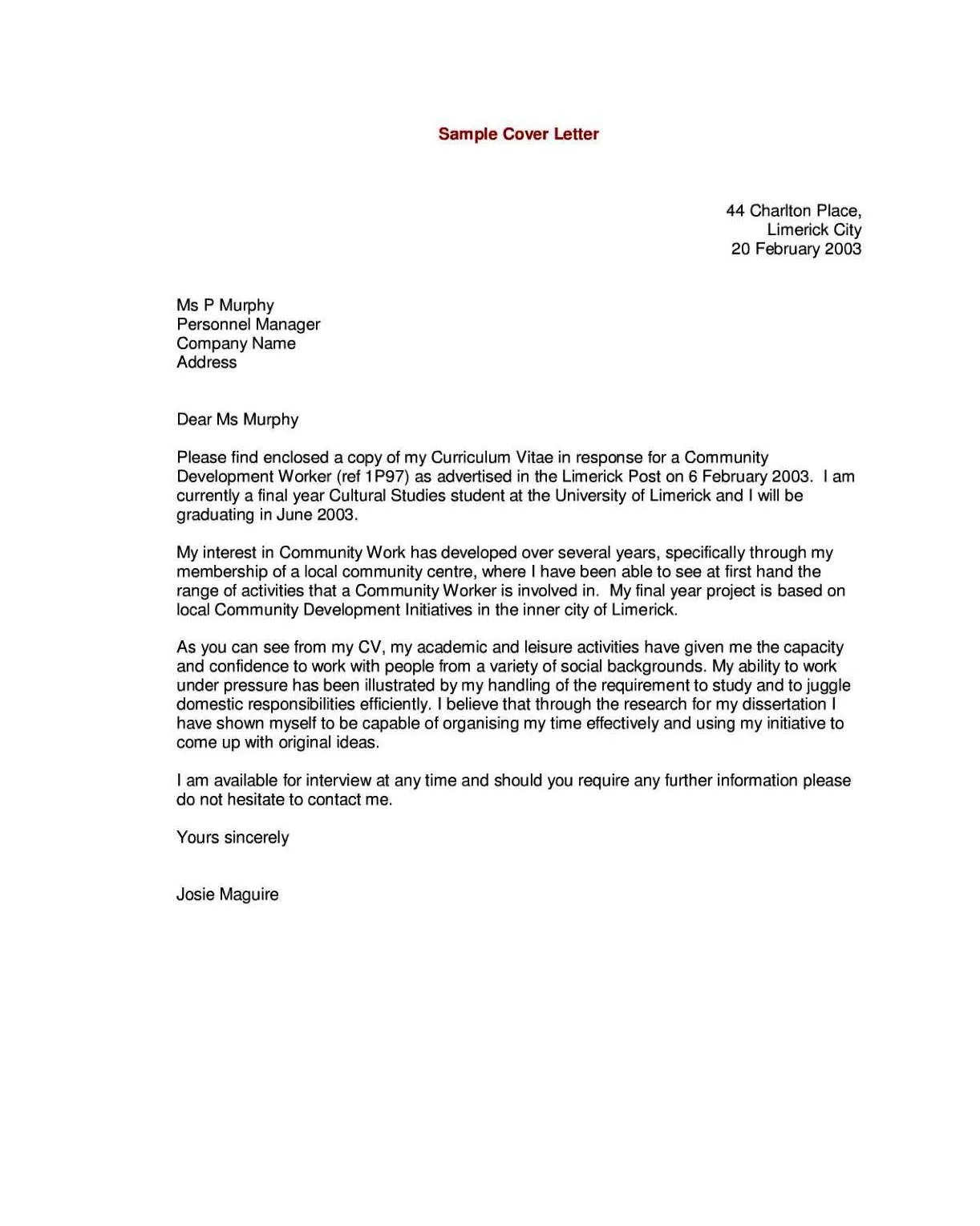
Why a Cover Letter Matters
In the competitive world of job applications, a cover letter serves as your personal introduction, offering a crucial opportunity to make a strong first impression. Many applicants underestimate the significance of a well-crafted cover letter, mistakenly believing that their resume alone is sufficient. However, a cover letter allows you to go beyond the confines of your resume, providing context and demonstrating your unique value proposition. It is your chance to connect with the hiring manager on a personal level, showcasing your personality, passion, and genuine interest in the role and the company. A compelling cover letter can significantly increase your chances of landing an interview, setting you apart from other candidates and highlighting your suitability for the position. Neglecting this vital component can mean missing the chance to highlight your most relevant skills and experiences. A cover letter is your chance to make a memorable impression and significantly boost your application.
Your Cover Letter’s Purpose
The primary purpose of a cover letter is to introduce yourself, express your interest in a specific job, and persuade the hiring manager that you are a strong fit for the role and the company. Think of it as your personal sales pitch, where you highlight your most relevant skills, experiences, and accomplishments. A well-written cover letter goes beyond merely reiterating the information in your resume; it provides a narrative that connects your qualifications with the specific requirements of the job. It should demonstrate your understanding of the company’s needs and show how you can contribute to their success. Furthermore, a cover letter allows you to showcase your communication skills, writing abilities, and attention to detail. It is your chance to present yourself as a proactive, enthusiastic, and well-prepared candidate who is eager to take on the challenges of the position. The aim is to secure an interview by providing a compelling reason for the hiring manager to learn more about you.
How to Research the Company

Before you start writing your cover letter, thorough research on the company is essential. This research allows you to tailor your letter to the specific needs and values of the organization, demonstrating your genuine interest. Begin by visiting the company’s website, exploring their mission statement, values, and recent news. Look for information on their current projects, industry position, and culture. Use platforms like LinkedIn to learn about the company’s employees, their roles, and their experiences. Understanding the company’s goals and challenges will enable you to articulate how your skills and experience align with their needs. Identify the specific keywords and phrases used in the job description and integrate them into your cover letter where appropriate. Personalize your letter by mentioning specific initiatives or values that resonate with you. Demonstrating that you have invested time in understanding the company will make a strong impression on the hiring manager.
Key Elements of a Winning Cover Letter
A winning cover letter typically includes several key elements that work together to make a strong impression. These include a well-formatted header, a compelling opening, a concise body that highlights relevant skills and accomplishments, and a professional closing with a clear call to action. The header should include your contact information, the date, and the hiring manager’s name and title if available. The opening should immediately capture the reader’s attention and state your purpose for writing. The body should provide specific examples that showcase your qualifications and demonstrate how you meet the job requirements. The closing should reiterate your interest and include a call to action, such as requesting an interview. Each element plays a crucial role in making your cover letter stand out. Attention to detail, clear communication, and a focus on the employer’s needs are the cornerstones of a winning cover letter, leading to a compelling and memorable document.
Your Header
The header of your cover letter is the first thing a hiring manager sees, so it should be accurate and professional. Include your full name, address, phone number, and email address at the top. Make sure your email address is professional, using your name or a variation of it, rather than a nickname. Below your contact information, include the date. After the date, add the hiring manager’s name and title, if known, and the company’s address. If you are unsure of the hiring manager’s name, use a general title like ‘Hiring Manager’. Proper formatting and attention to detail in the header set a professional tone and ensure that the hiring manager can easily contact you.
Your Opening

The opening of your cover letter is crucial, as it sets the tone and captures the reader’s attention. Avoid generic openings such as ‘Dear Sir/Madam’ or ‘To Whom It May Concern’. Instead, try to address the hiring manager by name; this demonstrates that you have done your research and are genuinely interested in the role. In your opening paragraph, clearly state the position you are applying for and where you saw the job posting. Briefly mention why you are interested in the company and the role. The goal is to immediately grab the reader’s interest and make them want to continue reading. Expressing enthusiasm and showcasing your understanding of the company’s needs and your ability to meet them helps create an excellent first impression.
Creating an Impactful Opening
To create an impactful opening, aim to capture the hiring manager’s attention from the start. One effective technique is to highlight a relevant achievement or skill that directly aligns with the job requirements. For example, you can begin by stating, ‘With five years of experience in project management and a proven track record of delivering projects under budget, I am excited to apply for the Project Manager position at [Company Name]’. Another approach is to express your admiration for the company and its mission. This demonstrates your genuine interest and research. Avoid clichés and generic statements; instead, be specific and concise. Mentioning a company initiative or recent success shows that you have done your homework. Make sure your opening clearly states the position you are applying for and your enthusiasm for the opportunity. The opening paragraph sets the stage for the rest of your letter.
Highlighting Relevant Skills
In the body of your cover letter, highlight your skills and experiences that directly relate to the job requirements. Carefully review the job description and identify the key skills and qualifications the employer is seeking. Use specific examples to demonstrate how you have used these skills in past roles. Don’t just list your skills; provide context by describing the situations in which you used them and the results you achieved. For example, instead of saying ‘I have strong communication skills’, you could write ‘In my previous role, I successfully led a team of 10 through a challenging project, communicating effectively to ensure all deadlines were met’. Back up your claims with quantifiable achievements whenever possible. This approach makes your cover letter more compelling and showcases your value as a candidate.
Showcase Your Accomplishments

Showcasing your accomplishments is a crucial part of a winning cover letter. Instead of just listing your responsibilities, focus on the specific achievements that demonstrate your value and ability to perform the job. Quantify your achievements whenever possible, providing measurable results that highlight your impact. For example, instead of saying ‘I improved customer satisfaction’, you could say ‘I increased customer satisfaction scores by 15% within six months through implementing a new support strategy’. Use the STAR method (Situation, Task, Action, Result) to structure your examples and provide clear, concise narratives. By focusing on what you have accomplished and how you have positively impacted previous employers, you will make a strong case for why you are the best candidate for the job. Highlighting your accomplishments is critical for making your cover letter memorable and effective.
Quantify Your Achievements
Quantifying your achievements makes your cover letter more compelling and provides concrete evidence of your value. Use numbers and metrics to illustrate your impact and make your claims more credible. For example, instead of saying ‘I managed a team’, you could write ‘I managed a team of 20 employees, resulting in a 10% increase in productivity’. Providing specific figures and percentages makes your accomplishments more tangible and helps the hiring manager understand the results you have achieved. Include metrics such as revenue generated, costs saved, projects completed on time and under budget, and customer satisfaction scores. Quantifying your achievements not only demonstrates your capabilities but also shows that you pay attention to detail and can deliver tangible results. This approach sets you apart from other candidates and increases your chances of getting an interview.
Tailoring the Cover Letter to the Job
Tailoring your cover letter to each specific job is essential for showing that you are a good fit and that you have taken the time to understand the role and the company. Generic cover letters are easy to spot and often disregarded. Customize your letter by carefully reviewing the job description and identifying the specific skills, experiences, and qualifications the employer is seeking. Highlight the experiences and skills in your background that align with the job requirements. Mention how your skills and experience can directly contribute to the company’s goals and challenges. Research the company and demonstrate your understanding of their mission, values, and culture. Using keywords from the job description throughout your cover letter shows you have read and understood the requirements. Showing that you are not just sending out a general application, but have taken the time to understand the role, greatly increases your chances of landing an interview.
Address Specific Job Requirements

When tailoring your cover letter, address the specific requirements listed in the job description. Identify the key skills, experiences, and qualifications the employer is looking for and provide examples that demonstrate how you meet those requirements. If the job description emphasizes project management skills, provide specific examples of projects you have successfully managed, highlighting your experience with planning, execution, and delivery. If the role requires specific software proficiency, mention your experience with the relevant tools and how you have used them in the past. Refer to the job description throughout your cover letter to show that you are directly addressing the employer’s needs. Ensure that you highlight your abilities and achievements that align with the required qualifications. This focused approach increases your chances of making a compelling case for why you are the right candidate.
Closing Your Cover Letter
The closing of your cover letter is your final chance to leave a lasting impression. Keep it concise and professional. Reiterate your interest in the position and express your enthusiasm for the opportunity. Thank the hiring manager for their time and consideration. Include a clear call to action, such as ‘I would welcome the opportunity to discuss my qualifications further in an interview’ or ‘I am available for an interview at your earliest convenience’. Make sure your closing is polite and positive, leaving the hiring manager with a favorable impression. Review your entire letter to ensure it aligns with the job requirements, and then proofread carefully before sending. The closing should summarize the essence of your interest in the role.
Call to Action
Including a call to action in your closing is a vital step in encouraging the hiring manager to take the next step. A well-crafted call to action encourages the reader to take action, such as scheduling an interview or contacting you for more information. Make sure your call to action is clear, concise, and specific. For example, you could say, ‘I am available for an interview at your earliest convenience and can be reached at [phone number] or [email address]’. Or, you could say, ‘I have attached my resume for your review and would be delighted to discuss how my skills and experience align with the needs of your team’. Avoid vague statements such as ‘I look forward to hearing from you’. Instead, prompt the hiring manager to take the next step. A strong call to action makes your cover letter more effective and increases your chances of getting an interview.
Proofreading and Editing

Proofreading and editing your cover letter is essential to ensure that it is free of errors and presents you in the best possible light. Typos, grammatical errors, and inconsistencies can undermine your credibility and make a negative impression. Before submitting your cover letter, carefully review every word for accuracy. Read it aloud to catch any awkward phrasing or sentences that don’t flow smoothly. Use spell check and grammar check tools, but don’t rely on them entirely; always proofread manually. Ask a friend, family member, or career advisor to review your cover letter and provide feedback. Consider checking for formatting issues and ensure that your contact information is accurate. Ensure your cover letter is polished and professional to increase your chances of success.
Cover Letter Examples to Inspire You
Reviewing examples of successful cover letters can give you inspiration and guidance when writing your own. Search online for cover letter samples, and pay attention to their structure, tone, and content. Notice how the writers introduce themselves, highlight their relevant skills, and address the specific needs of the employer. Look for examples that are tailored to different industries and job types. While you should not copy these samples directly, they can provide a framework and help you develop your own unique approach. Analyze how the writers showcase their accomplishments, quantify their achievements, and use a clear call to action. Use the examples as a guide to help you tailor your cover letter. Finding an example that matches your needs can greatly improve your writing style and formatting and help you succeed. Remember, the more you expose yourself to a wide range of cover letter formats, the better equipped you will be.