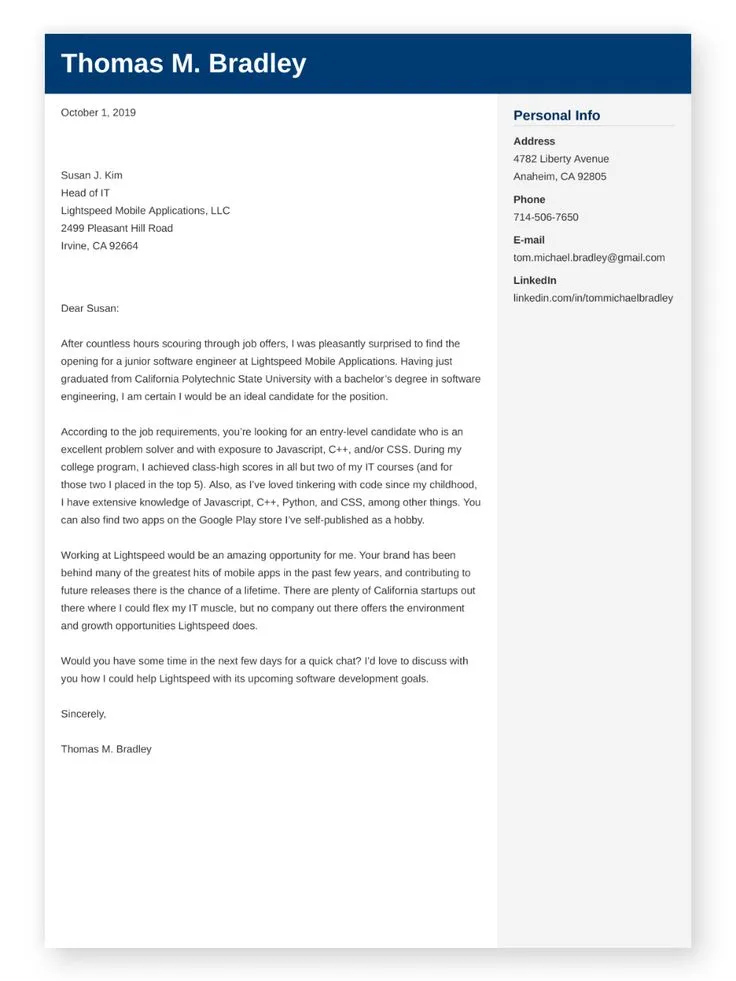
Crafting a Winning Cover Letter
A cover letter is your first impression. It’s your chance to grab a hiring manager’s attention and convince them to read your resume. Unlike your resume, which provides a factual overview of your experience, your cover letter allows you to tell a story, demonstrate your personality, and highlight why you’re the perfect fit for the job. This guide provides actionable examples on how to write a cover letter that not only gets read but also lands you an interview. Learning how to write a cover letter can significantly increase your chances of getting noticed by employers. Understanding its purpose and how to create a compelling narrative is key to success in the job market.
Understanding the Purpose of a Cover Letter
Why Cover Letters Matter

Cover letters serve several critical purposes in the job application process. They provide context for your resume, allowing you to expand on your experiences and explain how your skills align with the job requirements. They showcase your communication skills, demonstrating your ability to write clearly and persuasively. They also allow you to express your enthusiasm for the role and the company, setting you apart from other applicants. Many employers use cover letters as a screening tool, quickly assessing whether a candidate is a good fit. A well-crafted cover letter can significantly increase your chances of getting an interview. It shows that you’ve taken the time to understand the job and are genuinely interested in the opportunity. Without a strong cover letter, your resume might not even make it to the interview stage.
What to Include in a Cover Letter
A cover letter should be concise, focused, and tailored to the specific job you’re applying for. It should include essential elements that highlight your qualifications and express your interest in the role. The structure should be logical and easy to follow, making it simple for the hiring manager to grasp your key strengths and motivations. Avoid generic templates; each cover letter should be unique and customized to match the job description and the company’s values. By carefully selecting and presenting your experiences, you significantly increase your chances of making a positive impression and securing an interview. Remember, a strong cover letter goes beyond simply repeating what’s in your resume.
Personal Information and Contact Details
Start with your name, address, phone number, and email address. Include the date and the hiring manager’s name and title, if known. This ensures that the recipient knows who the letter is from and how to contact you. Proper formatting and accurate contact information are crucial to make sure your application is taken seriously. Proofread everything carefully to avoid any typos or errors that could undermine your credibility. If you are applying through an online portal, ensure the information matches the details provided there.
The Introduction Hook

The introduction is your first opportunity to grab the reader’s attention. Start with a strong opening sentence that immediately states why you’re writing and what position you are applying for. Briefly mention something that piqued your interest in the company or the role. Avoid generic phrases like “I am writing to express my interest.” Instead, try something more engaging, such as “I am excited to apply for the Marketing Manager position, as I believe my experience aligns perfectly with your company’s innovative approach to digital marketing.” This shows that you’ve done your research and are genuinely interested in the company. A good hook can be the difference between your application being read and being overlooked. A tailored introduction is key to capturing the reader’s interest and setting the tone for the rest of your letter.
Highlighting Your Skills and Experiences
The body of your cover letter is where you demonstrate why you’re the ideal candidate. Select 2-3 key skills and experiences that align with the job description. Provide specific examples of how you’ve used these skills to achieve results in previous roles. Use the STAR method (Situation, Task, Action, Result) to structure your examples. Describe the situation, the task you were assigned, the actions you took, and the results you achieved. This provides concrete evidence of your capabilities. Tailor your examples to the specific requirements of the job, showing that you’ve carefully considered what the employer is looking for. Avoid simply listing your responsibilities; instead, focus on your accomplishments and the impact you made in your previous roles. The goal is to show, not just tell, the hiring manager what you can do.
Tailoring Your Letter to the Job
Always tailor your cover letter to each job application. This shows that you’ve taken the time to understand the specific requirements and are genuinely interested in the role. Carefully review the job description and identify the key skills and qualifications the employer is seeking. Customize your letter to address these requirements directly. Use the same keywords and phrases that appear in the job description to demonstrate that you understand the role and have the necessary skills. This is one of the most critical steps in writing a successful cover letter, as it demonstrates that you’re not just sending out a generic application. Customization shows that you’ve taken the initiative to understand what the company values and that you are the perfect fit.
Using Keywords Effectively

Incorporate relevant keywords from the job description naturally throughout your cover letter. This helps your application get past applicant tracking systems (ATS) and demonstrates to the hiring manager that you possess the necessary skills and qualifications. However, avoid keyword stuffing, which can make your letter sound unnatural and robotic. Instead, weave the keywords seamlessly into your sentences. For example, if the job description mentions “project management” and “leadership,” use these terms when describing your experience. Show, rather than tell, how you’ve used these skills. This approach will help your application get noticed while ensuring your cover letter remains readable and engaging. Focus on a few key skills and use the corresponding keywords to reinforce your qualifications effectively.
Showcasing Achievements
Focus on your accomplishments rather than simply listing your responsibilities. Highlight specific achievements that demonstrate your skills and the value you can bring to the company. Use quantifiable results whenever possible to make your achievements more impactful. Instead of saying “Managed social media accounts,” say “Increased social media engagement by 30% in six months.” Showing achievements provides concrete evidence of your capabilities and demonstrates the positive impact you’ve had in previous roles. This type of evidence makes your cover letter more compelling and memorable. By showcasing your successes, you will provide the hiring manager with concrete examples of your skills, making your application stand out.
Quantifying Your Accomplishments
Quantifying your accomplishments adds credibility and impact to your cover letter. Whenever possible, use numbers, percentages, and data to illustrate your achievements. For example, instead of saying “Improved sales,” say “Increased sales by 15% in Q4.” This provides concrete evidence of your contributions and makes it easier for the hiring manager to understand the value you can bring to the role. Using numbers also demonstrates your ability to measure and analyze results. Include metrics like the number of projects completed, the amount of money saved, or the percentage of improvement in a specific area. The inclusion of numbers highlights your achievements, showing the hiring manager the extent of your achievements and their relevance to the job. Quantifiable achievements allow the hiring manager to quickly assess your value and the potential impact you will have on their team.
The Closing and Call to Action

Your closing should reiterate your interest in the role and express enthusiasm for the opportunity. Thank the hiring manager for their time and consideration. Include a call to action, such as “I look forward to the opportunity to discuss my qualifications further in an interview.” This prompts the hiring manager to take the next step. Make sure your closing is professional and reflects your genuine interest in the company. Proofread it carefully to ensure it is error-free and consistent with the rest of the letter. A strong closing leaves a lasting positive impression, and motivates the hiring manager to move forward with your application. Including a clear call to action ensures that the reader knows what you want them to do next, increasing your chances of an interview.
Expressing Enthusiasm
Convey your enthusiasm for the role and the company throughout your cover letter. Let the hiring manager know why you’re excited about the opportunity and how your skills align with the company’s mission and values. Avoid generic phrases and instead express your genuine interest in a sincere way. For example, you could mention a specific project you are excited about or an aspect of the company that resonates with you. This genuine interest is contagious, and it makes your application more memorable and personal. The key is to demonstrate that you’ve taken the time to research the company and are genuinely interested in contributing to its success. Your passion for the opportunity will shine through in the cover letter.
Proofreading and Formatting
Before submitting your cover letter, carefully proofread it for any typos, grammatical errors, and inconsistencies. Errors can create a negative impression and undermine your credibility. Ask a friend or family member to review your letter as a fresh pair of eyes can often catch mistakes that you might miss. Check the formatting to ensure it is consistent and professional. Ensure the font is readable, the spacing is correct, and the letter is easy to follow. A well-formatted and error-free cover letter demonstrates attention to detail. Proofreading and good formatting indicate that you’re serious about the opportunity and that you care about presenting yourself in the best possible light. A polished cover letter demonstrates professionalism, which is critical for making a strong first impression.
Ensuring Clarity and Conciseness

Keep your cover letter concise and to the point. Hiring managers are busy and may not have a lot of time to read lengthy documents. Aim for a letter that is no more than one page in length. Use clear and simple language, avoiding jargon or overly complex sentences. Ensure that your key points are easy to understand. Break up long paragraphs into shorter ones to improve readability. The goal is to communicate your qualifications effectively and efficiently. Clarity and conciseness demonstrate your ability to communicate clearly and concisely, which is a valuable skill in most professional settings. A well-written and succinct cover letter is more likely to be read and appreciated by the hiring manager.
Formatting Guidelines
Follow standard formatting guidelines to ensure your cover letter looks professional. Use a readable font like Arial or Times New Roman. Maintain consistent font size and spacing. Use one-inch margins on all sides of the page. Use left alignment for the text, with a justified alignment only on the right. Include a header with your contact information and the date, as well as the recipient’s contact information. Make sure the letter is well-organized with clear sections and headings. Consistency in formatting makes your cover letter easier to read and more visually appealing. Correct formatting demonstrates that you’re professional and pays attention to detail, contributing to a positive impression.
Common Cover Letter Mistakes to Avoid
Avoiding common mistakes can significantly increase your chances of landing an interview. Make sure to carefully review and revise your cover letter to eliminate any errors that could hurt your chances. By paying attention to detail and avoiding these pitfalls, you’ll present yourself in the best possible light and increase the likelihood of getting noticed by employers. Addressing these common pitfalls is crucial to ensure that your cover letter helps you stand out, rather than hindering your chances. Make sure to always proofread and ensure your cover letter demonstrates professionalism.
Generic and Vague Content

Avoid using generic and vague statements that could apply to any job or candidate. Instead, tailor your letter to the specific job requirements and the company’s needs. Provide concrete examples of your skills and accomplishments. Avoid phrases like “I am a team player” or “I am a hard worker” without providing supporting evidence. Instead, demonstrate these qualities with specific examples. This approach will make your cover letter more compelling and memorable. Generic content shows a lack of effort and customization, while specific details show that you’ve taken the time to understand the job. Specific examples make your claims more credible and show that you can back up your words.
Typos and Grammatical Errors
Typos and grammatical errors can undermine your credibility and make you appear unprofessional. Always proofread your cover letter carefully before submitting it. Use a spell checker and grammar checker, but also read the letter yourself to catch any errors that these tools might miss. Ask a friend or family member to review your letter as well. Errors in your cover letter can give the impression that you do not pay attention to detail. A well-proofread cover letter shows your attention to detail and your professionalism. Careful proofreading ensures that your message is clear and professional.
Lengthy and Unfocused Letters
Keep your cover letter concise and to the point. Aim for a letter that is no more than one page in length. Avoid including irrelevant information or going into excessive detail. Focus on the key skills and experiences that are most relevant to the job. Make sure that your letter has a clear purpose and that everything you include contributes to that purpose. A long and unfocused letter can lose the reader’s attention. Brevity and focus show that you value the hiring manager’s time and that you can communicate clearly and concisely. This is a sign of professionalism. By being clear and concise, you ensure that the hiring manager can quickly understand why you are the best candidate for the job.
Example Cover Letters

Reviewing example cover letters can provide valuable insights into how to structure and write an effective cover letter. Study different examples to get ideas on formatting, language, and how to highlight your qualifications. Adapt these examples to your own experience and the specific jobs you’re applying for. Pay attention to how the writers tailor their letters to the job description and express their enthusiasm for the role. These examples can help you refine your writing and create a more compelling application. Use the example cover letters as a guide to see how other candidates successfully present themselves and their skills. Adjust these examples to match your experiences and qualifications.
Cover Letter for Entry-Level Position
For entry-level positions, highlight any relevant coursework, internships, volunteer work, or extracurricular activities. Emphasize your enthusiasm for the field and your willingness to learn. Showcase any transferable skills you possess, such as communication, teamwork, or problem-solving. Focus on your accomplishments and experiences, even if they are not directly related to the job. Make sure to demonstrate your commitment to the field and your ability to contribute to the company’s goals. A strong entry-level cover letter will demonstrate your potential and make a positive impression. Make sure you demonstrate a willingness to learn, your eagerness to contribute, and the skills you possess that align with the job description. Use this as a chance to highlight all experiences that can support your application.
Cover Letter for Experienced Professionals
Experienced professionals should focus on their accomplishments and the value they brought to their previous roles. Use quantifiable results to demonstrate the impact you’ve made. Tailor your letter to the specific requirements of the job and highlight the skills and experiences that align with those requirements. Show how your previous experience has prepared you for the new role. Use a professional tone and showcase your expertise in the field. By showing specific examples, you demonstrate how you will bring value to the new company. Tailor your letter to highlight the most relevant skills and experiences. Use numbers and quantifiable results to demonstrate the value you offer and that you can contribute from day one.
Cover Letter for Career Change
If you are changing careers, highlight your transferable skills and explain why you are interested in the new field. Frame your past experiences to show their relevance to the new role. Demonstrate your enthusiasm for the career change and your commitment to learning and growth. Address any potential gaps in your experience and explain how you plan to overcome them. Customize the letter to the specific requirements of the job and show how your transferable skills can benefit the company. Focus on your skills that align with the new role, and emphasize the steps you are taking to acquire the necessary skills. A well-written cover letter can help you make a successful career transition and land the new job. Show why you have made this switch, what you are bringing and your potential for success.