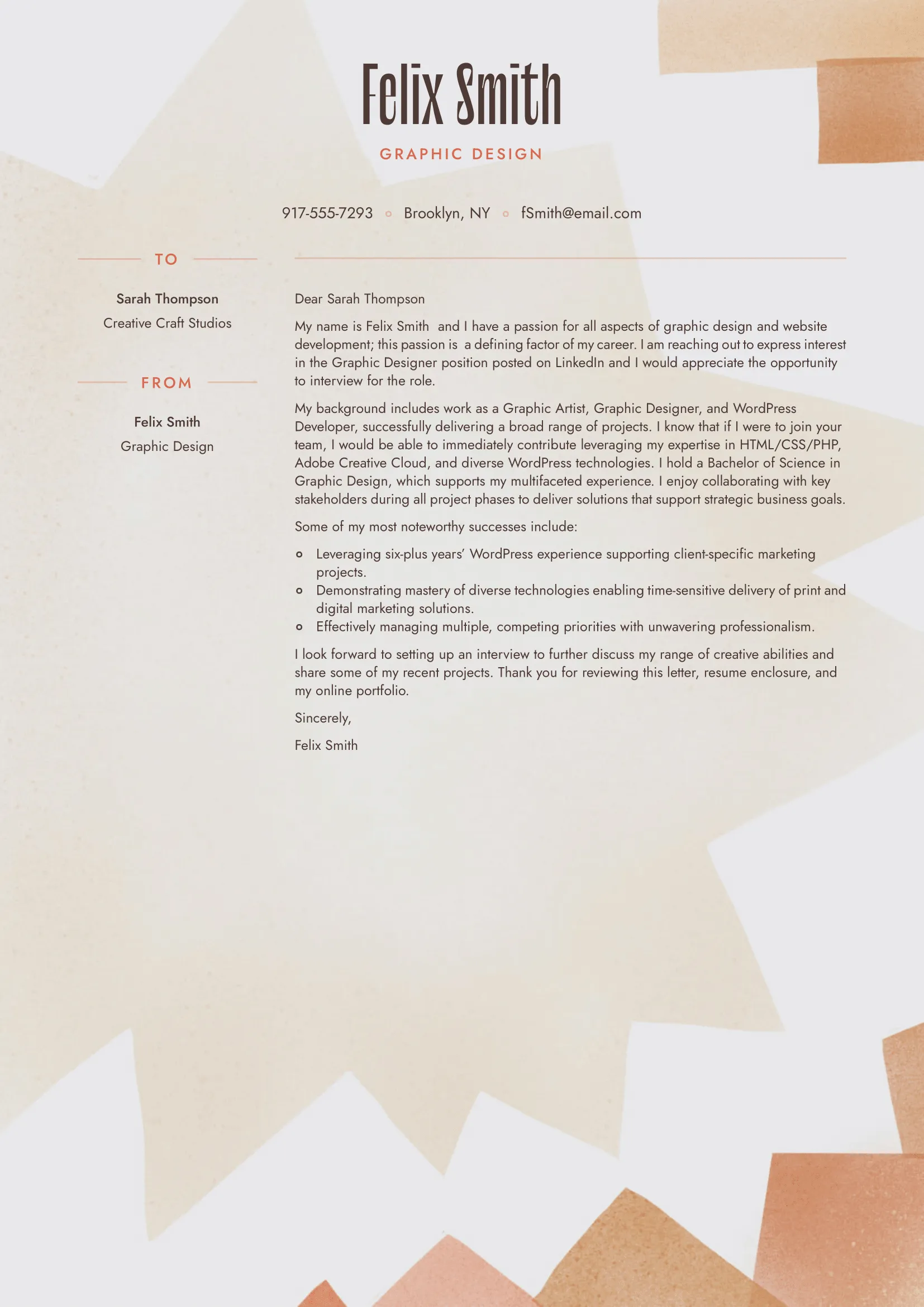
Understanding the Importance of a Graphic Design Cover Letter
In the competitive field of graphic design, a well-crafted cover letter is more than just a formality; it’s your first chance to make a lasting impression. It serves as your introduction, allowing you to go beyond the bullet points of your resume and connect with potential employers on a more personal level. A strong cover letter demonstrates your communication skills, showcases your personality, and highlights why you are the perfect fit for the role and the company. Think of it as your chance to shine, to prove that you have the creativity, passion, and skills to succeed in the world of graphic design. Therefore, take your time, put your best foot forward, and prepare a cover letter that captivates and inspires.
Why is a Cover Letter Crucial for Graphic Designers?
Unlike other professions, graphic design is a visual field. Your cover letter is where you can explain your design choices, showcase your understanding of design principles, and articulate your creative vision. It’s where you can paint a picture of how your skills and experience align with the specific needs of the company. Many job seekers, especially those new to the field, tend to neglect this important aspect of a job application and focus solely on their resume. A well-crafted cover letter offers you the opportunity to stand out from a pool of potential candidates and help you demonstrate your passion for the field.
How a Cover Letter Showcases Your Skills and Personality

Your cover letter is the place where you can inject personality into your application. While your resume lists your skills and experience, the cover letter allows you to showcase your unique voice, enthusiasm, and creative thinking. Use this chance to give a taste of what makes you different, and connect with the hiring manager on a personal level. Talk about your inspiration, your creative process, and what drives your passion for graphic design. It’s where you can highlight projects from your portfolio and show off your enthusiasm for design projects. This is also your chance to subtly demonstrate your soft skills, such as communication, problem-solving, and teamwork, that are as important as your technical expertise.
Key Elements of a Stellar Graphic Design Cover Letter
Your Contact Information and the Date
Start with your contact information. Include your name, phone number, email address, and (optionally) your LinkedIn profile URL. Place the date below your contact information. Make sure this is correctly formatted and easy to find. Avoid using overly creative fonts or layouts for this section; professionalism is key. This ensures the hiring manager can easily reach you for an interview and verify the application date.
Addressing the Hiring Manager

Always address the hiring manager by name whenever possible. Research the company to find the hiring manager’s name, this shows initiative and attention to detail. If you can’t find a specific name, use a professional greeting like “Dear Hiring Manager” or “Dear [Company Name] Team.” Avoid generic greetings like “To Whom It May Concern,” as they make your letter feel impersonal. Addressing the hiring manager by name instantly shows you’ve taken the time to personalize your application, and you are interested in the position.
Crafting a Compelling Opening Paragraph
Your opening paragraph is your hook – it needs to grab the reader’s attention immediately. Start with a strong statement about your passion for graphic design or your admiration for the company. Mention the specific position you’re applying for and how you discovered it. Briefly state why you’re interested in the role and what you can bring to the table. Avoid generic opening lines; be specific and enthusiastic. The goal is to make the hiring manager want to read more and to learn about your skills.
Highlighting Relevant Skills and Experience
In the body of your letter, provide specific examples of your skills and experience that align with the job description. Don’t just list your skills; demonstrate them. Use the STAR method (Situation, Task, Action, Result) to describe your accomplishments. Focus on projects where you used relevant design software, collaborated with a team, or solved a specific design challenge. Be specific about the results you achieved, such as increased website traffic, improved brand recognition, or successful project completion. Show the employer that you are the right candidate for the job.
Showcasing Your Design Portfolio

Your portfolio is a crucial part of your application; you must mention it prominently in your cover letter. Clearly state where the hiring manager can view your portfolio, whether it’s a link to your online portfolio, a PDF attachment, or a link to your Behance or Dribbble profile. Briefly highlight a few of your most relevant projects and what makes them stand out. Emphasize the design decisions you made, the challenges you overcame, and the results you achieved. Your portfolio is your chance to show your skills and provide visual proof of your capabilities. Use your letter to guide the employer toward your best work.
Demonstrating Your Passion and Enthusiasm
Let your passion for graphic design shine through. Show the hiring manager that you’re genuinely excited about the opportunity and the company. Express your admiration for their work, their brand, or their mission. Explain why you’re drawn to their specific role and how you can see yourself contributing to their team. Be sure to inject a little bit of personality. A genuine and enthusiastic tone will make your cover letter more memorable and help you stand out from other candidates. Use this chance to show that you are excited to work with the company.
Writing a Strong Closing Paragraph
Your closing paragraph should reiterate your interest in the role and thank the hiring manager for their time and consideration. Reiterate your desire to discuss your qualifications further in an interview. Include a call to action, such as stating that you look forward to hearing from them soon. End with a professional closing, such as “Sincerely,” “Best regards,” or “Thank you.” Proofread carefully to ensure there are no grammatical errors or typos. Make sure to proofread your application carefully before submitting it.
Formatting and Design Tips for Your Cover Letter

Choosing the Right Font and Formatting
Choose a clean, easy-to-read font, such as Arial, Helvetica, or Times New Roman. Avoid using overly stylized or decorative fonts that can distract from your message. Use a standard font size (10-12 points). Maintain consistent formatting throughout your letter, including the font, line spacing (1.15 or single-spaced), and paragraph alignment (left-aligned is generally preferred). A well-formatted cover letter is a sign of professionalism and attention to detail. Remember that your design should complement your writing; avoid anything that could make the letter hard to read.
Maintaining a Clean and Professional Layout
Keep your layout clean and uncluttered. Use clear headings and subheadings to break up large blocks of text, making your letter easy to scan. Use bullet points to highlight key skills or accomplishments. Leave sufficient white space around the text to improve readability. Your goal is to create a visually appealing and easy-to-read document. Proofread the layout for any inconsistencies. The layout shows that you have good attention to detail, and it helps the hiring manager focus on your message.
Proofreading and Editing Your Cover Letter

Proofread your cover letter multiple times to catch any typos, grammatical errors, or formatting inconsistencies. Use a grammar checker, but don’t rely on it completely. Always read the letter carefully yourself, as grammar checkers can miss certain errors. Ask a friend or mentor to review your cover letter for a fresh perspective. A polished, error-free cover letter demonstrates your attention to detail, which is essential in graphic design. Pay special attention to the formatting. The impression you leave on the hiring manager is important.
Tailoring Your Cover Letter to Specific Job Applications
Researching the Company and the Role
Before you start writing, research the company and the specific role you’re applying for. Visit their website, read their social media profiles, and study their brand guidelines. Understand their mission, values, and the type of work they produce. Analyze the job description carefully to identify the key skills, experience, and qualifications they are looking for. This research will help you tailor your cover letter to address their specific needs and demonstrate your interest in their company.
Customizing Your Letter to Match the Job Description

Don’t use a generic cover letter for every job application. Tailor your letter to each specific job by highlighting the skills and experience that align with the job description. Refer to the job description and identify the keywords and requirements. Provide specific examples of how you’ve demonstrated those skills in your previous work. Show the hiring manager that you understand their needs and that you have the qualifications to excel in the role. Make it clear you have the qualities needed to fulfill the job.
Using Keywords from the Job Posting
Incorporate keywords from the job posting into your cover letter, but do so naturally. Avoid keyword stuffing, which can make your letter sound forced and unprofessional. Use these keywords to describe your skills and experience. This helps your application get noticed by applicant tracking systems (ATS) and demonstrates to the hiring manager that you have the qualifications they are seeking. The keywords help to make your application stand out from the others.
Common Mistakes to Avoid in Your Graphic Design Cover Letter
Generic Cover Letters

Avoid sending generic cover letters that could be sent to any company. Generic cover letters show a lack of effort and interest. Customize your cover letter for each job application by researching the company, addressing the hiring manager by name, and highlighting the skills and experience that align with the job description. This is where you have a chance to show the hiring manager you are a serious candidate.
Typos and Grammatical Errors
Typos and grammatical errors can damage your credibility and make you appear unprofessional. Always proofread your cover letter carefully before submitting it. Use a grammar checker, but also read the letter yourself to catch any mistakes that the checker might miss. A polished, error-free cover letter shows that you pay attention to detail, which is essential in graphic design.
Focusing Solely on Yourself
While it’s important to highlight your skills and experience, don’t make your cover letter all about yourself. Focus on how your skills and experience can benefit the company and contribute to their goals. Show the hiring manager that you understand their needs and that you are genuinely interested in the role. Make sure to show them what you can do for the company.
Including Too Much Irrelevant Information
Keep your cover letter concise and focused. Avoid including irrelevant information that doesn’t support your candidacy for the role. Stick to the essential details about your skills, experience, and accomplishments. The hiring manager will appreciate your ability to get to the point and convey your value. Make sure to focus on what the job requires.