Understanding the Purpose of an Education Cover Letter
An education cover letter serves as your introduction to a potential employer, offering a glimpse into your qualifications and personality beyond your resume. It’s your opportunity to demonstrate your understanding of the school’s needs and articulate why you’re the ideal candidate. The cover letter allows you to showcase your passion for education, highlight relevant experiences, and explain how your skills align with the specific job requirements. It’s a crucial tool for making a positive first impression and securing an interview, playing a crucial role in your job search strategy and complementing your resume by providing context and personality. A well-crafted cover letter can significantly increase your chances of getting noticed in a competitive job market.
Key Components of a Compelling Cover Letter
Header and Contact Information

Begin your cover letter with a professional header that includes your full name, contact information (phone number, email address, and LinkedIn profile URL, if applicable), and the date. This section ensures that the hiring manager can easily reach you. Position this information at the top of the page, aligned to the left or center, maintaining a clean and organized presentation. Ensure your email address is professional and your contact details are current, accurate, and easy to read. This section sets the tone for the rest of your letter, so make sure it is clear and easily accessible.
Greeting and Salutation
Address your cover letter to a specific person whenever possible. Research the hiring manager’s name and title. Addressing the letter to “Dear Mr./Ms. [Last Name]” or “Dear [Hiring Manager Name]” adds a personal touch and demonstrates your attention to detail. If you are unable to find a specific name, you can use a general greeting such as “Dear Hiring Committee.” Avoid generic greetings like “To Whom It May Concern.” The salutation is crucial because it sets the tone of your letter. It shows that you have done your research and are genuinely interested in the position and the school or district.
Body Paragraphs
The body of your cover letter should consist of concise, well-structured paragraphs that showcase your qualifications and enthusiasm. The body paragraphs are where you highlight your skills, experiences, and passion for education. The most effective cover letters have three main body paragraphs. The first paragraph provides an overview of your interest in the position. The second paragraph goes into greater detail about your skills and experiences. The final paragraph is a concise conclusion, reiterating your interest and encouraging the hiring manager to review your resume and schedule an interview.
Highlighting Relevant Skills and Experience

Carefully review the job description and identify the key skills and experiences the employer is seeking. Use your cover letter to provide specific examples of how you’ve demonstrated these skills. These examples should be concise and relevant, directly addressing the requirements outlined in the job posting. This could include classroom management techniques, curriculum development expertise, experience with specific educational technologies, or any other relevant skills. Use action verbs to describe your accomplishments and quantify your contributions whenever possible. By focusing on how your experiences align with the job requirements, you demonstrate your understanding of the role and your potential to excel.
Quantifying Achievements and Results
Whenever possible, use quantifiable data to demonstrate your accomplishments. Instead of saying, “I improved student test scores,” say “I increased student test scores by 15% through the implementation of a new reading program.” Using specific numbers and data provides concrete evidence of your abilities and helps the hiring manager understand the impact you’ve had in previous roles. Quantifiable achievements make your qualifications more compelling and memorable. This can also include the number of students you have worked with, the number of professional development workshops you have attended, or any other data that demonstrates the impact of your contributions.
Expressing Passion for Education
Expressing your passion for education is crucial. This is an opportunity to describe why you love teaching and how your personal values align with the school’s mission. Describe what inspires you about teaching, what you enjoy about working with students, and how you believe you can contribute to a positive learning environment. Show enthusiasm for the specific school or district by mentioning something you admire about their programs, values, or community. A genuine expression of your passion will make your cover letter stand out and help the hiring manager understand why you’re the perfect fit.
Tailoring Your Letter to the Job Description

Avoid using a generic cover letter. Customize each letter to fit the specific job description. Research the school and address their specific needs. Highlight the skills and experiences most relevant to the position. Before you start writing, carefully read the job description and note the key qualifications and requirements. Use the same keywords and phrases the school uses in the job posting. By tailoring your letter, you show the hiring manager that you have taken the time to understand their needs and are genuinely interested in the specific opportunity. This makes your application much more likely to be considered.
Closing and Call to Action
In your closing paragraph, reiterate your interest in the position and express your eagerness to discuss your qualifications further. Thank the hiring manager for their time and consideration. Include a clear call to action, such as “I am eager to learn more about this opportunity and would welcome the chance to discuss my qualifications in an interview.” Provide your contact information once more. A strong closing leaves a lasting impression and encourages the hiring manager to take the next step in the hiring process. It shows that you are proactive and motivated.
Formatting and Proofreading Your Cover Letter
Choosing the Right Font and Layout

Choose a professional and easy-to-read font, such as Times New Roman, Arial, or Calibri. Use a font size between 10 and 12 points. Maintain consistent formatting throughout the document, including line spacing and margins. Use a clean and organized layout with clear headings and subheadings to make the letter easy to scan. Ensure the letter is well-structured and visually appealing. Avoid excessive use of bolding or underlining. A well-formatted cover letter is easier to read and demonstrates attention to detail.
Proofreading for Errors and Clarity
Proofread your cover letter carefully for any grammatical errors, spelling mistakes, and typos. These errors can detract from your credibility and professionalism. Use a spell checker and grammar checker, but also read the letter aloud to catch any awkward phrasing or unclear sentences. Ask a friend, family member, or career counselor to review your letter. Clear and concise writing is essential. Ensure your letter flows logically and that each paragraph serves a clear purpose. The clarity of your writing reflects your attention to detail and your ability to communicate effectively.
Formatting Your Cover Letter
A properly formatted cover letter demonstrates your professionalism and attention to detail. Use standard business letter format with single spacing within paragraphs and a double space between paragraphs. Use a left-aligned format, avoiding any justification. Keep the letter concise, ideally one page in length. Include your contact information at the top of the letter. The format helps present your application in a professional manner. A well-formatted letter ensures that your message is easy to read and highlights the key information.
Examples of Education Cover Letters

Early Childhood Education Cover Letter
An early childhood education cover letter should highlight your experience working with young children, your knowledge of child development, and your ability to create a nurturing and stimulating learning environment. Focus on specific examples of how you have fostered social, emotional, and cognitive development in young children. Highlight your skills in lesson planning, classroom management, and communication with parents. Tailor the letter to the specific needs and values of the early childhood program.
Elementary School Teacher Cover Letter
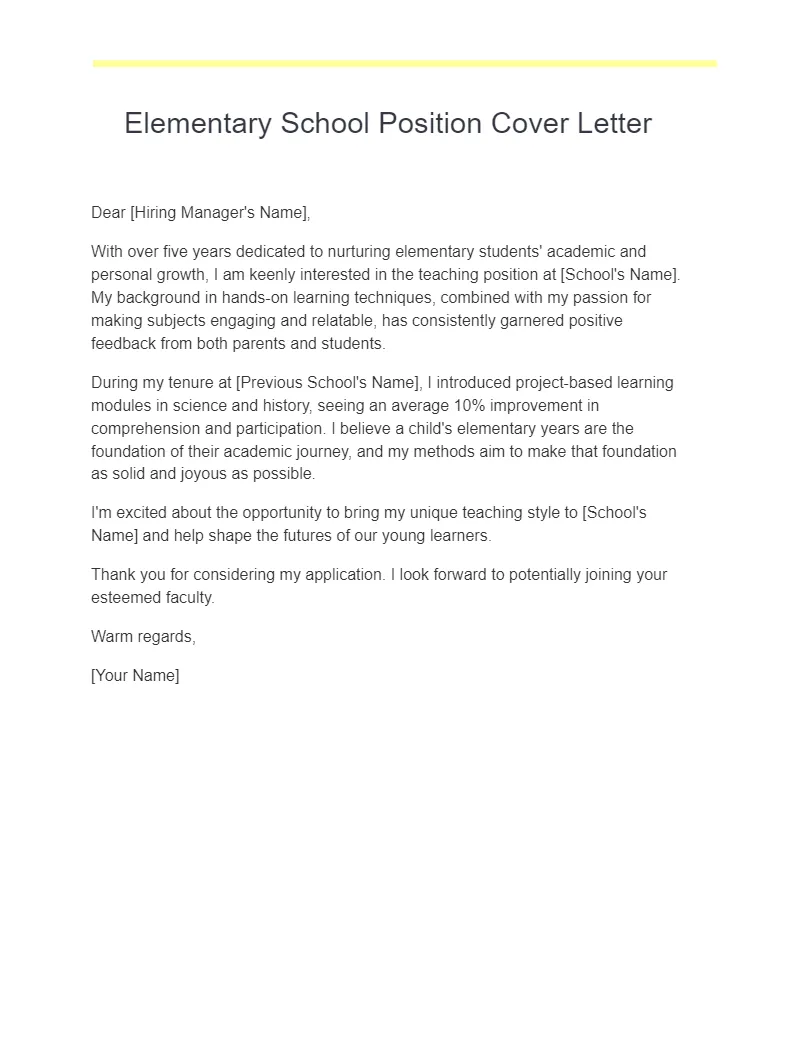
An elementary school teacher cover letter should demonstrate your ability to engage and inspire young learners, your understanding of elementary curriculum, and your experience in creating a positive classroom environment. Showcase your skills in differentiated instruction, classroom management, and assessment. Highlight any experience you have with specific teaching methodologies or technologies. Provide examples of how you have fostered a love of learning in your students. Tailor your letter to the specific grade level and school culture.
High School Teacher Cover Letter

A high school teacher cover letter should demonstrate your expertise in your subject matter, your ability to engage teenagers, and your experience in developing rigorous and engaging lessons. Highlight your skills in classroom management, assessment, and differentiation. Showcase any experience you have with advanced teaching methodologies, technology, or student mentorship. Provide examples of how you have prepared students for college, careers, and future success. Tailor your letter to the specific subject area and school’s mission.
Avoiding Common Cover Letter Mistakes
Generic Language and Lack of Personalization
Avoid using generic phrases and clichés. Replace them with specific examples and personalized details. Demonstrate that you understand the school’s mission and values by mentioning them in your letter. Avoid using a generic cover letter template without customization. Tailor the letter to each job application, mentioning the school or district’s name and specific programs or initiatives. Show your personality and enthusiasm for the position. This highlights your interest and attention to detail.
Focusing on What You Want, Not the School’s Needs

The cover letter should focus on how your skills and experiences can benefit the school and the students. Avoid making the letter all about your personal needs or desires. Instead, emphasize how you can contribute to the school’s goals and create a positive learning environment. Show how your qualifications align with the school’s needs and explain what you can bring to the table. Emphasize your understanding of the school’s mission and how you can contribute to it. This will demonstrate your value to the potential employer.
Grammatical Errors and Typos
Proofread your cover letter carefully. These errors can detract from your credibility and professionalism. Use a spell checker and grammar checker, but also read the letter aloud to catch any awkward phrasing or unclear sentences. Ask a friend, family member, or career counselor to review your letter. Make sure your writing is concise and clear. This reflects your attention to detail and professionalism.
Final Thoughts
Crafting a compelling education cover letter requires careful planning, attention to detail, and a genuine expression of your passion for teaching. By following these guidelines, you can create a cover letter that showcases your qualifications, highlights your experiences, and increases your chances of securing an interview. Take the time to tailor each letter to the specific job and school, and you will be well on your way to landing your dream teaching position. Remember that your cover letter is a key element of your job application, so make the most of this opportunity to make a positive first impression.