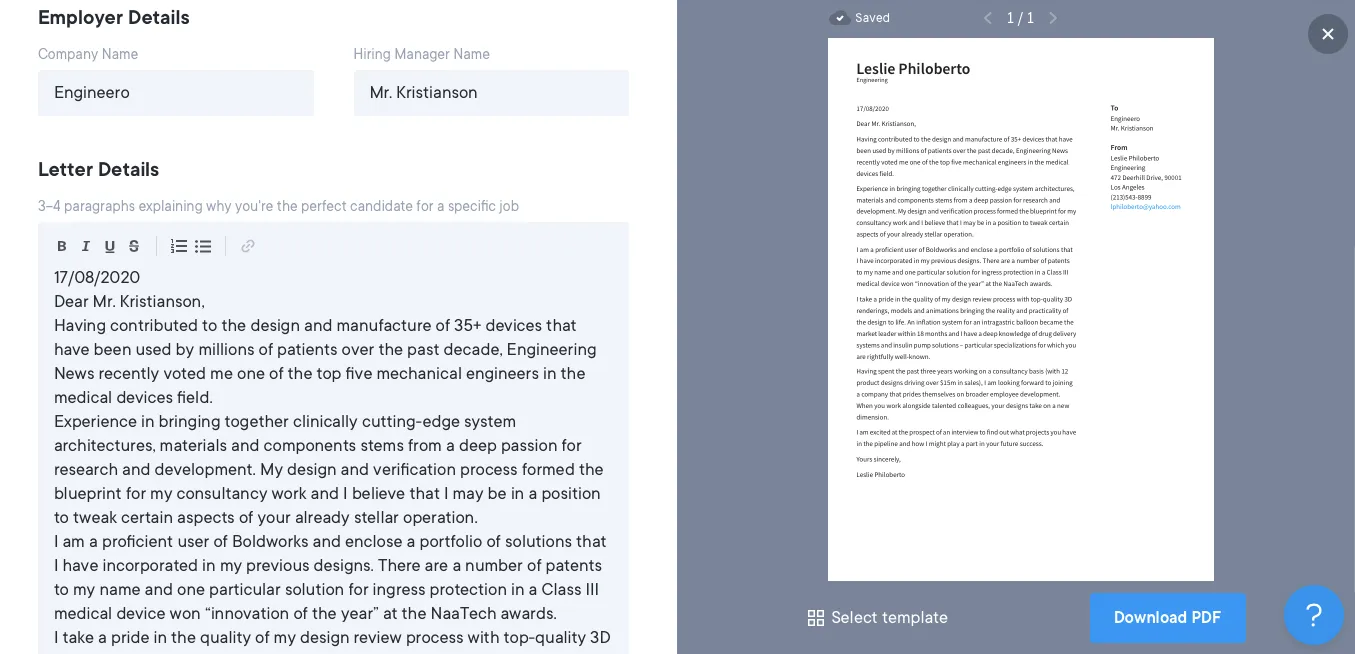
What is a Cover Letter and Resume?
In the competitive world of job applications, a well-crafted cover letter and resume are essential tools for making a strong first impression on potential employers. These two documents work together to present a comprehensive picture of your skills, experience, and qualifications. They both serve distinct yet complementary purposes in the hiring process. The resume offers a concise summary of your professional history, educational background, skills, and accomplishments, presented in a factual format designed to quickly inform the hiring manager about your suitability for the role. The cover letter, on the other hand, provides a personalized introduction, explaining why you are a strong fit for the specific job and the company, showcasing your personality, enthusiasm, and communication skills. Together, they form a complete application package that can significantly increase your chances of landing an interview.
The Purpose of a Cover Letter
The primary function of a cover letter is to express your interest in a specific position and company. It demonstrates how your skills and experiences align with their needs, offering you a chance to make a compelling first impression and personalize your application. A well-written cover letter also provides an opportunity to address specific requirements mentioned in the job description, explain any gaps in your employment history, and elaborate on your achievements. Unlike a resume, the cover letter allows you to share a narrative that highlights your understanding of the role and the company, showcasing your personality and communication style. Customizing your cover letter to show the employer that you have thoroughly researched their needs and are genuinely interested in the opportunity can set you apart from other candidates and encourage the hiring manager to give your resume a more detailed review.
The Purpose of a Resume

A resume serves as a concise and factual summary of your qualifications, education, and work history, designed to quickly convey your skills and experiences to potential employers. Its primary goal is to provide a clear and organized overview of your professional background, emphasizing relevant achievements and qualifications. The resume provides a structured format for presenting your work history, educational background, skills, and accomplishments, making it easier for hiring managers to evaluate your suitability for the role. A well-crafted resume should be easy to read, well-organized, and tailored to the specific job you are applying for, focusing on the skills and experiences most pertinent to the position. It is a snapshot of your professional life, designed to get you through the initial screening process and onto the interview stage.
Tip 1 Tailor Your Cover Letter and Resume
One of the most critical strategies in creating a successful cover letter and resume is to customize them for each job application. Generic applications are often overlooked. A tailored approach demonstrates that you have taken the time to understand the specific requirements of the role and the company’s culture. This involves carefully reviewing the job description and highlighting the skills, experiences, and achievements that directly align with the employer’s needs. This isn’t a one-size-fits-all approach; each cover letter and resume should be uniquely crafted to reflect the specific role and the company’s values. By tailoring your application, you significantly increase your chances of getting noticed and progressing to the interview stage.
Cover Letter Customization
Customizing your cover letter involves more than just changing the company name. It requires demonstrating a thorough understanding of the company’s mission, values, and the specific requirements of the role. Begin by researching the company and, if possible, the hiring manager. Address the cover letter to the hiring manager by name whenever possible. Use the job description as a guide, highlighting the skills and experiences that match their needs. Clearly explain how your skills and experiences make you an ideal fit for the specific role, providing concrete examples of your accomplishments and how they relate to the job’s responsibilities. Finally, show your enthusiasm for the company and the role, personalizing your cover letter to reflect the unique needs and culture of each organization you apply to.
Resume Customization

Tailor your resume to align with the specific job requirements. Start by carefully reviewing the job description and identifying the key skills and experiences the employer is seeking. Structure your resume to highlight the most relevant information by placing the skills and experiences that match the job description near the top. Incorporate keywords from the job description throughout your resume, particularly in the skills section and in your descriptions of past roles. Quantify your achievements with numbers and data to demonstrate your impact and make your accomplishments more compelling. Tailoring your resume to emphasize the most relevant skills and experiences will showcase your understanding of the employer’s needs and significantly increase your chances of getting noticed.
Tip 2 Highlight Your Achievements
Highlighting your achievements in both your cover letter and resume is crucial for demonstrating the value you bring to a potential employer. Rather than simply listing your responsibilities, focus on the outcomes you achieved and the results you delivered. Use action verbs to describe your accomplishments and quantify your results whenever possible. This approach provides concrete evidence of your skills and their impact. Highlighting achievements helps you stand out from other applicants by providing tangible proof of your capabilities. Shift your focus to what you have done, the impact you have had, and the positive outcomes you delivered, making your application more compelling and memorable to hiring managers.
Quantifying Achievements in Cover Letters
When writing your cover letter, emphasizing your accomplishments by quantifying your results is essential for making a strong impression. Instead of stating you ‘improved customer satisfaction,’ provide concrete data, such as ‘increased customer satisfaction scores by 15% through implementing a new feedback system.’ Use numbers, percentages, and data to showcase your achievements. Quantifying your achievements in your cover letter not only makes it more impactful but also provides a clear picture of your accomplishments. Always strive to provide specific examples of your accomplishments to clearly illustrate the tangible benefits you delivered in previous roles. It is a key element in giving the hiring manager a clearer understanding of your capabilities.
Quantifying Achievements in Resumes

Quantifying your achievements on your resume is a critical step in demonstrating your value and making a strong impression on potential employers. Use numbers and data to illustrate your accomplishments and the positive outcomes you delivered in your previous roles. For example, instead of stating that you ‘managed social media,’ specify that you ‘increased social media engagement by 30% and grew the follower base by 20% in one year.’ Use action verbs to describe your responsibilities. Provide concrete examples of your impact, showing the positive outcomes you achieved. Quantifying achievements provides concrete evidence of your capabilities, making your resume more persuasive and memorable to potential employers. This approach allows hiring managers to quickly assess your contributions and the value you could bring to their company.
Tip 3 Optimize Formatting and Design
A well-formatted and designed cover letter and resume are crucial for making a positive first impression. A clean, professional design ensures your application is easy to read and helps the hiring manager quickly find the information they need. Use clear fonts, consistent spacing, and a logical layout to present your information in a professional manner. The format should be visually appealing, professional, and easy to read. Formatting and design help the hiring manager to quickly grasp the information they need. A clean and well-structured application reflects professionalism and attention to detail. Proper formatting enhances readability, making your application more effective.
Cover Letter Formatting Best Practices
In cover letters, maintain a professional and easy-to-read format. Use a standard font like Arial, Times New Roman, or Calibri, with a font size between 10 and 12 points. Include a professional header with your contact information and address the hiring manager by name whenever possible. Keep the letter concise, ideally within one page. Use clear and concise language, and break up the text with paragraphs and bullet points where appropriate. Utilize consistent spacing and margins for a clean look. Proofread carefully for any errors. Employ a formal tone and avoid slang or jargon. A well-formatted cover letter is easy to read and showcases your professionalism and attention to detail.
Resume Formatting Best Practices

When formatting your resume, adopt a clear and organized structure that makes your information easy to find. Choose a professional font and a font size between 10 and 12 points for optimal readability. Utilize clear headings for each section, such as ‘Experience,’ ‘Education,’ and ‘Skills.’ Use bullet points to list your responsibilities and achievements, facilitating easy scanning. Keep your resume concise, ideally to one or two pages, depending on your experience. Maintain consistent spacing and margins throughout the document, and proofread carefully for any errors. Begin each bullet point with a strong action verb to immediately capture attention. Organize your information logically, with the most recent experience at the top. A well-formatted resume is easy to read and helps the hiring manager quickly assess your qualifications.
Tip 4 Use Action Verbs and Keywords
Incorporating action verbs and relevant keywords in your cover letter and resume is a highly effective strategy for capturing the attention of hiring managers and Applicant Tracking Systems (ATS). Action verbs describe your accomplishments and responsibilities, making your application more dynamic and engaging. Keywords, on the other hand, are terms that align with the job description. Using these words strategically helps your application pass through ATS and get noticed by the hiring manager. This demonstrates to the employer that you understand the job’s requirements and are a good fit for the role. This approach not only helps you stand out from other applicants but also significantly improves your chances of securing an interview.
Action Verbs in Cover Letters
In your cover letter, begin each sentence with a strong action verb to describe your accomplishments and skills. Action verbs inject energy into your writing, making your letter more engaging and impactful. Examples include ‘managed,’ ‘developed,’ ‘implemented,’ ‘achieved,’ ’led,’ and ‘created.’ Use action verbs to describe your responsibilities and demonstrate your achievements. By starting your sentences with action verbs, you create a dynamic and compelling narrative that showcases your contributions and skills. This approach helps you effectively communicate your value and the positive impact you have made in previous roles.
Action Verbs in Resumes

When creating your resume, the strategic use of action verbs is essential for describing your responsibilities and achievements. Starting each bullet point with a strong action verb is key to making your resume dynamic and results-oriented. Some examples include ‘managed,’ ‘developed,’ ‘implemented,’ ‘achieved,’ ’led,’ ‘created,’ and ‘coordinated.’ Use action verbs to describe your responsibilities and demonstrate your achievements. This approach makes your resume more compelling and showcases your accomplishments effectively. Using action verbs makes your resume more engaging and demonstrates your abilities. It shows that you have taken initiative and have made a positive impact in your past roles.
Tip 5 Proofread and Edit Meticulously
Proofreading and editing are essential steps in creating a polished cover letter and resume. Errors in grammar, spelling, and punctuation can undermine your credibility and leave a negative impression on potential employers. A thorough review of your application is essential for ensuring that your application is free of errors. It also demonstrates attention to detail, which is a highly valued skill in any workplace. Take your time and meticulously review your cover letter and resume for any mistakes. Having someone else review your application can also be very helpful, as a fresh pair of eyes can often catch errors that you might miss.
Cover Letter Proofreading
When proofreading your cover letter, pay close attention to grammar, spelling, and punctuation. Ensure that all sentences are clear and concise, and that the tone is professional. Check the formatting to make sure it is consistent throughout. Verify that the company name, hiring manager’s name, and the job title are accurate. Read your cover letter aloud to catch any awkward phrasing or errors. Consider asking a friend or career counselor to review your cover letter for a second opinion. A well-proofread cover letter demonstrates your professionalism and attention to detail, which can significantly improve your chances of getting an interview. Thorough proofreading and editing are crucial to making a positive impression.
Resume Proofreading

When proofreading your resume, focus on accuracy and consistency. Check that your contact information is correct and up-to-date. Verify the dates of employment and education to avoid any discrepancies. Ensure that the formatting is consistent throughout the document, using the same font, spacing, and style for all sections. Check for any spelling or grammatical errors, paying close attention to any terms or phrases you may have used. Read your resume aloud to identify any awkward phrasing or areas where the information might be unclear. Make sure that the keywords from the job description are incorporated correctly and naturally within the context of your experience. This will significantly enhance your chances of being selected for an interview. Proofreading is a critical step in creating a resume that makes a positive impression and accurately reflects your professional experience.