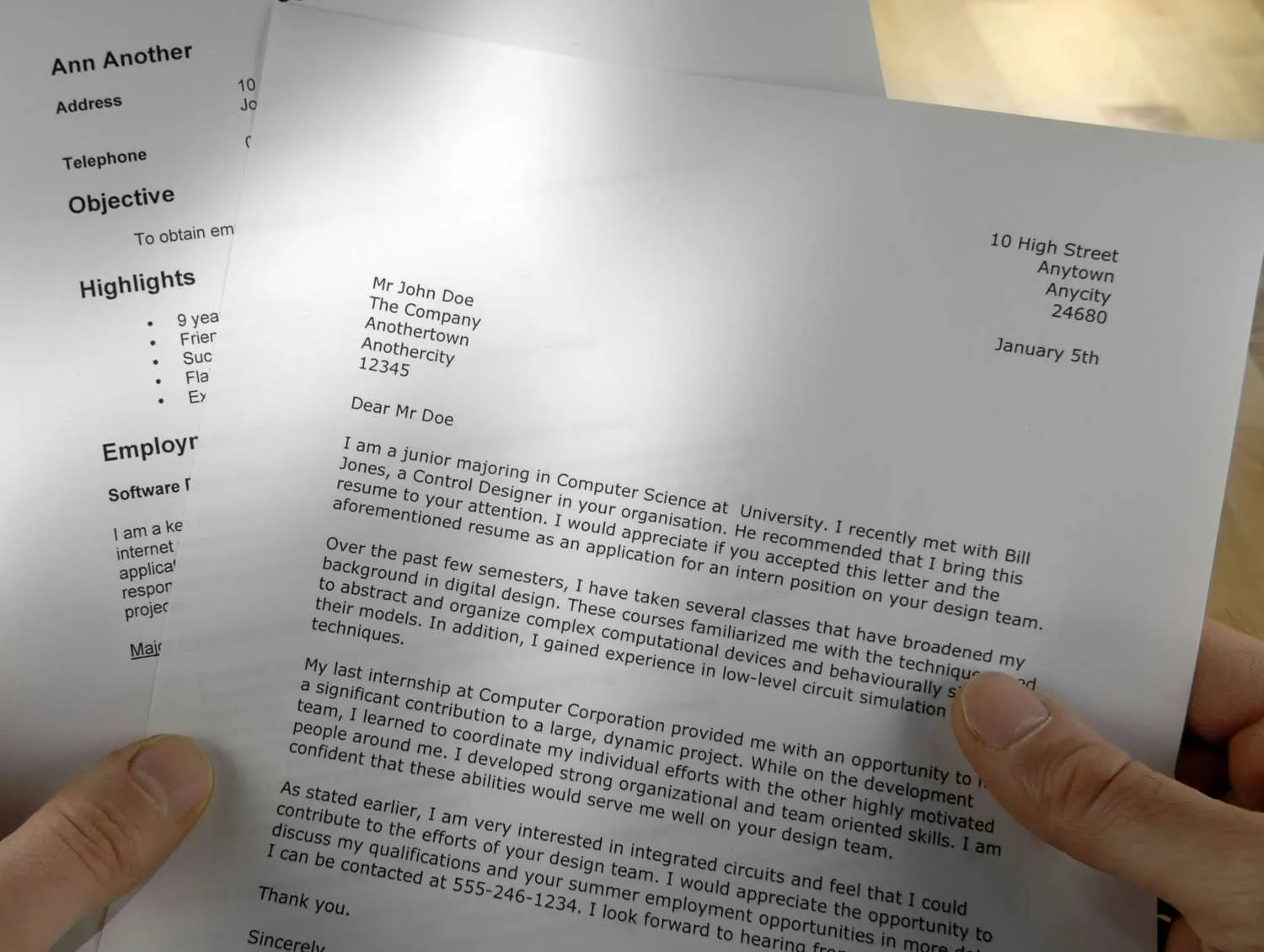
Why a Cover Letter Matters
In the competitive landscape of job applications, a well-crafted cover letter can be your secret weapon. Often overlooked, its importance is paramount because it offers an opportunity to go beyond the confines of a resume and connect with the hiring manager on a more personal level. It’s your chance to tell a story, to demonstrate your genuine interest in the role and the company, and to highlight why you are the perfect fit. A cover letter provides context to your resume, allowing you to explain gaps in employment, elaborate on specific skills, and express your career aspirations. In essence, it humanizes your application, transforming you from a list of qualifications into a compelling candidate. It showcases your communication skills, attention to detail, and your ability to effectively articulate your value proposition. In a world of automated applicant tracking systems, a well-written cover letter can still make you stand out.
The Purpose of a Cover Letter
The primary purpose of a cover letter is to secure an interview. It’s designed to introduce you to the hiring manager, express your enthusiasm for the position, and briefly summarize why you’re a strong match for the role. Unlike a resume, which is a static document, a cover letter allows you to tailor your message to the specific job and company. It gives you the flexibility to highlight the skills and experiences most relevant to the position, and to explain how your qualifications align with the employer’s needs. Furthermore, a cover letter demonstrates your communication skills, showing your ability to write clearly, concisely, and persuasively. By effectively communicating your qualifications and enthusiasm, a cover letter increases your chances of getting noticed and advancing to the next stage of the hiring process. A well-written cover letter shows your genuine interest in the position, demonstrating that you’ve done your research and are not just sending out a generic application.
How Cover Letters Complement Resumes

A cover letter and resume work together to present a complete picture of your qualifications and experience. While your resume provides a concise overview of your skills, education, and work history, the cover letter offers context and personality. It allows you to expand on specific experiences, explaining how they relate to the job you’re applying for. The resume is a list, the cover letter tells a story. Your resume lists your achievements; your cover letter demonstrates how those achievements translate into value for the employer. The cover letter offers a chance to explain gaps in your employment history, address any concerns the hiring manager might have, and highlight your personality and passion for the role. They complement each other by providing different perspectives of your capabilities, increasing your chances of securing an interview.
Key Components of a Winning Cover Letter
A winning cover letter includes several key components that work together to create a compelling narrative. These elements include a professional header, a personalized salutation, a strong introductory paragraph, impactful body paragraphs that highlight relevant skills and experiences, and a concise closing paragraph with a clear call to action. The header should contain your contact information, the date, and the hiring manager’s details. The salutation sets the tone and should address the hiring manager by name whenever possible. The body paragraphs are where you showcase your qualifications, providing specific examples of how your skills align with the job requirements. The closing paragraph should reiterate your interest in the position and express your eagerness for an interview. A well-structured cover letter not only demonstrates your communication skills, but also shows that you are detail-oriented and committed to the application process.
Header and Contact Information
The header of your cover letter is the first thing the hiring manager will see, so it’s important to get it right. Begin by including your full name, address, phone number, and professional email address. Make sure your email address is professional; avoid using nicknames or unprofessional usernames. Following your contact information, include the date. Then, address the hiring manager by name. If you are unsure of the hiring manager’s name, research the company website or LinkedIn profile of the hiring manager, or try using a general title such as ‘Hiring Manager’. By including this information in a clear and concise format, you help the employer easily contact you and demonstrate your attention to detail.
The Salutation Crafting the Right Greeting

The salutation sets the tone for your cover letter. The ideal approach is to address the hiring manager by name, e.g., ‘Dear Mr. Smith’. This personalized approach shows you’ve taken the time to research the company and demonstrates your attention to detail. If you are unable to find the hiring manager’s name, you can use a professional alternative such as ‘Dear Hiring Manager’, or ‘Dear [Department Name] Team’. Avoid generic greetings like ‘To Whom It May Concern’. Remember to use a professional tone throughout the letter, and ensure your salutation matches the overall formality of the job application. A well-crafted salutation makes a positive first impression and shows respect for the reader.
Body Paragraphs
The body paragraphs are the heart of your cover letter. They should showcase your skills, experience, and enthusiasm for the role. The key is to tailor each paragraph to the specific job requirements. Start with a strong first paragraph, clearly stating the position you are applying for and how you learned about it. The second paragraph should highlight your relevant skills and experience, providing specific examples of your accomplishments. The third paragraph should demonstrate your passion for the company and the role, explaining why you’re a good fit for their culture. When writing each paragraph, use action verbs to describe your accomplishments, and quantify your achievements whenever possible. Avoid simply restating your resume; instead, provide context and explain how your skills have led to tangible results. The body paragraphs should tell a compelling story that convinces the hiring manager that you are the best candidate for the job.
First Paragraph Grab Their Attention
The first paragraph of your cover letter is your opportunity to make a strong first impression. Begin by clearly stating the position you are applying for and where you found the job posting. Then, immediately grab their attention with a compelling statement. Highlight something that piqued your interest in the role or the company. Briefly touch upon the skills that make you a good fit, and express your enthusiasm for the opportunity. This paragraph should be concise and tailored to the specific job and company. You want to quickly explain your intention and express your interest. Avoid generic opening lines. Instead, use an engaging and professional tone to convince the reader to continue. Think of this paragraph as your elevator pitch, designed to capture the reader’s attention from the start.
Second Paragraph Showcase Your Skills

The second paragraph is your chance to showcase your relevant skills and experiences. This is where you directly address the job requirements and highlight how your skills align with the needs of the employer. Provide specific examples of your accomplishments, using the STAR method (Situation, Task, Action, Result) to illustrate your abilities. Quantify your achievements whenever possible. For instance, instead of saying ‘Improved customer satisfaction’, say ‘Increased customer satisfaction scores by 15%’. Tailor this section to match the job description, emphasizing the skills and experiences the employer values most. Be concise and use action verbs to describe your accomplishments. By showcasing your skills in a clear and compelling manner, you demonstrate to the hiring manager that you possess the qualifications to excel in the role. This paragraph bridges the gap between your resume and the job requirements.
Third Paragraph Demonstrate Your Enthusiasm
The third paragraph is where you connect with the company. This is where you demonstrate your genuine enthusiasm for the role and company. Show that you have researched the company and understand its mission, values, and culture. Explain why you’re a good fit for their environment and what excites you about the opportunity. Show your passion and personality and show that you are the perfect fit. Highlight any relevant personal connections you have with the company. This paragraph should be genuine and specific, avoiding generic statements. Demonstrate your understanding of the company’s needs and express your desire to contribute. By demonstrating your enthusiasm, you transform yourself from a candidate into a potential team member, increasing the likelihood that the hiring manager will want to learn more about you.
The Closing Paragraph Call to Action
The closing paragraph is the final opportunity to leave a lasting impression. Reiterate your interest in the position and express your enthusiasm for the opportunity to interview. Thank the hiring manager for their time and consideration. Include a clear call to action, indicating your availability for an interview and how the hiring manager can contact you. Keep the tone professional and positive. By ending on a strong note, you reinforce your qualifications and leave the hiring manager with a clear path to move forward. A well-crafted closing paragraph ensures that your cover letter has a lasting impact and increases your chances of getting the interview.
Formatting Your Cover Letter

Formatting your cover letter is crucial for making a good impression. A well-formatted letter is easy to read and demonstrates your attention to detail. Choose a clean and professional font, such as Times New Roman, Arial, or Calibri, and keep the font size between 10 and 12 points. Use consistent formatting throughout the document, including single spacing within paragraphs and double spacing between paragraphs. Use clear headings and subheadings to organize your content and make it easier for the reader to find the information they need. Maintain consistent margins on all sides of the page. The goal is to create a visually appealing and organized document that is easy to read and understand. Make sure your formatting is consistent with the expectations of the company.
Font and Style Choices
Selecting the right font and style is a key element in formatting your cover letter. The font should be easy to read and project a professional image. Popular choices include Times New Roman, Arial, Calibri, and Helvetica. Avoid overly decorative or unusual fonts that might detract from your message. Keep the font size between 10 and 12 points for easy readability. Use bolding and italics sparingly, and only to emphasize key information. Maintain consistent formatting throughout the document, including line spacing and margins. Choose a professional style, and use a consistent style. The font and style should complement your content, making the letter visually appealing and accessible to the reader. Remember, readability is key.
File Format Recommendations
When saving your cover letter, it’s important to choose the correct file format. The recommended format is PDF (Portable Document Format). PDFs preserve the formatting of your document, ensuring that it appears the same regardless of the recipient’s device or software. This is important because different word processing programs can sometimes alter the appearance of a document. Save your cover letter as a PDF. Before submitting, always double-check that the formatting is consistent and that all the elements are correctly displayed. Ensure the filename is professional; include your name and the job title, and avoid special characters or spaces in the filename. By following these recommendations, you ensure that your cover letter is professional, easy to read, and accurately represents your qualifications.
Proofreading and Editing

Proofreading and editing your cover letter is essential for ensuring that it is polished and professional. Carefully review the document for any spelling, grammar, and punctuation errors. Read the cover letter aloud to catch any awkward phrasing or sentence structures. Consider asking a friend, family member, or career counselor to review your cover letter for feedback. Pay attention to the details. Look out for common errors, such as incorrect capitalization, inconsistent formatting, and typos. By carefully proofreading and editing your cover letter, you show that you’re detail-oriented and committed to presenting yourself in the best possible light. A well-edited cover letter increases the likelihood of making a positive impression and advancing to the next stage of the hiring process.
Common Cover Letter Mistakes
Avoiding common cover letter mistakes can significantly improve your chances of success. One of the most common errors is typos and grammatical errors, which can damage your credibility. Generic and vague content that lacks personalization can also make a negative impression. Failing to tailor your letter to the specific job and company is another frequent mistake. Other mistakes include using overly formal or informal language, failing to highlight key skills, and simply restating your resume without adding value. By being aware of these common errors, you can proactively avoid them. Take time to write a compelling and tailored cover letter that showcases your qualifications and enthusiasm, increasing your chances of getting an interview.
Typos and Grammatical Errors
Typos and grammatical errors are a major red flag in a cover letter. They can undermine your credibility and make you appear unprofessional. Even a small mistake can suggest a lack of attention to detail. Always proofread your cover letter carefully, and use spell-check and grammar-check tools. However, don’t rely solely on these tools. Read the letter aloud to catch any awkward phrasing or sentence structures. Consider having a friend or career counselor review your cover letter for any errors you may have missed. A perfectly proofread cover letter demonstrates your professionalism and commitment to detail. These mistakes distract from your message and can lead to the rejection of your application.
Generic and Vague Content
Generic and vague content can make your cover letter feel impersonal. Avoid using generic statements and instead, tailor your letter to the specific job and company. Highlight your relevant skills and experiences, providing specific examples of your accomplishments. Don’t simply restate your resume; offer additional context and explain how your skills have led to tangible results. Research the company and its culture, and express your genuine enthusiasm for the opportunity. Show the hiring manager that you understand their needs and can contribute to their success. By providing personalized and specific details, you can make your cover letter stand out. A personalized cover letter shows that you have taken the time to understand the opportunity.
Failing to Tailor Your Letter
Failing to tailor your cover letter to the specific job and company is a common mistake. Sending a generic cover letter to every job application signals a lack of interest and research. The goal is to provide information that is specific to each company and role. Tailor your cover letter to show the hiring manager that you have researched the company, understand the role’s requirements, and are genuinely interested in the opportunity. Highlight the skills and experiences most relevant to the job description. Explain how your qualifications align with the employer’s needs. Show that you have taken the time to understand the company’s needs. By demonstrating that you understand their needs and can contribute to their success, you increase the chances of the hiring manager wanting to learn more about you.
Cover Letter Examples for Inspiration
Reviewing cover letter examples can provide valuable inspiration and guidance. There are many online resources that offer examples for various industries and job types. When reviewing these examples, pay attention to the structure, tone, and content. Note how the candidates highlight their skills and experiences, and how they tailor their letters to the specific job. Adapt the templates to your own circumstances, ensuring that your letter reflects your unique qualifications. Use these examples as a starting point, customizing your own letter to align with the job requirements and the company’s culture. Look at the examples for formatting, style, and wording to get an idea of what a successful cover letter looks like. Ensure that you make the letter your own.