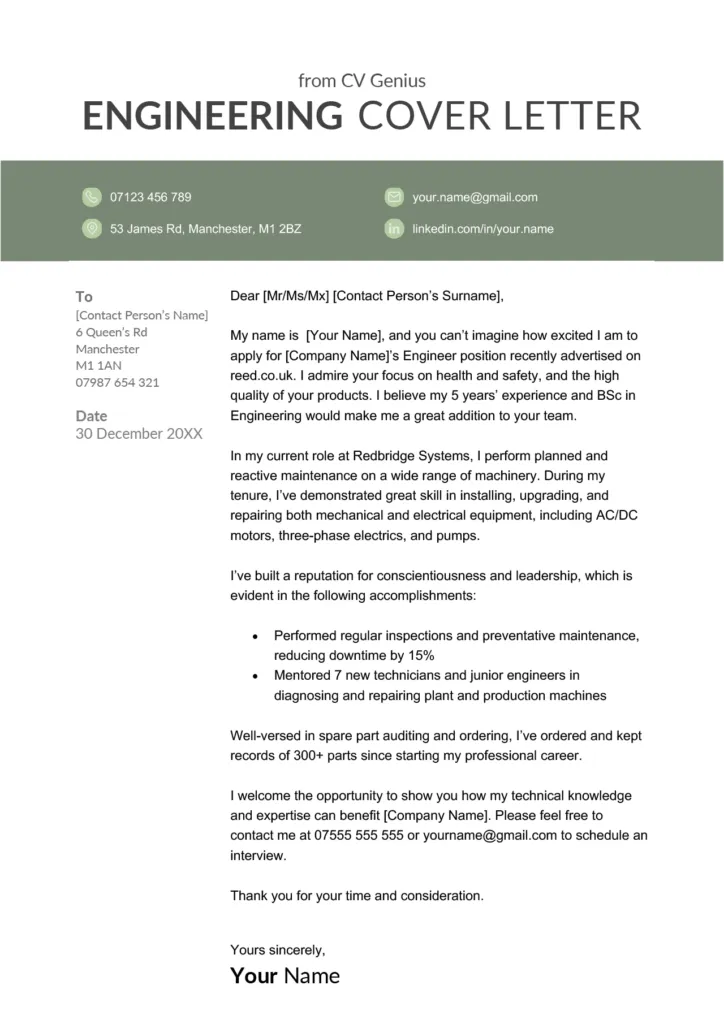
In the competitive world of engineering, a good engineering cover letter is your first opportunity to make a lasting impression on potential employers. More than just a formality, your cover letter is a crucial document that complements your resume by providing a narrative, showcasing your personality, and highlighting how your skills and experience align with the specific requirements of the job. A well-crafted cover letter can significantly increase your chances of landing an interview, setting you apart from other qualified candidates. This guide provides actionable tips on how to create a compelling engineering cover letter that grabs attention and gets you noticed.
Why a Good Engineering Cover Letter Matters
A strong cover letter is essential because it allows you to personalize your application and demonstrate genuine interest in the position and the company. It allows you to elaborate on your resume, offering context and deeper insights into your qualifications and accomplishments. Recruiters often use cover letters to assess your communication skills, attention to detail, and your understanding of the job requirements. A good engineering cover letter allows you to showcase your problem-solving skills, explain your technical expertise in more detail, and provide examples of your past projects. It also allows you to demonstrate how your skills and experience align with the job and the company’s mission and values, which is critical for making a good first impression.
Highlighting Your Engineering Skills
Your cover letter should provide specific examples of how you have applied your engineering skills in previous roles. Mention the specific software, tools, or technologies you are proficient in, and provide quantifiable results or outcomes whenever possible. For example, instead of saying ‘I have experience with CAD software,’ mention the specific CAD software you’ve used and the projects you’ve completed. Tailor your skills section to match the job description, emphasizing the skills the employer is looking for. Use keywords from the job posting to ensure your application passes through applicant tracking systems (ATS), which often screen applications based on keywords. Emphasize your ability to translate technical concepts into clear, concise language that can be understood by both technical and non-technical audiences.
Quantifiable Achievements

One of the most effective ways to make your cover letter stand out is to showcase your accomplishments with quantifiable results. Instead of just listing your responsibilities, provide specific examples of what you achieved in previous roles. For example, ‘Reduced production costs by 15% through process optimization’ or ‘Improved project efficiency by 20% through implementation of new project management techniques.’ Numbers and percentages provide concrete evidence of your capabilities and make a strong case for your value as an engineer. Use action verbs to start your achievements, such as ‘designed,’ ‘implemented,’ ‘managed,’ or ‘solved,’ making your cover letter more engaging and professional. Ensure that your achievements are relevant to the job you are applying for and that they highlight the key skills and experiences the employer is looking for.
Tailoring Your Letter to the Job
The most successful cover letters are those that are customized for each job application. Generic cover letters rarely make a strong impression. Before writing, carefully review the job description and identify the key requirements, skills, and experiences the employer is seeking. Then, tailor your letter to address those specific needs and demonstrate how your qualifications align with the job requirements. Show that you have researched the company and understand their mission, values, and recent projects. Mention the company by name and reference specific aspects of their work that interest you. Highlighting the projects or initiatives that resonate with you shows genuine interest and sets you apart from candidates who send generic letters.
Structuring Your Good Engineering Cover Letter
A well-structured cover letter is easy to read and allows the reader to quickly grasp the essential information. The structure should follow a logical flow, from introduction to conclusion, with each section serving a specific purpose. Keep the letter concise and avoid unnecessary jargon. Use clear, professional language and maintain a tone that reflects your personality and enthusiasm. The structure of your cover letter should include a header with your contact information, a professional greeting, a compelling opening paragraph, body paragraphs detailing your skills and experience, and a closing paragraph that expresses your interest and a call to action.
Header and Contact Information

The header of your cover letter should include your name, address, phone number, email address, and, optionally, your LinkedIn profile URL. Ensure that your contact information is accurate and up-to-date. Use a professional email address. Choose a clean, readable font and format the header neatly so the information is easily accessible. Include the date and the name and address of the hiring manager or the company. If you don’t have a specific contact name, you can use a general greeting such as ‘Dear Hiring Manager.’
Opening Paragraph Attention Grabbing
The opening paragraph is your opportunity to grab the reader’s attention and make a strong first impression. Start with a concise and compelling statement that highlights your interest in the position and the company. State the specific job you are applying for and where you found the listing. Briefly mention something that sparked your interest in the role or the company. Use a strong opening statement that showcases your enthusiasm and sets the tone for the rest of the letter. Avoid generic openings and tailor your introduction to the specific job and company. The opening paragraph should immediately convey why you are a good fit for the role and why the employer should keep reading.
Body Paragraphs Detailing Your Skills
The body paragraphs are where you provide the details of your qualifications and demonstrate how your skills and experience align with the job requirements. Use these paragraphs to elaborate on your accomplishments, highlighting specific projects or experiences that are relevant to the role. Refer back to the job description and use keywords to show how you match the employer’s needs. Provide evidence of your technical expertise, problem-solving abilities, and other skills listed in the job description. Use clear, concise language and avoid jargon unless it’s necessary. Structure the paragraphs logically, with each paragraph focusing on a specific skill or achievement. Show the employer how you can contribute to the company’s success by providing examples of your past projects and their outcomes.
Closing the Letter

In your closing paragraph, reiterate your interest in the position and the company. Express your enthusiasm for the opportunity and thank the hiring manager for their time and consideration. Include a call to action, such as stating that you look forward to hearing from them or are available for an interview at their earliest convenience. Provide your contact information again in case it was missed. End with a professional closing, such as ‘Sincerely’ or ‘Best regards,’ followed by your name. Make sure your closing is professional and reflects your positive attitude.
Key Elements of a Strong Engineering Cover Letter
Several key elements contribute to the effectiveness of an engineering cover letter. These elements, when incorporated, significantly increase the likelihood of your application standing out. The cover letter should be personalized, reflecting your understanding of the company’s needs. Highlighting technical expertise, demonstrating problem-solving abilities, showcasing soft skills, and proofreading your letter are vital components. Make sure that your cover letter effectively communicates your qualifications and your enthusiasm for the role and the company.
Showcasing Technical Expertise
A good engineering cover letter should clearly showcase your technical expertise and proficiency in relevant tools and technologies. Mention the specific engineering software, programming languages, and design tools you are skilled in. Elaborate on your experience with specific types of engineering projects, such as designing, testing, or implementing specific systems. Give examples of how you used your technical expertise to solve complex problems or achieve successful outcomes. Use the language of the industry and incorporate relevant keywords to demonstrate your knowledge of the technical requirements. The technical expertise you list must align with the needs of the potential employer.
Demonstrating Problem-Solving Abilities

Engineering is inherently about solving problems, and your cover letter must highlight your problem-solving abilities. Describe situations where you had to identify and resolve technical challenges. Explain the steps you took to approach the problem, the strategies you used to analyze and develop solutions, and the results you achieved. Provide specific examples of how you used critical thinking, analytical skills, and creativity to solve problems. Show the employer that you can think critically, analyze complex issues, and develop effective solutions. Emphasize your ability to work through technical challenges by presenting a clear and structured approach to problem-solving.
Soft Skills and Teamwork
While technical skills are crucial, employers also value soft skills. In your cover letter, highlight your ability to work collaboratively, communicate effectively, and manage projects. Describe your experience working in teams, and provide examples of how you contributed to successful outcomes. Mention your communication skills, including your ability to present technical information in a clear and concise manner. Highlight any leadership experience and your ability to mentor or guide others. Soft skills are essential for engineers to work effectively in a collaborative environment.
Proofreading and Editing Your Letter
Before submitting your cover letter, proofread it carefully to ensure there are no errors in grammar, spelling, or punctuation. Pay close attention to the formatting to make sure it is clean and professional. Having typos in your cover letter can make you look careless and may undermine your credibility. Read the cover letter aloud to identify any awkward phrasing or unclear sentences. Ask a friend, family member, or career advisor to review your cover letter for feedback. Taking the time to proofread and edit your cover letter is an essential step in ensuring a strong impression.
In conclusion, a good engineering cover letter is a powerful tool that can significantly boost your chances of landing your dream job. By following the tips outlined in this guide – highlighting your skills, quantifying your achievements, tailoring your letter to the job, and structuring it effectively – you can create a cover letter that showcases your qualifications and sets you apart from other candidates. Remember to always tailor your letter to the specific job and company, proofread it carefully, and present yourself as a qualified and enthusiastic candidate. Good luck with your job search!