Understanding the Food Service Industry
The food service industry is a dynamic and competitive field, encompassing a wide array of establishments from fast-food restaurants and casual dining spots to fine-dining establishments and catering services. Understanding the nuances of this industry is crucial when crafting a cover letter. Employers seek candidates who grasp the importance of customer service, hygiene, and efficiency. Demonstrating your knowledge of these aspects can significantly boost your chances of securing an interview. Think about the specific type of food service job you’re targeting. Is it a role in a fast-paced kitchen, a customer-facing position at the front of the house, or something else entirely? Tailoring your cover letter to align with the specific requirements of the role and the establishment is key. Research the restaurant or company to gain insights into their values and operational style; this will allow you to customize your cover letter to make a stronger impression.
Key Components of a Strong Cover Letter
A compelling cover letter serves as your introduction to a potential employer and complements your resume. It offers an opportunity to elaborate on your qualifications and express your genuine interest in the position. A well-structured cover letter typically includes a clear and concise introduction, a body that highlights relevant skills and experiences, and a confident conclusion. Your introduction should immediately grab the reader’s attention. Start by stating the position you’re applying for and where you found the job posting. The body should showcase your most relevant skills and experiences, providing specific examples to illustrate your capabilities. The conclusion should reiterate your interest in the position, express gratitude for the reader’s time, and include a call to action, such as stating your availability for an interview.
Highlighting Your Skills and Experience
Food service positions often require a blend of hard and soft skills. When writing your cover letter, it’s essential to emphasize skills that align with the job requirements. For example, if the job involves taking orders, highlight your communication skills, ability to handle customer interactions, and attention to detail. If the role involves food preparation, showcase your experience with specific cooking techniques, food safety knowledge, and ability to work efficiently under pressure. Quantify your achievements whenever possible. Instead of saying ‘Managed restaurant operations,’ you could say ‘Managed restaurant operations, increasing efficiency by 15% within six months.’ This provides concrete evidence of your abilities. Include details such as serving experience, cash handling, and menu knowledge. Furthermore, highlight your experience with teamwork and your ability to work effectively within a fast-paced environment. Demonstrate any experience you have with POS (Point of Sale) systems, customer relationship management, or any other relevant technologies.
Formatting and Structure of Your Cover Letter
The format and structure of your cover letter are just as important as its content. A well-formatted cover letter is easy to read and visually appealing. Start with your contact information, including your name, phone number, email address, and optionally, your LinkedIn profile URL. Then, include the date and the employer’s contact information, if available. Address the hiring manager by name whenever possible; this shows that you’ve taken the time to research the company. The body of your cover letter should be divided into logical paragraphs, each focusing on a specific aspect of your qualifications. Use clear, concise language and avoid jargon. Choose a professional font like Arial or Times New Roman and use a font size between 10 and 12 points. Maintain consistent formatting throughout the document, including spacing and margins. Proofread meticulously for any errors in grammar, spelling, and punctuation.
Essential Sections of Your Cover Letter
Every cover letter should have certain essential sections to ensure it effectively conveys your qualifications and interest. Start with a compelling introduction that grabs the reader’s attention. State the position you are applying for and where you saw the job posting. The body of the letter should highlight your skills and experiences. Provide specific examples of how you have demonstrated the skills required for the job. Address the specific requirements outlined in the job description. The conclusion should reiterate your enthusiasm for the position and express your gratitude for the hiring manager’s time and consideration. End with a call to action, inviting the hiring manager to contact you for an interview. Consider adding a paragraph showcasing your knowledge of the company and your alignment with their values. This demonstrates that you’ve done your research and are genuinely interested in working there.
Tailoring Your Cover Letter to the Job

Generic cover letters rarely impress hiring managers. To stand out, you must tailor each cover letter to the specific job and company. Start by carefully reading the job description. Identify the key requirements and skills the employer is seeking. Then, use your cover letter to demonstrate how your skills and experience align with those requirements. Research the company. Understanding their mission, values, and recent news can help you tailor your letter to show your interest and fit. Reference specific aspects of the company or the role in your cover letter to show your understanding and enthusiasm. Use keywords from the job description throughout your cover letter, but be careful not to overdo it. Integrate the keywords naturally into your sentences to show how you meet the requirements. Modify your cover letter for each job you apply for. This extra effort can make a significant difference in your chances of getting an interview.
Proofreading and Polishing Your Cover Letter
Before submitting your cover letter, thorough proofreading and polishing are essential. Errors in grammar, spelling, and punctuation can create a negative impression and undermine your credibility. Read your cover letter multiple times. Once after writing, once a day later. Use a spell checker and grammar checker, but don’t rely on them completely. These tools can miss errors. Read your cover letter out loud. This can help you catch awkward phrasing and other mistakes. Ask a friend, family member, or career counselor to review your cover letter. A fresh pair of eyes can often spot errors that you might miss. Make sure your contact information is accurate and up-to-date. Ensure your cover letter is well-formatted and visually appealing. Pay attention to the tone of your cover letter. It should be professional, enthusiastic, and tailored to the specific job. A polished and error-free cover letter demonstrates attention to detail, which is highly valued in the food service industry.
Tips for Food Service Worker Cover Letters
When writing a cover letter for a food service position, consider these specific tips to increase your chances of success. Highlight any experience with customer service. Mention your ability to handle cash transactions accurately, use POS systems, and resolve customer issues. Showcase your knowledge of food safety and hygiene standards. Any certifications like food handler permits should be mentioned. Demonstrate your ability to work well under pressure and maintain a positive attitude in a fast-paced environment. If you have experience with teamwork, emphasize your ability to collaborate effectively with colleagues. Include specific examples of your skills. Quantify your achievements. For instance, mention how you increased order accuracy or improved customer satisfaction. Show enthusiasm for the specific type of food service establishment. Tailor your letter to show you understand their menu, values, and target audience.
Example Cover Letter for Food Service Worker

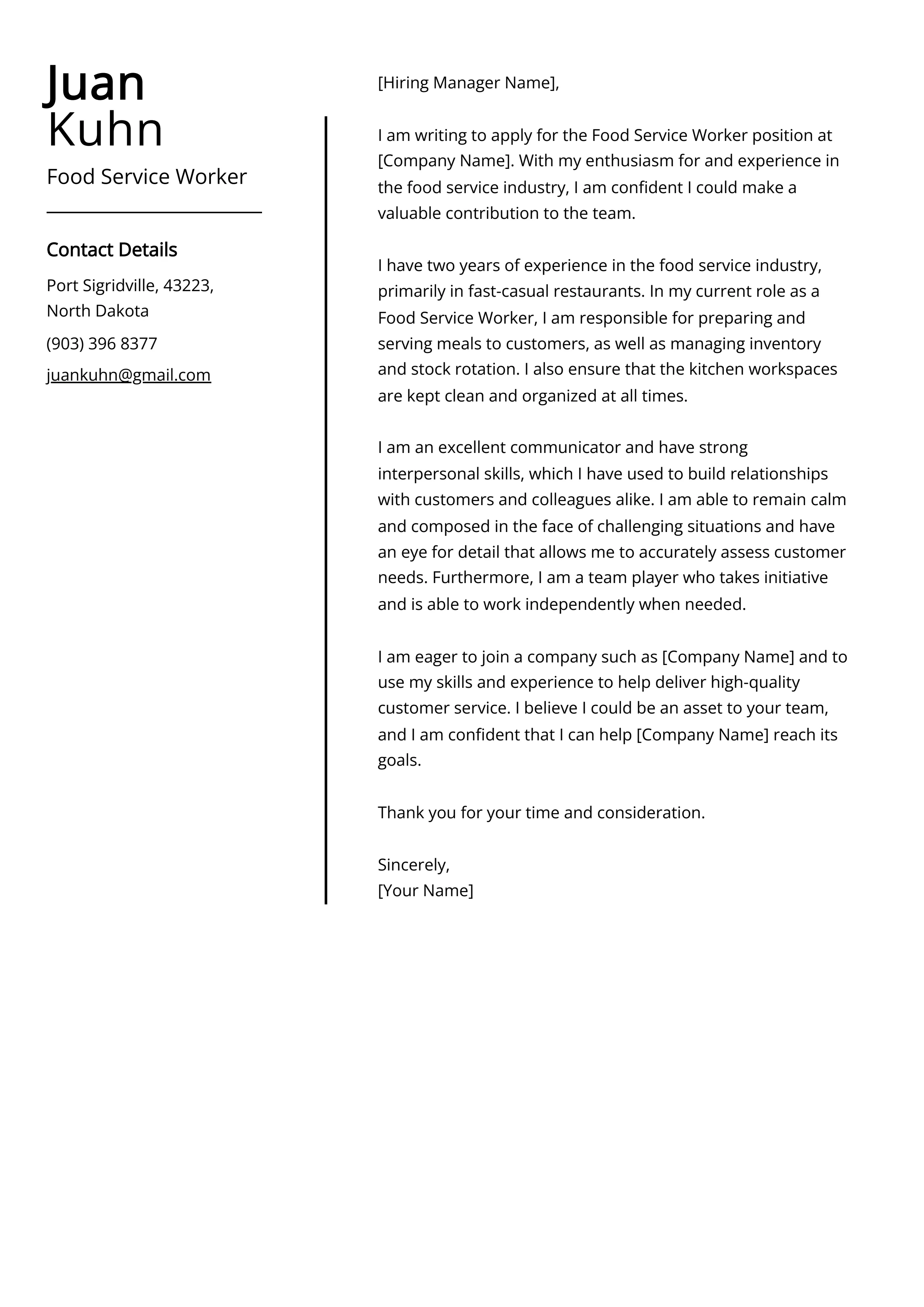
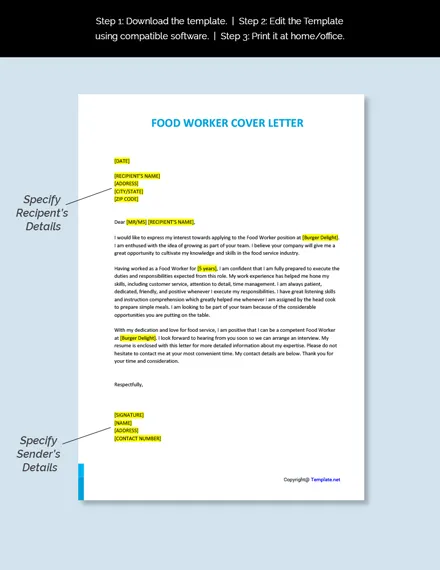
Here’s an example to guide you. [Your Name] [Your Address] [Your Phone Number] [Your Email Address] [Date] [Hiring Manager Name] (if known), or [Hiring Manager Title] [Restaurant Name] [Restaurant Address] Dear [Mr./Ms./Mx. Last Name or Hiring Manager], I am writing to express my interest in the Food Service Worker position at [Restaurant Name], as advertised on [Platform]. With my [Number] years of experience in the food service industry and my passion for providing excellent customer service, I am confident I can contribute to your team’s success. In my previous role at [Previous Restaurant], I was responsible for [List of responsibilities, quantifying where possible]. I am adept at taking orders, handling cash, and ensuring customer satisfaction. I am a highly motivated and detail-oriented individual with a strong work ethic and a commitment to maintaining high standards of food safety and hygiene. I am excited about the opportunity to work at [Restaurant Name] because [Mention something specific you admire about the restaurant]. Thank you for your time and consideration. I have attached my resume for your review and welcome the opportunity to discuss my qualifications further. I am available for an interview at your earliest convenience. Sincerely, [Your Signature] [Your Typed Name]. Remember to customize the bracketed information with your personal details and experiences.
Common Mistakes to Avoid in Your Cover Letter
There are some common mistakes that can significantly reduce your chances of getting hired. Avoid using generic language. Tailor your cover letter to the specific job and company. Do not simply restate your resume. Use your cover letter to expand on your experiences and highlight your personality and enthusiasm. Avoid spelling and grammatical errors. Proofread carefully before submitting your cover letter. Do not write too much. Keep your cover letter concise and focused on the most relevant information. Do not include irrelevant information. Focus on skills and experiences that directly relate to the job requirements. Avoid a negative tone or making excuses. Instead, highlight your strengths and accomplishments. Don’t forget to include a call to action. Tell the hiring manager that you are available for an interview. Avoid using overly casual language or slang. Maintain a professional tone throughout your cover letter.