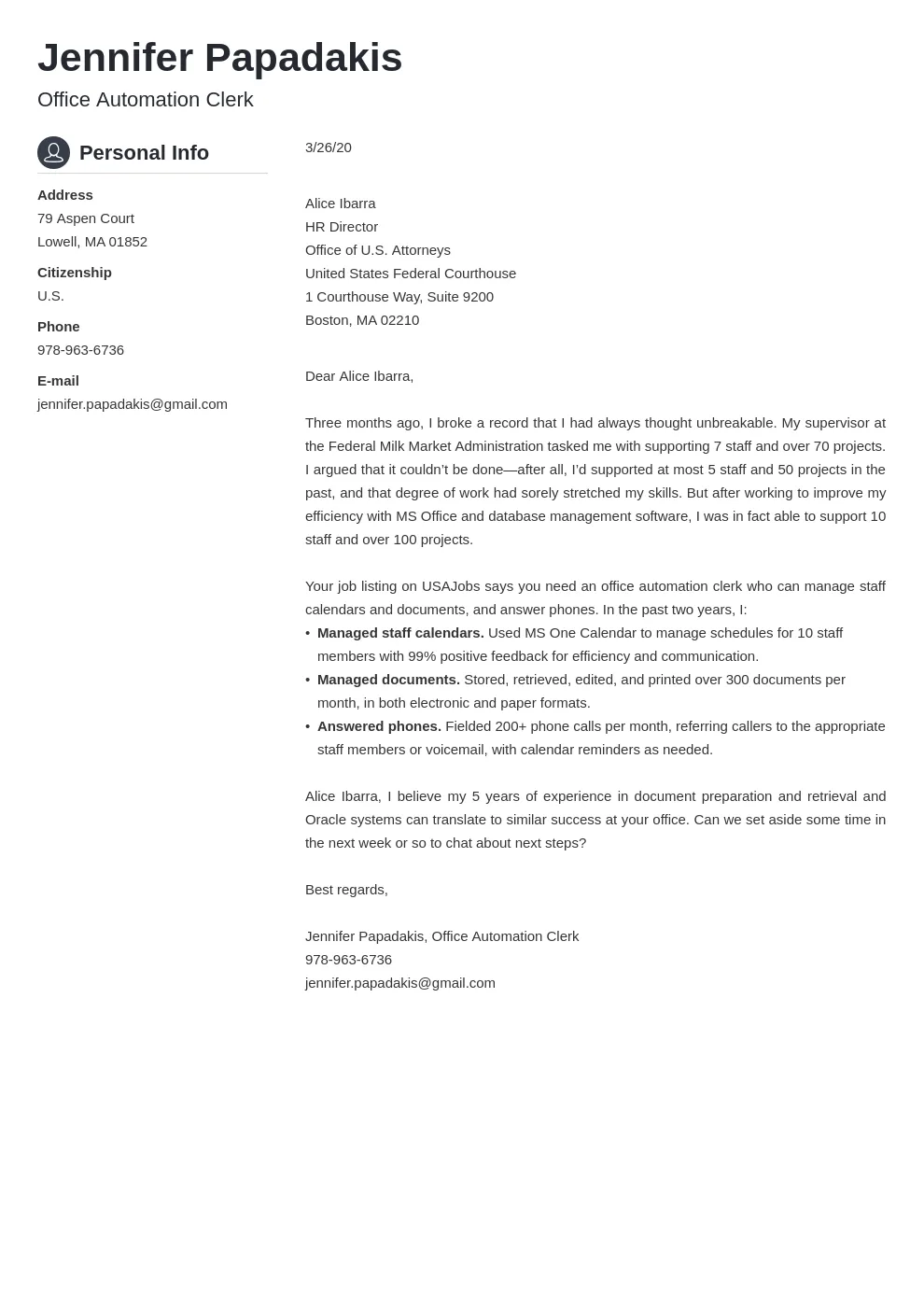
Understanding Federal Job Cover Letters
Navigating the federal job application process can feel daunting, but a well-crafted cover letter is your secret weapon. Unlike private sector jobs, federal positions often require a cover letter that goes beyond a simple introduction. It’s your opportunity to demonstrate how your skills, experience, and qualifications align with the specific requirements of the job announcement. A strong cover letter doesn’t just repeat your resume; it tells a compelling story, highlighting your key accomplishments and showcasing your understanding of the federal government’s mission. By investing time in this crucial document, you significantly increase your chances of getting noticed and securing an interview. Remember that federal hiring managers often use cover letters as a primary screening tool, so make yours count.
Key Components of a Strong Federal Cover Letter
Header and Contact Information

Start with a professional header including your full name, address, phone number, and email address. This ensures the hiring manager can easily contact you. Consistency is key; the information here should exactly match what’s on your resume. Also, if you are applying for a job through USAJOBS, make sure that your information is current and accurate on that profile as well. A clean, well-formatted header reflects attention to detail, a critical quality for federal employees. Ensure your email address is professional; avoid using nicknames or informal language. This initial presentation sets the tone for the rest of your letter, signaling your professionalism and preparedness.
Addressing the Hiring Manager
Whenever possible, address the cover letter to a specific person, ideally the hiring manager or the contact person listed in the job announcement. This personal touch demonstrates initiative and attention to detail. If the name isn’t provided, you can try to find it on the agency’s website or LinkedIn. If you can’t find a name, use a professional greeting like “Dear Hiring Manager” or “Dear [Department Name] Hiring Team.” Avoid generic greetings like “To Whom It May Concern.” Addressing the specific person shows that you’ve done your research and are genuinely interested in the position, immediately setting you apart from generic applications.
Opening Paragraph Grab Attention
Your opening paragraph is your first and perhaps only chance to grab the hiring manager’s attention. Instead of a generic introduction, immediately state the specific position you’re applying for, where you saw the job announcement, and, most importantly, a brief statement that showcases your immediate qualifications and interest. For instance, start with something compelling: “I am writing to express my keen interest in the [Job Title] position, as advertised on [Platform], and I am excited by the opportunity to leverage my extensive experience in [relevant field] to contribute to [agency’s mission].” This approach immediately tells the reader why you’re a good fit. Make it specific, enthusiastic, and tailored to the job.
Highlighting Your Qualifications

Showcasing Relevant Skills and Experience
The body of your cover letter should delve into your relevant skills and experience. The core of your message should clearly demonstrate how your capabilities match the job’s requirements. For each key skill or requirement mentioned in the job announcement, provide a specific example from your experience that illustrates your proficiency. Use action verbs to describe your accomplishments and highlight the results of your work. This approach gives the hiring manager concrete proof of your capabilities. Avoid vague statements and instead provide tangible examples of how you’ve successfully applied your skills in past roles. Always focus on what you bring to the table and how your skills and experience will benefit the agency.
Quantifying Achievements and Results
Federal hiring managers are keen on seeing quantifiable results. Whenever possible, support your claims with numbers and data to demonstrate your impact. Instead of saying, “Managed a team,” say “Managed a team of 10 employees, resulting in a 15% increase in productivity.” Similarly, if you improved efficiency, specify by how much, like, “Streamlined the process, reducing processing time by 20%.” This concrete evidence demonstrates your value and provides a clear understanding of the results you achieved. This level of detail convinces the hiring manager of your effectiveness and ability to deliver results, significantly strengthening your application.
Tailoring Your Cover Letter

Matching the Job Description
One of the most critical aspects of a successful federal cover letter is tailoring it to the specific job description. Thoroughly analyze the job announcement, identifying the key skills, qualifications, and responsibilities. Then, in your cover letter, specifically address how your experience and skills align with these requirements. Use the same keywords and phrases used in the job description, but don’t simply copy and paste. Instead, integrate these keywords naturally into your sentences while providing specific examples of how you’ve demonstrated these skills in past roles. This targeted approach shows the hiring manager that you understand the job’s needs and are a perfect fit for the position.
Using Keywords Effectively
Federal job applications are often screened using applicant tracking systems (ATS). To increase your chances of getting through the initial screening, strategically incorporate keywords from the job description into your cover letter. Read the job announcement carefully and identify the essential skills, qualifications, and requirements. Use these keywords naturally throughout your cover letter. However, avoid keyword stuffing, which can make your letter sound robotic and unnatural. Instead, use the keywords in context to describe your experience, skills, and accomplishments in a way that demonstrates your understanding of the job requirements. A well-crafted cover letter with relevant keywords will help your application stand out.
Formatting and Style Tips

Font and Readability
Ensure your cover letter is easy to read. Use a standard, professional font like Times New Roman, Arial, or Calibri, with a font size between 11 and 12 points. Maintain consistent formatting throughout the document. Use clear, concise language and avoid jargon or overly complex sentences. Break up long paragraphs into shorter ones to improve readability. Employ bullet points to highlight key skills or achievements. Aim for a clean and organized layout that allows the hiring manager to easily scan the document and quickly find the information they need. A well-formatted cover letter demonstrates attention to detail and professionalism.
Proofreading and Editing
Proofreading and editing are non-negotiable. Before submitting your cover letter, meticulously check for any spelling, grammatical, or punctuation errors. These errors can create a negative impression and undermine your credibility. Use spell-check and grammar-check tools, but don’t rely on them entirely; they won’t catch all errors. Read your cover letter aloud to catch awkward phrasing or sentence structures. Have a trusted friend or colleague review your letter for clarity, accuracy, and overall impact. A polished, error-free cover letter is a testament to your professionalism and attention to detail, greatly enhancing your application’s success.
Call to Action and Closing

Expressing Enthusiasm and Gratitude
End your cover letter with a clear and enthusiastic call to action. Reiterate your interest in the position and briefly summarize why you are a strong candidate. Express your gratitude to the hiring manager for their time and consideration. Include a statement about your availability for an interview and your willingness to provide any additional information they may need. A positive and confident closing leaves a lasting impression and encourages the hiring manager to take the next step. Thank them for considering your application and reinforce your eagerness to discuss the opportunity further.
Providing Contact Information
Reiterate your contact information in the closing. Repeat your phone number and email address so it is easily accessible for the hiring manager. This makes it simple for them to contact you to schedule an interview. This final touch ensures that your contact details are readily available. Make sure to include any links to your professional online profiles, such as LinkedIn, if applicable. By making it as easy as possible for the hiring manager to reach you, you increase your chances of moving forward in the hiring process.