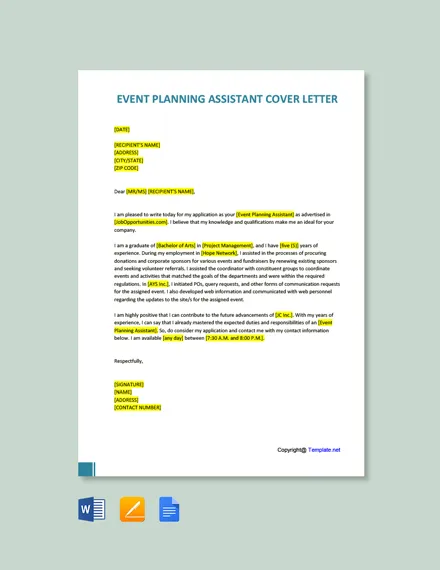
Crafting a Compelling Cover Letter
A well-crafted cover letter is your initial opportunity to make a strong impression and secure an interview for an Event Assistant role. It serves as a crucial introduction, allowing you to showcase your skills, enthusiasm, and suitability for the position. Your cover letter should go beyond simply restating your resume; it should narrate your story, connecting your experiences and abilities to the specific requirements of the job. The key is to demonstrate your passion for event management, highlighting your relevant skills and experiences in a manner that captures the hiring manager’s attention and encourages them to delve deeper into your qualifications. Make sure your cover letter is unique.
Understanding the Event Assistant Role
Before you begin writing, gain a clear understanding of what the Event Assistant role entails. Research the specific responsibilities associated with the position you’re applying for. Event Assistants are often tasked with a variety of duties, including assisting in event planning, coordinating logistics, managing vendor relationships, handling on-site event support, and providing administrative assistance. Familiarize yourself with the event types, whether corporate, social, or promotional, and the specific needs of the hiring organization. This information will enable you to tailor your cover letter to the specific requirements of the role, highlighting your most relevant skills and experiences.
Key Skills to Highlight

Identify and emphasize the core skills that make you a strong candidate for an Event Assistant position. Some of the most critical skills include strong organizational abilities, excellent communication skills, attention to detail, problem-solving capabilities, and the ability to work effectively under pressure. Highlight your experience in event planning, logistics, and coordination. If you have experience in vendor management, budgeting, or marketing, be sure to include these as well. Provide examples of how you’ve demonstrated these skills in previous roles or situations. By showcasing your relevant skills, you’ll clearly demonstrate your ability to excel in the role.
Relevant Experience & Achievements
Use your cover letter to highlight specific experiences and achievements that showcase your capabilities. Think about the events you’ve assisted with and what you contributed. Did you play a key role in event setup, registration, or guest management? Did you successfully manage vendors or resolve on-site issues? Focus on quantifiable achievements whenever possible, such as the number of attendees you managed, the budget you helped manage, or the positive feedback you received. Use the STAR method (Situation, Task, Action, Result) to describe your experiences, providing a clear picture of the challenges you faced, the actions you took, and the positive outcomes you achieved. Make sure each achievement has a quantifiable result.
Tailoring Your Cover Letter
Generic cover letters often fail to impress hiring managers. Take the time to tailor each cover letter to the specific job and organization. Research the company, its mission, and its values. Review the job description carefully, identifying the key requirements and responsibilities. Then, customize your cover letter to match these specific needs. Demonstrate your understanding of the organization’s work and explain how your skills and experience align with their requirements. This level of personalization shows your genuine interest in the role and increases your chances of getting noticed.
Formatting for Impact

The format of your cover letter can significantly impact its readability and appeal. Use a professional font, such as Arial or Times New Roman, in a readable size. Maintain consistent formatting throughout the document. Break up large blocks of text with paragraphs and bullet points to make it easier to scan. Ensure the letter is well-structured with clear headings and subheadings, and use a professional tone. Keep the language clear, concise, and error-free. Your goal is to create a document that is easy to read and demonstrates your attention to detail and professionalism. Remember, an Event Assistant needs to be organized.
Proofreading & Editing for Perfection
Before you submit your cover letter, meticulously proofread and edit it. Errors in grammar, spelling, or punctuation can undermine your credibility and create a negative impression. Read the letter aloud to catch any awkward phrasing or typos. Ask a friend or colleague to review it as well, as a fresh pair of eyes can often spot errors you might have missed. Ensure that the letter is free of jargon or slang, and that the tone is professional and appropriate for the role. This final step is critical for ensuring that your cover letter represents you in the best possible light.
Highlighting Relevant Experience
When detailing your experience, be sure to highlight any event-related activities you’ve been involved in. Even if your previous role wasn’t strictly an event assistant position, showcase any experiences that demonstrate transferable skills. Did you help organize office events, manage a team, or handle customer service during events? Quantify your accomplishments whenever possible. Did you increase event attendance, improve customer satisfaction, or successfully manage a budget? Use action verbs to describe your responsibilities and achievements, making your experience more compelling and memorable. Consider the tasks you did on your other jobs and determine which are event-related.
Quantifying Your Accomplishments

Whenever possible, use numbers and data to quantify your achievements. For example, instead of saying you “assisted with event planning,” you could say “assisted in planning and executing events for up to 500 attendees.” Similarly, instead of saying you “managed vendors,” you could say “managed a team of 10 vendors, ensuring timely delivery and adherence to budget.” Quantifying your accomplishments provides concrete evidence of your abilities and helps hiring managers understand the impact you made in previous roles. This approach demonstrates your ability to achieve results and contribute positively to the success of events.
Formatting & Structure
Your cover letter should follow a standard business letter format. Begin with your contact information and the date, followed by the hiring manager’s name and address. Use a professional greeting, such as “Dear Mr./Ms. [Last Name].” The body of the letter should be divided into three to four paragraphs. The first paragraph should state your purpose for writing and express your interest in the position. The subsequent paragraphs should highlight your skills and experiences, providing specific examples of your achievements. Conclude with a call to action, expressing your eagerness for an interview and thanking the hiring manager for their time and consideration. Close the letter with a professional closing, such as “Sincerely” or “Respectfully,” followed by your name.