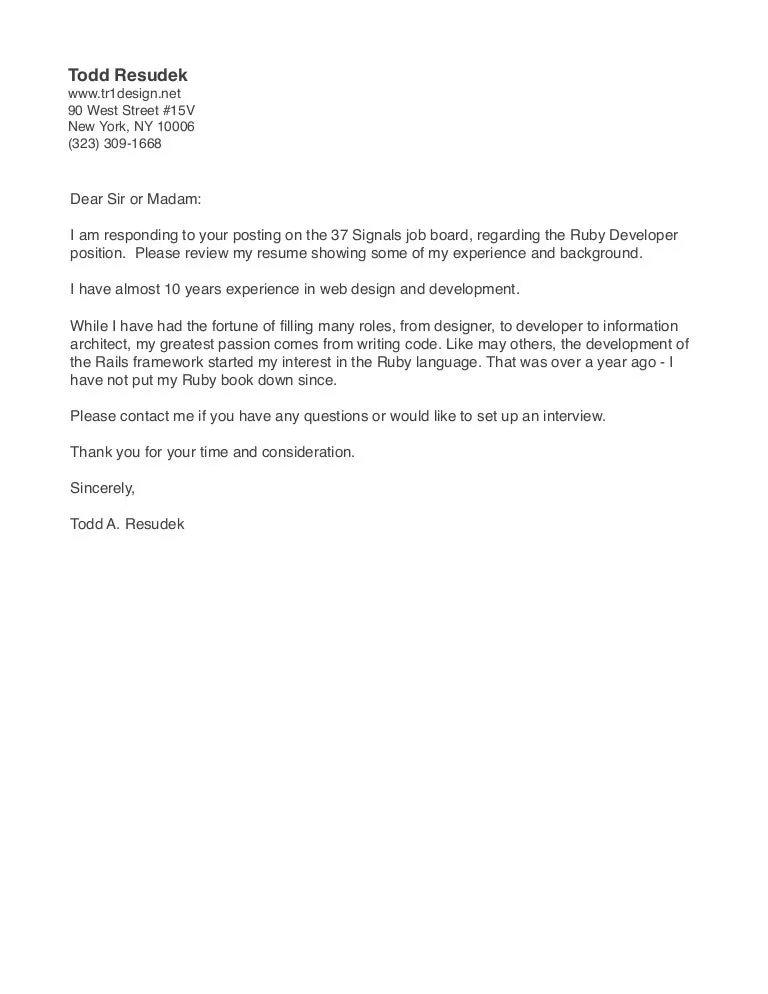
Why Use Dear Madam or Sir in Cover Letters
When you’re navigating the job application process, one of the first hurdles is often the cover letter’s salutation. The salutation sets the tone for the entire letter and can significantly influence how the recipient perceives you. While many guides advise you to address the hiring manager by name, there are situations where that information simply isn’t available. This is where the salutation “Dear Madam or Sir” becomes a viable option. It’s a polite and professional way to begin your letter when you lack a specific contact name. This opening acknowledges the recipient’s position without making any assumptions. It’s especially useful when applying to larger organizations or when the hiring manager’s identity is difficult to ascertain through online searches. By opting for “Dear Madam or Sir,” you demonstrate respect and professionalism while ensuring your application gets the attention it deserves.
When to Use Dear Madam or Sir
Choosing the right salutation can be tricky, and knowing when to use “Dear Madam or Sir” is crucial. The primary scenario for using this salutation is when you can’t find the name of the hiring manager or the specific contact person for the job. This frequently occurs when applying through online portals, responding to job postings that don’t provide contact details, or when applying to large companies where identifying the relevant individual can be challenging. Another appropriate situation is when you’re unsure of the recipient’s gender or preferred pronouns. In such cases, using “Dear Madam or Sir” is a safe and inclusive choice. It avoids the potential for causing offense by misgendering the recipient. The key is to prioritize professionalism, politeness, and accuracy. If you’re ever in doubt about the appropriate salutation, “Dear Madam or Sir” is a solid, reliable option.
Situations where Dear Madam or Sir is Appropriate

Several specific situations warrant the use of “Dear Madam or Sir” in your cover letter. Consider it when the job posting does not specify a contact person. Many job advertisements, particularly on general job boards, lack named contacts. In these cases, starting your letter with “Dear Madam or Sir” is perfectly acceptable. Another situation is when the company’s website doesn’t readily offer the hiring manager’s name. Some organizations do not publicly list contact details for their hiring personnel. Trying to find this information can be time-consuming. Using “Dear Madam or Sir” in these instances saves you effort while maintaining a professional tone. Finally, consider it when applying to a large company. Big corporations often have numerous departments and layers of management, making it difficult to identify the right contact. Using “Dear Madam or Sir” is a safe bet to ensure your letter reaches the right department.
Alternatives to Dear Madam or Sir
While “Dear Madam or Sir” is a reliable option, consider other salutations. One alternative is to use a job title if you can’t find a name. For instance, “Dear Hiring Manager” or “Dear Recruitment Team” are both acceptable ways to start your letter. Another approach is to use a department name. If the job posting mentions the department you’re applying to (e.g., “Dear Human Resources Department”), that can be a suitable salutation. Furthermore, you might be able to find the hiring manager’s name by researching the company on LinkedIn or other professional networking sites. If you find a name, always opt for a personalized salutation (e.g., “Dear Mr. Smith”) because it shows extra effort and a genuine interest. Remember to tailor your salutation to the specific situation.
Benefits of Using Dear Madam or Sir
Choosing “Dear Madam or Sir” for your cover letter offers several advantages. It’s a universally recognized and accepted salutation. Unlike some less formal greetings, it is unlikely to offend anyone, regardless of their background. It ensures that you maintain a high level of professionalism. This is particularly important because your cover letter is a direct reflection of your communication skills. Using “Dear Madam or Sir” demonstrates respect for the reader’s position and shows that you have a firm grasp of professional etiquette. Another benefit is that it saves time. Trying to track down the hiring manager’s name can be a significant undertaking, and sometimes, that information simply isn’t available. Opting for “Dear Madam or Sir” allows you to quickly complete your application without wasting valuable time and resources on a fruitless search.
Crafting Your Dear Madam or Sir Cover Letter

When using “Dear Madam or Sir,” the rest of your cover letter must be equally polished. Your letter should clearly outline your skills, experience, and how you align with the job requirements. Tailor your letter to the specific job you’re applying for; use keywords from the job description. Begin by stating the position you’re applying for and where you saw the job posting. The body of your letter should elaborate on your qualifications, providing specific examples of your achievements and skills. Make sure your letter is well-organized, easy to read, and free of grammatical errors. Use a professional font and standard margins. Consider including a call to action, such as requesting an interview or expressing your enthusiasm for the opportunity. Finally, always end your letter with a professional closing (e.g., “Sincerely,” or “Respectfully,”) followed by your name and contact information. This approach guarantees your letter is both professional and compelling.
Formatting Your Letter
Formatting your cover letter correctly is crucial for making a strong first impression. Begin by choosing a professional font such as Times New Roman, Arial, or Calibri in a standard size (11 or 12 points). Ensure that your letter has clear and consistent formatting throughout. Use single spacing for paragraphs and double spacing between paragraphs. Maintain 1-inch margins on all sides of the page. Align the text to the left, except for your contact information and the date, which can be right-aligned. Including your name, address, phone number, and email address at the top of your letter is good practice. The date and the recipient’s contact information (if available) should also be included. Keep the formatting consistent and professional. Properly formatted letters are easy to read and demonstrate attention to detail. Proper formatting signals respect for the recipient.
Highlighting Your Skills and Experience
Your cover letter should showcase your relevant skills and experience. Carefully review the job description and identify the key skills and qualifications the employer is seeking. Then, in your cover letter, highlight how your skills match these requirements. Instead of simply listing your skills, give specific examples of how you’ve used them in previous roles. Use the STAR method (Situation, Task, Action, Result) to provide context and demonstrate your achievements. For instance, instead of stating “Managed projects,” you could write, “Managed a team of five to deliver a project on time and under budget, resulting in a 15% increase in efficiency.” Quantify your accomplishments whenever possible. This gives the reader a clear picture of your impact. Tailoring your skills to the job description makes your application more relevant and improves your chances of success. By clearly showcasing how your skills align with the job requirements, you can create a compelling argument for why you’re the ideal candidate.
Tailoring Your Letter

One of the most effective ways to make your cover letter stand out is to tailor it to each specific job application. Generic cover letters often fail to impress because they don’t demonstrate a genuine interest in the position or the company. To tailor your letter, start by carefully reviewing the job description. Identify the key requirements and responsibilities. Research the company and understand its mission, values, and culture. Then, incorporate this information into your cover letter. Explain why you are interested in this particular role and this particular company. Show how your skills, experience, and goals align with theirs. Use keywords from the job description throughout your letter. This will demonstrate your attention to detail and your understanding of the company’s needs. Personalizing your cover letter with specific examples makes your application more relevant and memorable.
Proofreading and Editing
After you have written your cover letter, proofreading and editing are essential steps. Grammatical errors, typos, and other mistakes can undermine your credibility and make a poor impression. Before submitting your letter, carefully review it for any errors in grammar, spelling, punctuation, and sentence structure. Read your letter aloud. This will help you to catch awkward phrasing or any areas that need improvement. Ask someone else to read your letter and provide feedback. A fresh pair of eyes can often spot mistakes that you might have missed. Make sure that your letter is concise and easy to read. Remove any unnecessary words or phrases. Ensure the tone is professional and that your message is clear. Proofreading and editing are critical to ensure that your cover letter is polished and professional. A well-written, error-free letter demonstrates your attention to detail and enhances your chances of success.
Common Mistakes to Avoid
Certain mistakes can significantly damage your cover letter’s effectiveness. One common mistake is sending a generic cover letter. As mentioned earlier, tailoring your letter to the specific job and company is essential. Another mistake is including irrelevant information. Focus on the qualifications and experiences that are most relevant to the job requirements. Avoid being too wordy. Keep your letter concise and to the point. Avoid overly formal or casual language. Maintain a professional tone throughout your letter. Do not use jargon or slang that the reader may not understand. Finally, always proofread your letter for any errors. Errors can detract from your credibility and give the impression you are not paying attention to detail. By avoiding these common pitfalls, you can write a cover letter that highlights your strengths and significantly increases your chances of getting the job.
The Importance of the Salutation

The salutation sets the tone for your entire cover letter. While “Dear Madam or Sir” is perfectly acceptable when you don’t know the hiring manager’s name, the salutation must be appropriate. The salutation is your first chance to make a positive impression. It acknowledges the reader and shows that you’re professional and thoughtful. A personalized salutation (e.g., “Dear Mr. Smith”) is always preferred if possible. However, if you do not have the name, “Dear Madam or Sir” is a suitable and respectful alternative. Avoid using overly casual or informal salutations. Similarly, do not use outdated or gendered salutations. The salutation should reflect professionalism and respect the recipient, regardless of whether it’s personalized or general. The correct salutation ensures your cover letter starts on the right foot, making it more likely to capture the reader’s attention.
Structuring Your Dear Madam or Sir Cover Letter
Structuring your cover letter logically improves clarity and impact. Your letter should include an opening paragraph, body paragraphs, and a closing paragraph. The opening paragraph should state the position you are applying for and where you saw the job posting. It should capture the reader’s attention and briefly introduce your interest in the opportunity. The body paragraphs should highlight your qualifications, skills, and experience, providing specific examples of your achievements. These paragraphs should show how your qualifications match the job requirements. The closing paragraph should summarize your interest in the role and reiterate your enthusiasm for the opportunity. This paragraph should also include a call to action, such as requesting an interview. A well-structured cover letter is easy to read and helps your message resonate with the reader.
Opening Paragraph
The opening paragraph of your cover letter is crucial for grabbing the reader’s attention. Start by stating the position you are applying for and where you saw the job posting. This immediately clarifies the purpose of your letter and provides context for the reader. Then, briefly introduce yourself and express your enthusiasm for the opportunity. Highlight your key skills or qualifications that align with the job requirements. You want to get the reader interested in learning more about your qualifications. Keep your opening paragraph concise and engaging. It should set the tone for the rest of your letter and motivate the reader to continue reading. A strong opening paragraph can make a big difference in whether your application is read and considered. Your introduction paragraph is your first impression, so make it count.
Body Paragraphs

The body paragraphs are where you highlight your skills, experience, and accomplishments. Each body paragraph should focus on a specific aspect of your qualifications. Use the job description as your guide and tailor your content. Show how your skills and experience align with the requirements. Use the STAR method (Situation, Task, Action, Result) to provide context and demonstrate your achievements. Provide specific examples of how you have used your skills to solve problems or achieve goals. Quantify your accomplishments whenever possible. Make your body paragraphs clear and easy to read. Avoid lengthy paragraphs or overly complex sentences. A well-structured body will make your application more effective. By making your body paragraphs compelling, you will highlight your value as a potential candidate.
Closing Paragraph
The closing paragraph is your last chance to make a positive impression. Summarize your interest in the position and reiterate your enthusiasm for the opportunity. Thank the reader for their time and consideration. Include a call to action, such as requesting an interview or offering to provide additional information. Make sure to include your contact information so the reader can easily reach you. The closing paragraph should be brief, polite, and professional. Avoid using clichés or generic phrases. Instead, aim for a closing that leaves the reader feeling positive about you and your qualifications. Your closing is the last thing the reader sees, and the appropriate closing will increase your chances of getting the job.