Crafting Your Custodian Cover Letter
A well-crafted custodian cover letter can significantly improve your chances of landing a job, even if you lack direct experience. This guide will provide you with actionable steps to create a compelling cover letter that highlights your skills, demonstrates your understanding of the role, and showcases your potential as a valuable employee. By focusing on transferable skills, showcasing your enthusiasm, and emphasizing your willingness to learn, you can make a strong impression on potential employers. Remember, a cover letter is your first introduction to a company, so make it count. Take your time and ensure that your cover letter is customized, well-written, and free of errors. This is your opportunity to shine and set yourself apart from other applicants.
Highlighting Relevant Skills and Abilities
Even without direct experience, you likely possess skills that are valuable to a custodian role. Think about your past experiences and identify skills that align with the job requirements. For instance, if you have experience in any kind of cleaning (housekeeping, helping relatives, etc.), emphasize your ability to clean effectively and efficiently. If you’ve managed projects, highlight your organizational skills. If you have experience with maintenance tasks, such as simple repairs, be sure to mention them. The goal is to connect your existing skills to the needs of the job. Make a list of these skills and how they translate to a custodian role, then incorporate them into your cover letter, providing specific examples of how you’ve utilized these skills in the past.
Emphasizing Soft Skills for Custodian Roles

Soft skills are crucial in any job, and they are especially important for a custodian role. Highlight soft skills like reliability, teamwork, communication, and problem-solving. Explain how you’ve demonstrated these skills in previous roles or situations. For example, if you’ve worked in a team, describe how you collaborated with others to achieve a common goal. If you’ve encountered a problem, explain how you resolved it. Emphasize your ability to follow instructions, take initiative, and work independently. These soft skills are essential to show that you can be a dependable and effective member of the team, which are highly valued by employers. Use real-life examples to demonstrate your proficiency in these areas, making your application more impactful and memorable.
Detailing Past Experiences (Even if Not Direct)
While you might lack direct experience as a custodian, your past experiences can still be relevant. Even if you’ve held jobs that seem unrelated, consider how the tasks and responsibilities you had can translate to the role. For instance, if you’ve worked in retail, you might have experience cleaning up spills, organizing shelves, or interacting with customers, which proves you’re capable of working in a fast-paced environment. If you’ve volunteered, describe the tasks you completed and the responsibilities you held. The key is to connect your past experiences to the requirements of the custodian role. Be detailed and explain how those experiences have prepared you for the job. This demonstrates resourcefulness and the ability to learn and adapt to different environments.
Showcasing Your Understanding of the Role
Demonstrate that you understand the duties and responsibilities of a custodian. Research the job description and the specific requirements of the position you are applying for. Mention your knowledge of cleaning products, equipment, and safety protocols. If you have a basic understanding of maintenance tasks, mention this. Emphasize your commitment to maintaining a clean and safe environment. Show that you are aware of the importance of attention to detail, timeliness, and the ability to work independently and as part of a team. Showcasing your understanding of the role shows your potential employer that you understand the responsibilities involved and are willing to meet expectations.
Demonstrating a Strong Work Ethic

Employers value employees with a strong work ethic. Highlight traits such as reliability, punctuality, and a willingness to work hard. Use examples from your past to illustrate your work ethic. For instance, if you’ve consistently met deadlines or gone above and beyond in your previous roles, include those details. Convey your enthusiasm for the job and your dedication to performing your duties to the best of your ability. Your work ethic will often determine how far you go within the company and show the potential employer you’re willing to work hard and be a valuable asset. Demonstrate your willingness to learn and adapt by mentioning any training you’ve completed or plan to pursue in the future.
Emphasizing Your Attention to Detail
Attention to detail is a crucial skill for custodians. Emphasize your ability to notice details and ensure that all tasks are completed thoroughly. Provide specific examples of times when your attention to detail made a difference, such as catching an error or ensuring a task was performed to perfection. Mention your commitment to adhering to safety protocols and maintaining a clean and organized workspace. Your willingness to maintain this standards shows potential employers that you can deliver great results. Consider how this trait can benefit the job and showcase that you can do the job well.
Structuring Your Cover Letter Effectively
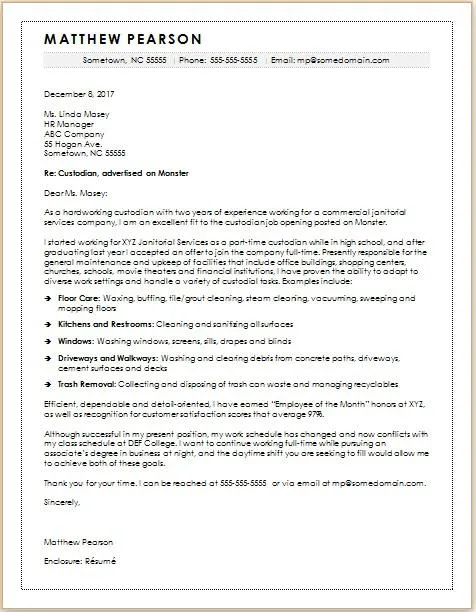
A well-structured cover letter is essential for making a strong impression. Start with a professional header that includes your contact information. Then, address the hiring manager by name if possible. The opening paragraph should state the position you’re applying for and briefly explain why you’re interested in the role. The body paragraphs should focus on your skills and experiences. Use a few paragraphs to highlight your relevant skills and connect them to the job requirements. The closing paragraph should summarize your qualifications and express your enthusiasm for the position. Be concise and make sure your cover letter is well-organized and easy to read. A clear structure makes your message more understandable.
Writing a Compelling Opening

The opening paragraph is your chance to grab the reader’s attention. Start by stating the position you’re applying for and where you saw the job posting. Briefly explain why you are interested in the role and the company. If possible, personalize your opening by mentioning something specific that interests you about the company or the job description. Be enthusiastic and show your potential employers why you’re excited about the opportunity. A well-written opening sets the tone for the rest of your cover letter and encourages the reader to continue reading.
Developing Strong Body Paragraphs
The body paragraphs should be the meat of your cover letter. Use these paragraphs to showcase your skills and experiences. Provide specific examples to illustrate how your skills align with the job requirements. If you lack direct experience, focus on transferable skills from past roles or activities. Explain how your skills make you a strong candidate. Quantify your accomplishments whenever possible. Focus on what you bring to the table and why you are the best person for the job. Make sure your paragraphs are clear, concise, and easy to read, so the employer can see the benefit of hiring you.
Creating a Powerful Closing
The closing paragraph should summarize your qualifications and reiterate your enthusiasm for the position. Reiterate your interest in the job and the company. Thank the hiring manager for their time and consideration. State your availability for an interview and how they can contact you. End with a professional closing, such as “Sincerely” or “Best regards,” followed by your name. Your closing is your last chance to make an impression, so make sure it is professional and memorable. A strong closing leaves the reader with a positive impression of you and your qualifications, increasing your chances of getting an interview.
Customizing Your Cover Letter for Each Application
Avoid sending generic cover letters. Customize each letter to the specific job and company you are applying to. Research the company and the role to understand their needs and requirements. Tailor your skills and experiences to match the job description. Highlight the specific skills and experiences that are most relevant to the position. Mention the company’s values or mission statement if possible. Customizing your cover letter demonstrates your genuine interest in the job and the company. This increases your chances of standing out among other applicants.
Researching the Company and Its Needs
Before you start writing your cover letter, take time to research the company. Visit their website, read about their mission and values, and learn about their products or services. This information will help you tailor your cover letter to the company’s specific needs. Identify the key responsibilities and requirements of the job by carefully reading the job description. Understanding the company’s needs and tailoring your cover letter to address them is crucial for showing why you’re a good fit. This shows your potential employer that you’ve taken the time to learn about the company and that you’re interested in contributing to its success.
Tailoring Your Skills to the Job Description
Carefully review the job description and identify the key skills and qualifications the employer is seeking. Then, align your skills and experiences with the requirements. Highlight the skills and experiences that match what the employer is looking for, and provide specific examples. Explain how you’ve demonstrated these skills in the past. By tailoring your cover letter to the job description, you show the employer that you understand the role and have the skills and experiences necessary to succeed. This helps your cover letter stand out and increase your chances of getting an interview.
Proofreading and Polishing Your Cover Letter

Before submitting your cover letter, proofread it carefully. Check for any spelling, grammar, and punctuation errors. Errors can undermine your professionalism and create a negative impression. Read your cover letter aloud to catch any awkward phrasing or unclear sentences. Ask a friend or family member to review your cover letter for feedback. They might find mistakes that you overlooked. Proofreading ensures your cover letter is polished, professional, and free of errors. It also demonstrates your attention to detail, which is a valuable skill for a custodian.
Ensuring Accuracy and Professionalism
Accuracy and professionalism are essential for creating a positive impression. Ensure all the information in your cover letter is accurate, including your contact information, the job title, and the company’s name. Use a professional tone and avoid slang or informal language. Maintain a positive and enthusiastic tone throughout your cover letter. Make sure your cover letter is well-formatted and easy to read. Use a clean font, such as Times New Roman or Arial, and a consistent font size. Your cover letter should be a reflection of the care and attention you will give in your job.
Following Up After Submitting Your Application
After submitting your cover letter and application, follow up with the hiring manager to show your continued interest in the position. Send a brief email or make a phone call within a week or two of submitting your application. Reiterate your interest in the role and ask if they have any questions. Following up demonstrates your enthusiasm and initiative. It shows you’re committed to the job. While not all companies expect this, doing so will help make you memorable. Following up is a good way to stay on their radar and can increase your chances of getting an interview.