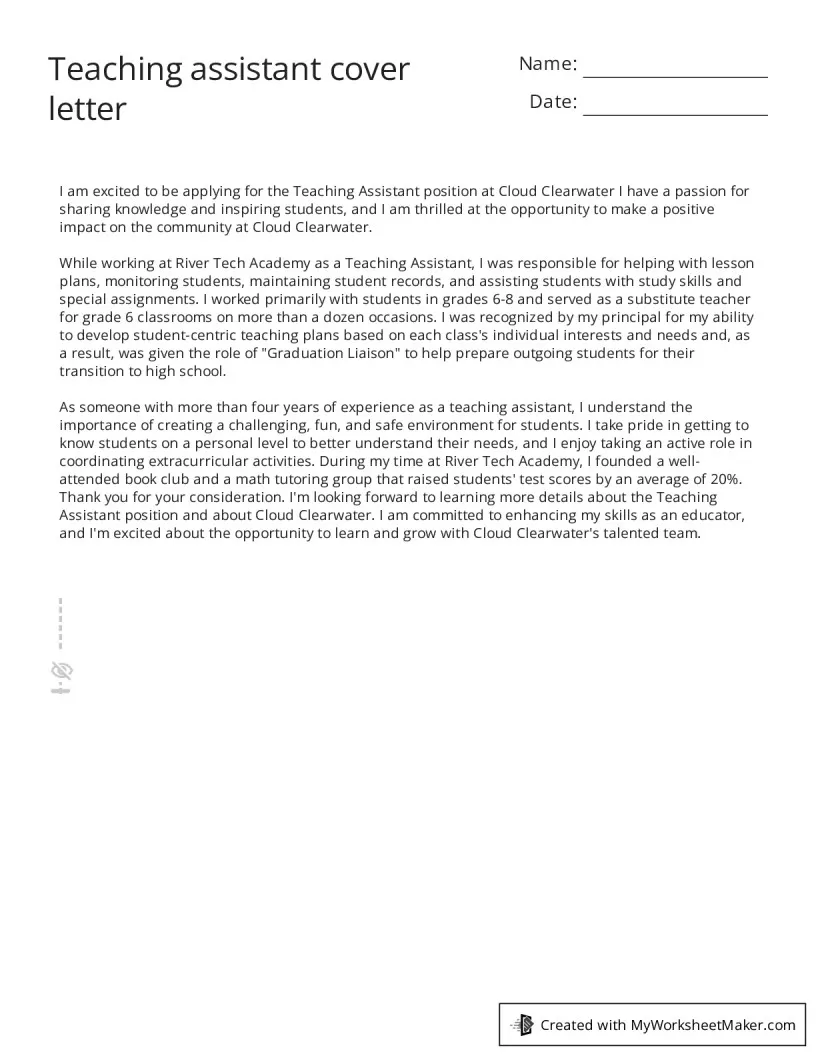
Understanding the Teacher Aide Role
A teacher aide, also known as a classroom assistant or paraeducator, plays a vital role in supporting educators and students within a school environment. They are essential for creating a positive and effective learning atmosphere. Their responsibilities extend beyond basic administrative tasks, often encompassing direct interaction with students, assisting with lesson preparation, and providing individualized support. A strong understanding of the teacher aide role is paramount when crafting a compelling cover letter, as it enables you to highlight your most relevant skills and experiences. This understanding demonstrates to potential employers that you recognize the value you can bring to their school or program and the positive impact you can have on students’ learning journeys.
Key Responsibilities of a Teacher Aide
The duties of a teacher aide are multifaceted, varying depending on the specific needs of the school, the grade level, and the teacher they support. Key responsibilities generally include assisting with lesson planning, preparing instructional materials, and supervising students during activities. Teacher aides often work with students individually or in small groups, providing academic support and helping them with assignments. They may also assist with classroom management, maintaining a structured and organized learning environment. Furthermore, teacher aides can play a crucial role in communicating with parents or guardians, providing updates on student progress and addressing any concerns. Understanding these key responsibilities helps tailor the cover letter to the specific requirements of the target job.
Essential Skills for Teacher Aides
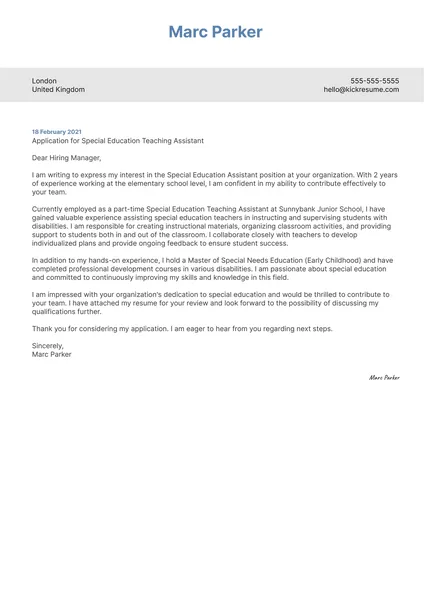
To succeed as a teacher aide, certain skills and qualities are indispensable. Excellent communication skills are vital, as teacher aides must interact effectively with students, teachers, and parents. Patience, empathy, and a genuine desire to help children learn are also crucial. Teacher aides should be organized, detail-oriented, and able to manage multiple tasks simultaneously. Proficiency in basic computer skills and relevant software can also be advantageous. Moreover, the ability to adapt to different learning styles and create a supportive classroom environment is key. When writing a cover letter, explicitly mentioning these skills will demonstrate that you possess the core competencies required to excel in the role. Consider using keywords from the job description to ensure your letter aligns with the employer’s needs.
Crafting Your Teacher Aide Cover Letter
A well-crafted cover letter is your opportunity to make a strong first impression and showcase your suitability for the teacher aide position. It allows you to elaborate on your qualifications, experience, and passion for education beyond the confines of your resume. The goal is to create a letter that is both professional and personal, highlighting your unique strengths and demonstrating your commitment to supporting student success. The following sections will guide you through the essential elements of creating a compelling cover letter that grabs the attention of hiring managers and increases your chances of landing an interview.
Header and Contact Information
Start your cover letter with a professional header that includes your full name, address, phone number, and email address. Make sure the contact information is accurate and up-to-date. Below your contact details, include the date and the recipient’s information: the name of the hiring manager (if known), their title, the school’s name, and the school’s address. This header ensures that the employer can easily contact you and demonstrates your attention to detail and professionalism.
Personalized Salutation

Instead of using a generic greeting like “To Whom It May Concern,” always try to address the hiring manager by name. Research the school’s website or use LinkedIn to find the name of the person responsible for hiring. If you cannot find a specific name, use a professional greeting such as “Dear Hiring Committee” or “Dear [School Name] Principal.” A personalized salutation shows that you have taken the time to research the position and are genuinely interested in the opportunity. It is the first step in establishing a connection with the reader.
Opening Paragraph - Hooking the Reader
The opening paragraph is your chance to grab the reader’s attention. State the position you are applying for and briefly explain where you saw the job posting. Then, immediately highlight your most relevant skills or experience. Instead of a generic statement, try to express your enthusiasm for the role and the school. For example, “I am writing to express my keen interest in the Teacher Aide position at [School Name], as advertised on [Platform]. With my [Number] years of experience in supporting young learners and my passion for fostering a positive learning environment, I am confident I can make a valuable contribution to your team.” This concise opening immediately communicates your qualifications and passion.
Highlighting Your Skills and Experience
The body of your cover letter is where you showcase your skills and experience in detail. Focus on the qualifications and requirements mentioned in the job description. Use specific examples to demonstrate how your skills align with the needs of the school. For instance, if the job description emphasizes classroom management, describe how you’ve successfully maintained order in a classroom setting or assisted with implementing behavioral strategies. Quantify your achievements whenever possible. For example, “I assisted in a classroom with 25 students, helping to improve their reading scores by 15% through targeted interventions.” Tailor this section to each job application for maximum impact.
Showcasing Relevant Qualifications

When highlighting your skills and experience, be sure to focus on the qualifications most relevant to the teacher aide role. This might include experience working with children, assisting in a classroom setting, or knowledge of educational software and tools. Mention any relevant certifications, such as a teacher aide certificate or First Aid/CPR training. If you have experience with specific age groups or subject areas, highlight these as well. For instance, “In my previous role at [School Name], I supported students in grades 3-5, assisting with literacy and mathematics activities.” Aligning your qualifications with the job requirements increases your chances of being considered a strong candidate.
Quantifying Accomplishments
Instead of simply stating what you did, quantify your accomplishments to make a stronger impact. Use numbers and data to demonstrate the positive results of your contributions. For instance, instead of saying, “I helped students with their reading,” write, “I supported 15 students with their reading skills, resulting in a 20% improvement in their reading comprehension scores.” Quantifying your achievements makes them more tangible and shows employers the value you can bring to their school. Whenever possible, use metrics to illustrate your impact on student learning and classroom effectiveness.
Expressing Enthusiasm and Passion
Demonstrate your enthusiasm for the role and your passion for working with children and in education. Share what motivates you to be a teacher aide and what you hope to achieve in the position. This can be as simple as stating, “I am passionate about creating a supportive and engaging learning environment where all students can thrive.” Show your excitement for the specific school and its mission or values. Research the school’s website to find information about its programs, initiatives, or philosophy. Personalizing your letter to reflect your interest in the school and the specific role demonstrates you are genuinely interested in joining their team.
Closing the Cover Letter

In the closing paragraph, reiterate your interest in the position and thank the reader for their time and consideration. Briefly summarize your key qualifications and express your confidence in your ability to contribute to the school. Keep the tone professional and enthusiastic. Clearly state your availability for an interview and how the employer can contact you. Always end with a professional closing, such as “Sincerely,” or “Best regards,” followed by your full name.
Call to Action
Always include a call to action in your closing paragraph. This encourages the reader to take the next step in the hiring process. Clearly state your availability for an interview and how they can contact you. For example, “I am available for an interview at your earliest convenience and can be reached at [Phone Number] or [Email Address]. Thank you again for your time and consideration. I look forward to hearing from you soon.” A call to action makes it easy for the hiring manager to move forward.
Proofreading and Editing
Before submitting your cover letter, carefully proofread and edit it for any errors in grammar, spelling, and punctuation. Errors can create a negative impression and undermine your credibility. Read your letter aloud to catch any awkward phrasing or unclear sentences. It is always a good idea to have a trusted friend or family member review your letter as well. They may catch errors you missed. A polished and error-free cover letter demonstrates your attention to detail and professionalism.
Formatting and Presentation

Pay attention to the formatting and presentation of your cover letter. Use a clear and readable font, such as Arial or Times New Roman, with a font size between 10 and 12 points. Use single spacing within paragraphs and double spacing between paragraphs. Ensure your letter is well-organized with clear headings and subheadings. The letter should be concise, ideally no more than one page. Proper formatting makes your letter easy to read and visually appealing.
Common Mistakes to Avoid
Avoiding common mistakes can significantly improve the effectiveness of your cover letter and increase your chances of landing an interview. By being aware of these pitfalls, you can ensure that your letter presents you in the best possible light. Common mistakes include generic cover letters, typos, and failing to tailor the letter to the specific job requirements. Addressing these issues will boost your chances of success. The key is to demonstrate your understanding of the role and how your skills and experience align with the school’s needs.
Generic Cover Letters
One of the most common mistakes is sending a generic cover letter that could be used for any job. Tailor your cover letter to each specific position you apply for. Research the school and the job requirements, and then customize your letter to highlight your relevant skills and experiences. Avoid using vague language or generic statements that don’t directly relate to the specific job or school. A personalized cover letter shows that you have taken the time to understand the opportunity and are genuinely interested in the role.
Typos and Grammatical Errors

Typos and grammatical errors can make a negative impression and suggest a lack of attention to detail. Always proofread your cover letter carefully before submitting it. Use a spell checker and grammar checker, but don’t rely on them entirely. Read your letter aloud to catch any awkward phrasing or unclear sentences. It is also a good idea to have a friend or family member review your letter. A polished and error-free cover letter demonstrates your professionalism and attention to detail.
Failing to Tailor the Letter
Failing to tailor your cover letter to the specific job and school is a major mistake. Research the school’s mission, values, and programs, and then tailor your letter to align with their needs. Highlight the skills and experiences that are most relevant to the job description. Use keywords from the job posting to demonstrate your understanding of the role. Explain why you want to work at that specific school and how you can contribute to their team. A tailored cover letter demonstrates your genuine interest in the opportunity and increases your chances of standing out from other applicants.
Showcasing Your Personality
While your cover letter should be professional, it should also reflect your personality. Let your enthusiasm and passion for education shine through. Share your unique qualities and what makes you a great fit for the role. Demonstrating your personality can help you connect with the hiring manager and make a memorable impression. Writing with a genuine tone will make your cover letter more engaging and stand out from the crowd.
Highlighting Your Passion for Education

Express your passion for education in your cover letter. Explain why you are drawn to supporting students and teachers. Share any personal experiences that have fueled your passion. Demonstrate your commitment to creating a positive and effective learning environment. Showing your passion for education can help you connect with the hiring manager and make a memorable impression. This could be in the form of mentioning your volunteer experiences or describing the joy you feel when helping students.
Demonstrating a Positive Attitude
Demonstrate a positive and enthusiastic attitude in your cover letter. Highlight your willingness to learn, collaborate, and take initiative. Show that you are a team player and that you are committed to helping students succeed. Use positive language and avoid negative statements. A positive attitude is a valuable asset in any teaching environment and will make you more appealing to potential employers. Focus on what you can contribute to the school and the students.
Using Action Verbs
Use strong action verbs to describe your skills and experience. Action verbs make your cover letter more dynamic and engaging. Instead of saying, “I was responsible for,” say, “I managed,” “I implemented,” or “I supported.” Action verbs bring your accomplishments to life and demonstrate your abilities. Using a variety of action verbs throughout your cover letter will help make it more compelling and showcase your qualifications more effectively. It is the best way to highlight your achievements and give hiring managers a clearer picture of what you can bring to the position.
Resources and Templates for Teacher Aide Cover Letters
Many resources and templates are available to help you create a compelling cover letter for a teacher aide position. Online job sites often provide cover letter templates that you can customize. Consider looking for free resources to assist in crafting your letter. Use these templates as a starting point, tailoring them to your specific skills, experience, and the requirements of the job. You can find plenty of examples to learn from by searching the internet. Remember to personalize the template to reflect your unique qualifications and your genuine interest in the role. By utilizing these resources effectively, you can create a cover letter that stands out and increases your chances of securing an interview.