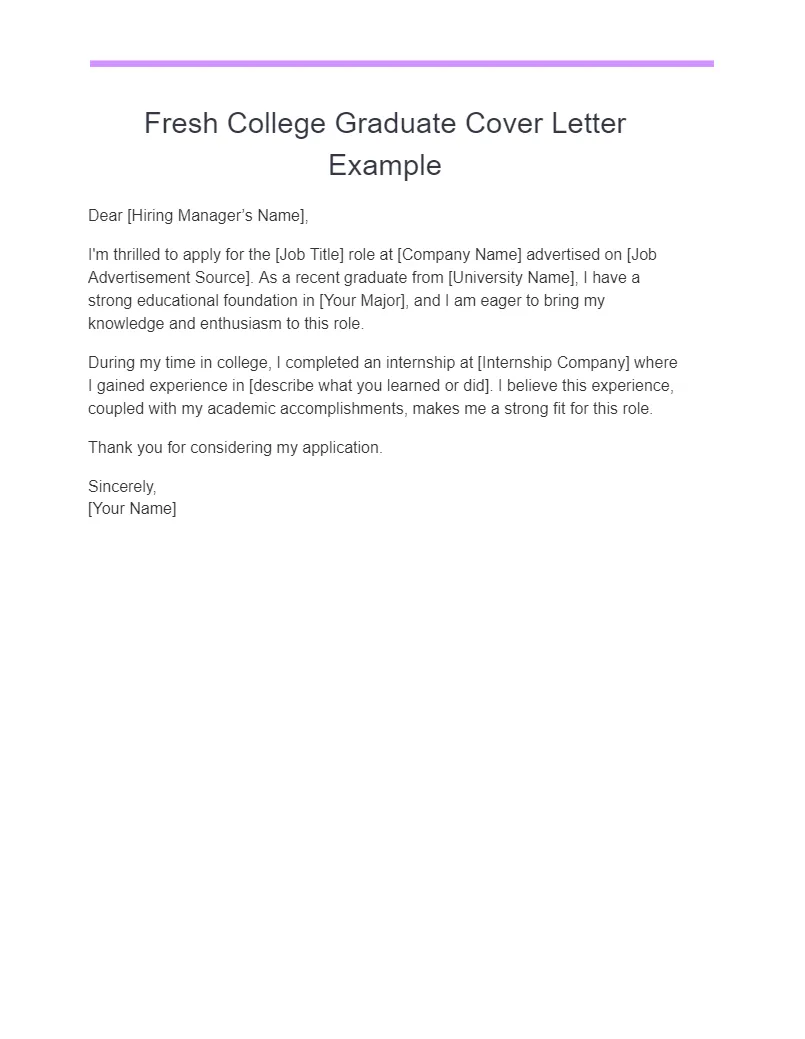
As a fresh graduate, your cover letter is your first impression on potential employers. It’s your chance to showcase your potential and persuade them to read your resume. A well-crafted cover letter is not just a formality; it’s a powerful tool to highlight your unique value proposition. It demonstrates your understanding of the job and your enthusiasm for the opportunity. This guide will unveil the secrets to writing a compelling cover letter that will help you land your dream job. By following these tips, you can transform your cover letter from a generic document into a personalized statement that grabs the attention of hiring managers and sets you apart from the competition.
Crafting a Compelling Cover Letter
The foundation of a successful cover letter is its ability to clearly and concisely communicate your value. This involves highlighting your skills, experiences, and achievements in a way that aligns with the job requirements. It’s about telling a story that demonstrates your suitability for the role and your eagerness to contribute to the company’s success. Remember, a compelling cover letter is more than just a summary of your resume; it’s a narrative that captivates the reader and leaves a lasting impression.
Highlighting Your Skills and Experiences
As a fresh graduate, you may be concerned about a lack of extensive work experience. However, your cover letter is an opportunity to showcase transferable skills gained through academic projects, internships, volunteer work, and extracurricular activities. Focus on demonstrating how your skills align with the job description, using specific examples to illustrate your capabilities. Instead of just listing skills, explain how you’ve applied them to solve problems, achieve goals, and work effectively in a team. This proactive approach demonstrates your potential to contribute to the company, even with limited professional experience.
Showcasing Relevant Academic Achievements

Your academic achievements provide valuable insights into your capabilities and work ethic. Mention relevant coursework, projects, and any academic awards or honors you’ve received. If you completed a thesis or capstone project, briefly summarize it and highlight your key findings or contributions. These details demonstrate your ability to learn, apply knowledge, and achieve results, which are highly valued by employers. Focus on achievements that directly relate to the job and showcase your understanding of the subject matter and your capacity to excel in a professional environment. A well-presented academic background will significantly enhance your profile.
Emphasizing Soft Skills and Personal Qualities
Beyond technical skills, employers are increasingly looking for candidates with strong soft skills and positive personal qualities. Highlight your communication, teamwork, problem-solving, and leadership abilities. Provide specific examples of how you’ve demonstrated these skills in your academic, extracurricular, or volunteer experiences. Showcase your adaptability, initiative, and willingness to learn. For instance, if you successfully led a team project, describe the challenges you faced and how you overcame them. If you volunteer, highlight your dedication, empathy, and commitment to helping others. This will create a well-rounded impression.
Tailoring Your Cover Letter to the Job
Generic cover letters often end up in the rejection pile. Customizing your cover letter for each job application is crucial. This shows the employer that you’ve taken the time to understand their specific needs and that you genuinely want the position. By aligning your skills and experiences with the job requirements, you immediately demonstrate your suitability for the role. This targeted approach increases your chances of getting noticed and making it to the next stage of the hiring process.
Researching the Company and the Role

Before writing your cover letter, thoroughly research the company and the specific role you’re applying for. Visit the company’s website, review their social media profiles, and read news articles about their activities. Understand their mission, values, and recent projects. This knowledge allows you to tailor your cover letter to demonstrate how your skills and experiences align with the company’s objectives. Understand the key responsibilities of the role and identify how your qualifications meet the requirements. This demonstrates your genuine interest in the position and the company.
Matching Your Skills with Job Requirements
Carefully review the job description and identify the key skills, qualifications, and experience sought by the employer. Then, align your cover letter to demonstrate how your skills match these requirements. Use keywords from the job description throughout your cover letter. When you mention your skills, provide specific examples to illustrate how you’ve used them in the past. This direct correlation between your abilities and the job’s demands showcases your suitability for the role. If the job posting emphasizes a specific skill or experience, make sure you highlight it prominently in your cover letter.
Formatting and Presentation
The visual appeal of your cover letter is just as important as its content. A well-formatted cover letter shows professionalism and attention to detail. Choose a clean, readable font like Arial or Times New Roman, and use a font size between 10 and 12 points. Use clear headings, bullet points, and adequate spacing to make the document easy to read. Proofread your cover letter multiple times to eliminate any typos or grammatical errors. A well-formatted cover letter with no errors is a sign of respect for the employer and shows that you care about the opportunity.
Using a Professional Tone and Language

Your cover letter should maintain a professional tone and use formal language throughout. Avoid slang, jargon, and overly casual expressions. Use proper grammar, punctuation, and spelling. Demonstrate your respect for the employer by using a courteous and respectful tone. Write in a clear, concise style, making your points directly and efficiently. Maintain a confident yet humble demeanor. Express your enthusiasm for the opportunity without sounding overly eager or desperate. A polished and professional cover letter builds credibility and boosts your chances of success.
Proofreading and Editing Your Cover Letter
Proofreading is a critical step in the cover letter writing process. Errors, no matter how small, can undermine your credibility. Carefully review your cover letter for any typos, grammatical errors, and inconsistencies. Read it aloud to catch any awkward phrasing. Have a friend or family member proofread it as well. A fresh pair of eyes can often spot mistakes you might have missed. Ensure your contact information is accurate and up-to-date. Your cover letter represents you, so it should be error-free and polished. Taking the time to proofread will significantly enhance your chances of making a positive impression.
Standing Out from the Competition
With numerous fresh graduates vying for jobs, it’s important to make your cover letter stand out. You must go beyond simply listing your qualifications and showcase what makes you unique. A compelling cover letter not only grabs attention but also demonstrates your genuine interest in the role and the company. Highlight how you can contribute to their team and how your skills and experiences match the requirements. Stand out by providing specific examples, quantifying your achievements, and ending with a clear call to action.
Quantifying Your Achievements Whenever Possible

Whenever possible, use numbers to quantify your accomplishments. This adds credibility and impact to your statements. For instance, instead of saying ‘Improved customer service,’ say ‘Increased customer satisfaction scores by 15%’. Instead of ‘Managed social media,’ say ‘Grew social media followers by 20%’. Quantifying your achievements provides concrete evidence of your skills and the value you can bring to the employer. Data-driven statements make your cover letter more persuasive and make it easier for the employer to see the impact you have.
Using Action Verbs to Describe Your Accomplishments
Use strong action verbs to describe your accomplishments and responsibilities. Action verbs bring your experiences to life and make your cover letter more engaging. Instead of using passive phrases, use active language that showcases your contributions. For example, instead of ‘Was responsible for project management,’ write ‘Managed projects, ensuring on-time and within-budget completion’. Use verbs like ’led,’ ‘created,’ ‘developed,’ ‘managed,’ ‘implemented,’ and ‘achieved.’ This will make your cover letter more dynamic and demonstrate your proactive approach. This also helps the employer quickly identify your skills and abilities.
Creating a Strong Opening and Closing
The opening and closing paragraphs are crucial for grabbing the reader’s attention and leaving a lasting impression. The opening should immediately capture the reader’s interest and clearly state your purpose. The closing should summarize your key qualifications, reiterate your enthusiasm, and include a clear call to action. Make your cover letter memorable from beginning to end to maximize your chances of success. Well-crafted opening and closing paragraphs help frame the rest of your letter and increase its effectiveness.
The Importance of a Powerful Opening Paragraph

Your opening paragraph is your first opportunity to make a positive impression. It should be concise, engaging, and clearly state the reason you’re writing. Avoid generic openings like ‘I am writing to express my interest’. Instead, start with a statement that immediately grabs the reader’s attention. Consider mentioning a specific achievement, a shared connection, or your excitement about the opportunity. Clearly state the position you’re applying for and briefly highlight your relevant skills and experience. A strong opening paragraph sets the tone for the rest of the letter and encourages the reader to continue.
Ending with a Call to Action
Your closing paragraph should reinforce your interest in the position and include a clear call to action. Thank the hiring manager for their time and consideration. Express your enthusiasm for the opportunity and reiterate your qualifications. Include a statement like, ‘I am eager to discuss my qualifications further,’ or ‘I look forward to hearing from you soon.’ Providing your contact information again makes it easy for the employer to reach you. A clear call to action encourages the employer to take the next step and consider your application more favorably. The call to action will maximize your chances to be considered.
By following these secrets, you can craft a cover letter that stands out from the competition and increases your chances of landing your dream job as a fresh graduate. Tailor your cover letter, highlight your skills, and present yourself professionally. Good luck.