What to Include in a Cover Letter
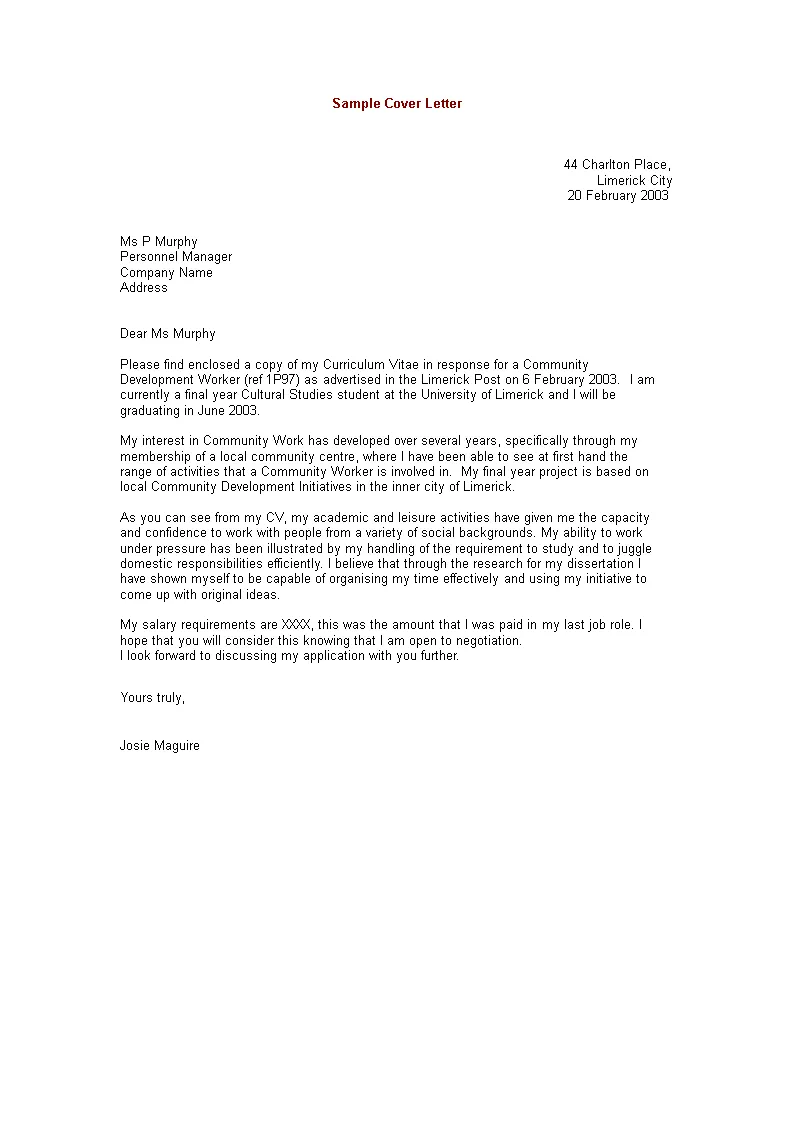
A cover letter serves as your first introduction to a potential employer, making it crucial to craft a compelling and professional document. While the specific elements may vary depending on the job and industry, several key components should always be included. Begin with a clear and concise header that includes your contact information, the date, and the employer’s details. Next, address the hiring manager by name if possible; this demonstrates attention to detail and genuine interest in the position. The body of the letter should then highlight your relevant skills, experiences, and accomplishments, tailoring them to the specific requirements outlined in the job description. Ensure that your letter reflects your personality and enthusiasm for the opportunity, making a strong case for why you are the ideal candidate. Furthermore, always proofread your cover letter meticulously for any grammatical errors or typos, as these can undermine your credibility. A well-written cover letter is not merely a formality but a powerful tool that can significantly increase your chances of securing an interview.
Why Mention Salary in Cover Letter
Whether or not to include your salary expectations in your cover letter is a common dilemma for job seekers. The decision often depends on the employer’s instructions, the industry standards, and your personal comfort level. Some job postings explicitly request salary requirements, in which case, it’s essential to provide this information. In other situations, it may be beneficial to mention your desired salary, especially if you know the industry average or have specific salary expectations. However, if the job posting does not request a salary, it is generally advisable to avoid stating your expectations upfront. This allows you to focus on showcasing your qualifications and negotiate your salary during the interview stage. If you are uncertain, research the typical salary range for the role and location, and be prepared to discuss it during the interview. Remember, transparency and professionalism are key, so always be ready to justify your salary expectations with your skills and experience.
Cover Letter Examples with Salary Requirements

Understanding how to articulate your salary expectations effectively in a cover letter can significantly impact your job application. There are various approaches to stating your desired salary, each suited to different circumstances. The examples below showcase effective ways to incorporate salary requirements, demonstrating how to address this crucial aspect of the job application process. Remember to tailor these examples to your specific situation and the requirements of the job posting. Whether you choose to provide a specific salary range, indicate your willingness to negotiate, or simply state that your expectations are in line with industry standards, ensure that your approach is professional and aligns with your overall career goals. These examples should give you a good idea to create your own cover letter based on your needs, remember to customize them. Avoid generic templates.
Example 1 Stating Salary Range
When the job posting specifically requests a salary, or you have a clear understanding of the market value, stating a salary range is an effective approach. This demonstrates your awareness of the industry standards and your willingness to be flexible. In your cover letter, clearly state the salary range you are seeking, highlighting that you are open to negotiation within that range. For instance, you could write, “My salary expectations are in the range of $XX,000 to $YY,000 per year, based on my experience and the responsibilities of the role.” This demonstrates that you have researched the market and are realistic about your worth. Ensure your range is reasonable and reflects your experience level. This approach also gives the employer some flexibility, allowing them to make an offer that suits their budget while still considering your qualifications. This approach ensures that you and the employer are on the same page regarding salary.
Example 2 Researching the Salary
If the job posting does not specify a salary, but you want to include your expectations, researching the typical salary range for the role and location is essential. Utilize online resources such as Glassdoor, Salary.com, or Payscale to gather accurate data. Once you have a clear understanding of the market rate, you can frame your salary expectations in your cover letter. For example, you might write, “Based on my research and experience in this field, I am seeking a salary that aligns with industry standards for this role in the [City, State] area.” This approach allows you to indicate your salary expectations without stating a specific number. In addition, if you have unique skills or certifications that add value, you can also mention this. This will give the employer a sense of your salary expectations while also allowing some room for negotiation during the interview stage.
Example 3 Salary Requirements Negotiable

If you are unsure of the exact salary requirements, or if you prefer to discuss compensation later in the hiring process, you can state that your salary expectations are negotiable. This approach allows you to focus on your skills and qualifications, leaving the salary discussion for the interview stage. In your cover letter, you might include a brief statement such as, “I am flexible regarding salary and am open to discussing my expectations based on the role’s responsibilities and your company’s compensation structure.” This indicates your willingness to negotiate while conveying your professional demeanor. You can also add, “I am confident that my skills and experience align well with this role, and I am open to discussing salary during the interview process.” This approach gives the employer some flexibility, allowing them to make an offer that suits their budget while still considering your qualifications. This is helpful for both parties in the early stages of the recruitment process.
Example 4 Salary expectations Unspecified
In some cases, it may be best to avoid mentioning your salary expectations in your cover letter altogether. This is particularly true if the job posting does not request salary information, or you are unsure of the industry standards. In such situations, focus on your qualifications and express your enthusiasm for the position. Instead of stating a specific salary, you can state that your compensation expectations are in line with market rate. You may state, “I am eager to learn more about this opportunity and am confident that my salary expectations align with industry standards for this role.” Then, you can leave the salary discussion for the interview, where you can have a more detailed conversation with the hiring manager. This approach allows you to highlight your skills and experience without potentially limiting your chances based on salary considerations. It is essential to research the average salary before the interview to be prepared.
Example 5 Avoid Salary in Cover Letter
There are situations where avoiding salary expectations altogether in your cover letter is the best approach. This is particularly relevant when the job posting explicitly discourages including salary information, or when you prefer to discuss compensation later in the process. Instead of mentioning your salary, you can focus on your qualifications and your interest in the role. You might include a sentence such as, “I am enthusiastic about the opportunity to contribute my skills and experience to your team.” You can then mention your compensation expectations when you discuss during the interview stage. This approach may be preferred when you want to emphasize your value as a candidate. This allows you to demonstrate to the hiring manager that you are more focused on the job itself rather than your salary. In this scenario, you have more negotiation power.
Final Tips for Salary in Cover Letters

When discussing salary requirements in your cover letter, consider the following tips for a professional and effective approach. Always tailor your approach to the specific job posting and your industry. Research the typical salary range for the role and location to have an informed basis for your expectations. Be prepared to justify your salary expectations with your skills, experience, and accomplishments. Avoid providing a salary range that is significantly higher or lower than market value. If you choose to include your salary expectations, do so concisely and professionally. Proofread your cover letter meticulously for any errors, as this reflects your attention to detail. By following these tips, you can effectively address the salary requirement and increase your chances of landing an interview and ultimately securing the job. A well-crafted cover letter is key to any job application, especially in a competitive job market.