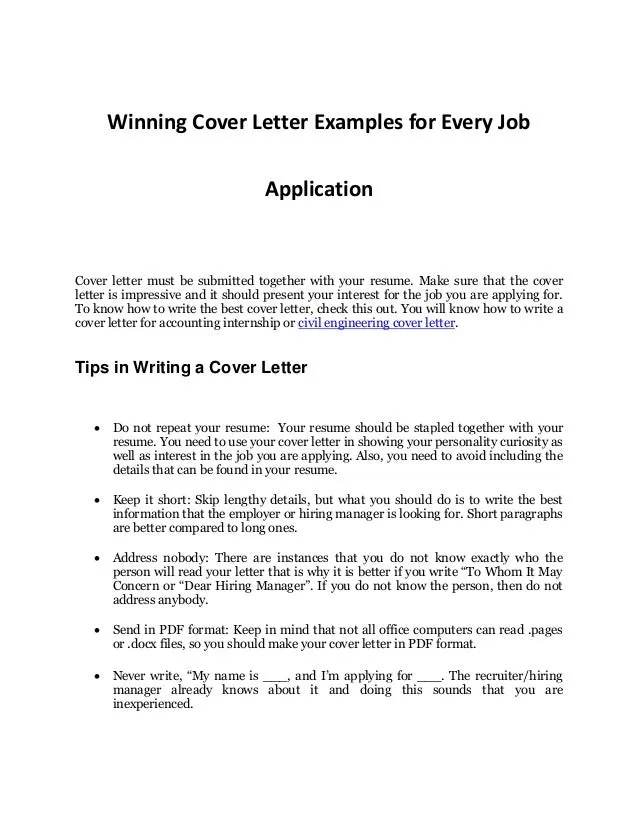
What is a Cover Letter
A cover letter is a crucial document that accompanies your resume when applying for a job. It serves as a personalized introduction, allowing you to express your interest in the position and highlight your qualifications in a more detailed and engaging way than a resume alone. Think of it as your first opportunity to make a strong impression on a potential employer. A well-crafted cover letter demonstrates your personality, writing skills, and genuine enthusiasm for the role and the company. It goes beyond simply listing your skills and experiences; it connects them directly to the specific requirements and objectives of the job you are applying for. In a competitive job market, a compelling cover letter can significantly increase your chances of getting an interview.
Key Components of a Cover Letter
A strong cover letter is made up of several essential components that work together to create a persuasive and professional document. Each section plays a critical role in presenting you as a suitable candidate. First and foremost, the layout should be clear and easy to read, with a professional font and appropriate spacing. Begin with your contact information, followed by the date and the employer’s details. A personalized greeting addressed to the hiring manager or the specific person mentioned in the job posting is essential. The body of the letter is where you highlight your skills and experience, explain your motivations for applying, and demonstrate how your qualifications align with the job’s requirements. Finally, conclude with a strong call to action, expressing your interest in an interview and thanking the reader for their time and consideration. A well-structured cover letter will give you a significant advantage in the job application process.
Contact Information

At the top of your cover letter, provide your full name, phone number, email address, and optionally, your LinkedIn profile URL. Make sure your contact details are current and professional. Double-check for any errors to ensure that the hiring manager can easily reach you. It’s crucial that your email address sounds professional; avoid using nicknames or unprofessional language. Using a professional email address is one of the first steps to create a good impression. This section establishes your identity and provides the necessary information for the employer to contact you for the next steps in the hiring process. It sets a positive tone right from the start by showcasing your professionalism and attention to detail.
Date and Company Details
Below your contact information, include the current date and the employer’s details. Start with the date on which you are sending the letter, and then include the hiring manager’s name (if known), their title, the company name, and the company’s address. Proper formatting is crucial here. It is a sign of respect and attention to detail, showcasing your diligence and organizational abilities. If you don’t know the hiring manager’s name, research it. It’s a sign that you have taken the time to get familiar with the company. If you can’t find the name, you can use a general greeting like ‘Dear Hiring Manager’ or ‘Dear [Department Name] Team’.
Greeting
Start your cover letter with a professional greeting. Ideally, address the hiring manager or the specific person mentioned in the job posting by name. A personalized greeting immediately grabs the reader’s attention and shows that you have researched the company. If you cannot find a specific name, use ‘Dear Hiring Manager’ or ‘Dear [Department Name] Team.’ Avoid generic greetings like ‘To Whom It May Concern,’ as they can make your application feel impersonal. A well-chosen greeting sets the tone for the rest of your letter and helps build a positive connection from the outset. Use ‘Mr.’, ‘Ms.’, or ‘Mx.’ before their last name to show respect.
Body Paragraph 1 Why are you Applying

In the first paragraph, clearly state the position you are applying for and where you found the job posting. Show your enthusiasm for the role and the company. Briefly mention what attracted you to the company and the position. This is your chance to make a strong first impression and capture the reader’s attention. Be specific and avoid generic statements. Demonstrate that you’ve researched the company and understand its values and mission. This paragraph should highlight why you are interested in this specific opportunity and why you believe you are a good fit. It helps establish your genuine interest and sets the stage for the rest of your letter.
Body Paragraph 2 Showcase Your Skills
In this paragraph, highlight your skills and how they align with the job requirements. Carefully review the job description and identify the key skills and qualifications the employer is seeking. Provide specific examples of how you have demonstrated these skills in your previous roles or experiences. Use action verbs to describe your accomplishments and quantify your achievements whenever possible. This section is where you demonstrate your competence and ability to perform the job effectively. The goal is to show how your skills match the needs of the role, making you a compelling candidate. Focus on your most relevant skills and achievements to impress the hiring manager.
Body Paragraph 3 Highlight Your Achievements
Use this paragraph to expand on your achievements and accomplishments that are relevant to the job. Instead of just listing your responsibilities, quantify your accomplishments with numbers and data to demonstrate your impact. For instance, mention how you increased sales by a certain percentage, improved customer satisfaction scores, or successfully managed a specific project. Provide concrete examples to prove your value and show what you can bring to the company. This section is about showcasing the results of your skills and experiences, making a strong case for why you are the best fit for the position. Make sure your achievements directly relate to the job requirements.
Body Paragraph 4 Address the Company Needs

In this paragraph, demonstrate your understanding of the company’s needs and explain how you can contribute to its success. Show that you have researched the company and are familiar with its goals, values, and challenges. Explain how your skills and experiences can help address these needs and contribute to the company’s objectives. This shows the hiring manager that you are not just interested in a job but also in helping the company thrive. This section highlights your alignment with the company’s values and your readiness to make a meaningful contribution. Connect your skills and experiences to the specific needs of the company, demonstrating your understanding of the role’s requirements and showing how you can make a difference.
Closing and Call to Action
Conclude your cover letter with a strong closing and a clear call to action. Express your enthusiasm for the opportunity and reiterate your interest in the position. Thank the hiring manager for their time and consideration. Clearly state that you are available for an interview and how they can reach you. A strong call to action prompts the employer to take the next step, increasing your chances of moving forward in the hiring process. Reiterate your contact information to make it easy for the hiring manager to respond. A well-crafted closing leaves a positive lasting impression and encourages the employer to take action.
Sign-off
Choose a professional sign-off, such as ‘Sincerely,’ ‘Best regards,’ or ‘Yours sincerely.’ Then, type your full name below the sign-off. If you are submitting a physical copy, leave space for your signature above your typed name. Ensure your sign-off is appropriate for the tone of your letter and the formality of the company culture. This final touch provides a professional and polished conclusion to your cover letter. Keep it simple and respectful. Proofread your entire cover letter to ensure there are no typos or grammatical errors before submitting.
Cover Letter Formats

There are several cover letter formats you can use, each with its own advantages. The choice of format depends on your personal preferences and the specific job requirements. Understanding the different formats can help you create a cover letter that effectively showcases your skills and experiences.
The Traditional Format
The traditional cover letter format is the most common and widely accepted. It follows a structured approach with specific sections for contact information, the date, the greeting, the body paragraphs, the closing, and the sign-off. The traditional format is considered professional and straightforward. It is suitable for almost all job applications and provides a clear and organized presentation of your qualifications. This format is ideal if you have a strong and well-defined career path, and it is appropriate for formal or conservative industries.
The Modern Format
The modern format offers a more creative and visually appealing approach. It often incorporates design elements, such as different fonts, colors, and layouts, to make your cover letter stand out. This format allows for greater flexibility in presenting your information and highlighting your skills. It is well-suited for creative industries or when you want to show off your design skills. While it can make your cover letter more memorable, make sure to maintain a professional tone and avoid excessive design elements that could distract from the content. When using a modern format, carefully consider the industry and the company culture to ensure it is appropriate.
The Combination Format

The combination format blends elements of both the traditional and modern formats. It includes a clear structure with essential sections while incorporating some design elements to enhance the visual appeal. This format balances professionalism with creativity. It’s an excellent choice if you want to be more engaging while maintaining a professional look. The combination format gives you the freedom to tailor your cover letter to the specific job and industry, ensuring you make a memorable impression without compromising on professionalism.
Cover Letter Examples by Industry
Different industries require tailored cover letters to effectively highlight relevant skills and experiences. Adapt your cover letter to the industry standards and the specific requirements of the job. Here are some examples.
Cover Letter Example for Marketing
A marketing cover letter should emphasize your creativity, analytical skills, and understanding of marketing strategies. Highlight your experience in developing marketing campaigns, analyzing market trends, and driving customer engagement. Quantify your achievements, such as increasing website traffic or improving conversion rates. Showcase your knowledge of marketing tools and platforms, such as SEO, social media, and email marketing. Demonstrate your passion for the industry and your ability to contribute to the company’s marketing goals. Use the cover letter to present your personality and communication skills, which are essential in marketing. A compelling cover letter can significantly boost your chances of getting an interview.
Cover Letter Example for IT
An IT cover letter should highlight your technical skills and your experience in software development, network administration, or cybersecurity. Focus on your knowledge of specific technologies, such as programming languages, operating systems, and network protocols. Provide details of your experience in managing IT projects, troubleshooting technical issues, and implementing solutions. Showcase your problem-solving skills and your ability to work in a team. Mention any certifications or specific IT tools you are proficient in. Demonstrate your passion for technology and your ability to stay updated with the latest trends. Use the cover letter to emphasize your technical expertise and your ability to contribute to the company’s IT infrastructure. Your IT cover letter should show attention to detail.
Cover Letter Example for Healthcare
A healthcare cover letter should emphasize your qualifications, experience, and compassion. Mention your specific medical skills, such as patient care, medical procedures, or administrative tasks. Highlight your experience in a healthcare setting and your understanding of medical regulations. Show your ability to communicate with patients and their families. Demonstrate your passion for providing quality patient care and your commitment to ethical practices. Emphasize any certifications or specializations. Use the cover letter to demonstrate your qualifications and express your dedication to the healthcare field. In the healthcare industry, it is especially important to be detail-oriented.
Cover Letter Mistakes to Avoid
Avoiding common cover letter mistakes can significantly improve your chances of landing an interview. These mistakes can damage your application and make a negative impression on hiring managers. Being aware of the pitfalls will allow you to make a polished, professional impression. Here are some common mistakes to avoid.
Grammar and Spelling Errors
One of the most critical mistakes is making grammar and spelling errors. These errors demonstrate a lack of attention to detail and can make you seem unprofessional. Always proofread your cover letter carefully before submitting it. Use a grammar checker and have someone else review your letter for any mistakes. A single error can undermine your credibility and lead to your application being rejected. Ensure that your writing is clear, concise, and error-free. Paying attention to grammar and spelling shows that you care about the quality of your work and are willing to put in the necessary effort.
Generic Cover Letters
Avoid using a generic cover letter that you send to every job application. Tailor your cover letter to each specific job and company. Customize your letter by mentioning the job title, the company’s name, and the specific requirements mentioned in the job posting. Personalize your cover letter to show your interest in the specific role and demonstrate that you’ve researched the company. Generic cover letters lack impact and often fail to impress hiring managers. Customization shows that you care enough about the role to make your application unique. Address your skills, experiences, and accomplishments in a way that makes sense for that job.
Ignoring the Job Description
Failing to address the requirements listed in the job description is a significant mistake. Carefully review the job description and identify the key skills and qualifications the employer is seeking. In your cover letter, demonstrate how your skills and experiences align with these requirements. Provide specific examples of how you have demonstrated these skills in your previous roles. Ignoring the job description can make it seem like you are not a good fit for the position. Your cover letter is a great opportunity to highlight why you are a great candidate. Make sure your skills and achievements meet the needs of the role.
Lengthy Cover Letters
Keep your cover letter concise and to the point. Hiring managers are busy and often do not have the time to read lengthy letters. Aim for a cover letter that is no more than one page long. Focus on the most relevant information and avoid including unnecessary details. Use clear and concise language, and make sure each paragraph serves a specific purpose. A well-structured and concise cover letter shows that you respect the hiring manager’s time and that you can communicate effectively. Highlight your key skills and accomplishments, and make sure your letter is easy to read.