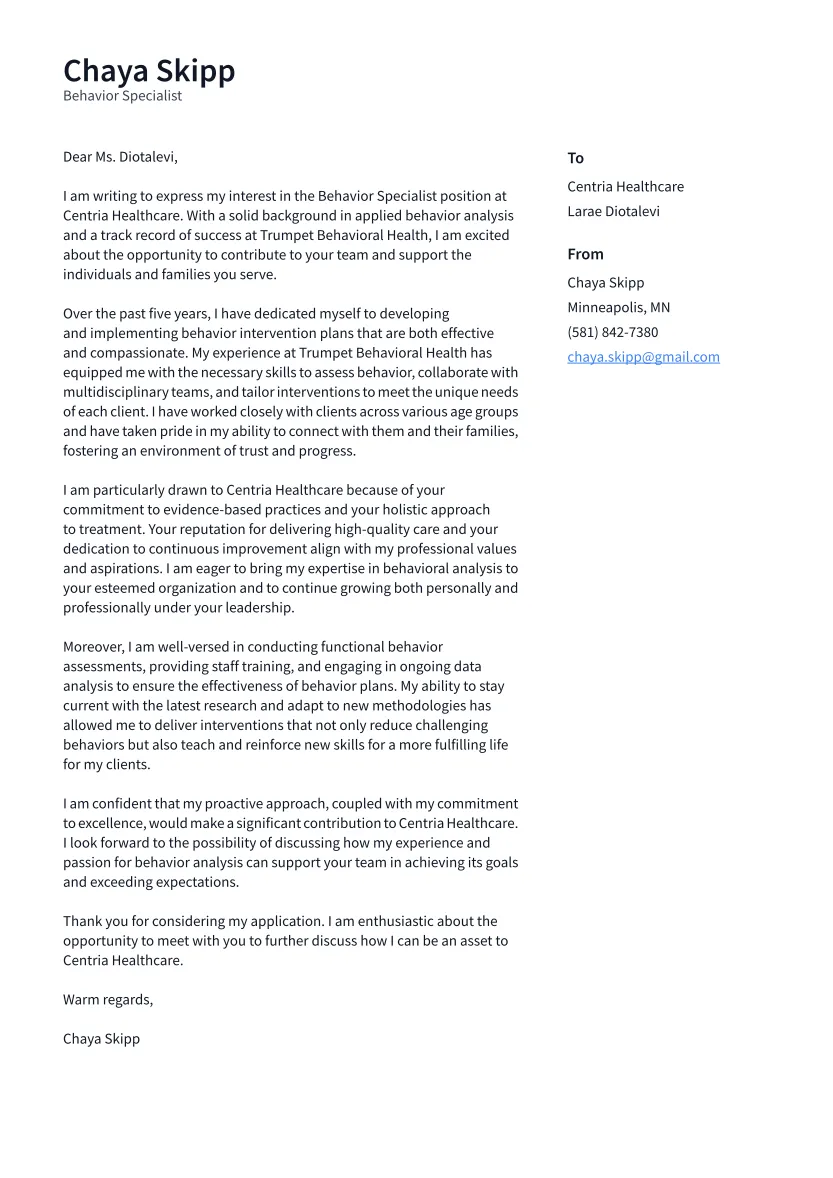
Highlighting Your Skills Cover Letter for Behavior Specialist
Crafting a compelling cover letter for a behavior specialist position is crucial for making a positive first impression and securing an interview. This document is your opportunity to showcase your expertise, passion, and qualifications in a concise and engaging manner. A well-written cover letter not only complements your resume but also provides a platform to demonstrate your understanding of the role and your commitment to the field of behavioral analysis. By following these key strategies, you can significantly increase your chances of standing out from the competition and landing your dream job. Remember, your cover letter is a personal statement that reflects your professional brand, so it’s essential to invest time and effort in its creation.
Emphasize Relevant Experience
When describing your experience, focus on the aspects most relevant to the job description. Instead of simply listing your previous roles, delve into the specific tasks and responsibilities that align with the requirements of the position. For example, if the job requires experience in implementing positive behavior support plans, highlight your proficiency in this area, providing concrete examples of how you’ve successfully developed and executed such plans in the past. This targeted approach demonstrates your understanding of the employer’s needs and showcases your ability to perform the job effectively. Be specific about the populations you have worked with, the settings you have experience in (schools, clinics, homes), and any specialized training or certifications you possess.
Quantify Achievements

Don’t just tell potential employers what you did; show them the impact you made. Use quantifiable data to showcase your achievements and demonstrate the value you brought to previous roles. For instance, instead of saying you ‘improved student behavior,’ state that you ‘decreased incidents of disruptive behavior by 30% within six months through the implementation of a new behavior intervention program.’ Providing specific numbers and metrics makes your accomplishments more tangible and persuasive. Whenever possible, include data that highlights the positive outcomes of your work, such as improved academic performance, increased social skills, or reduced rates of self-injurious behavior. Quantifying your achievements adds credibility to your claims and makes your cover letter more compelling.
Showcase Soft Skills
While technical skills are essential, don’t underestimate the importance of soft skills in the field of behavior analysis. Highlight your interpersonal abilities, such as communication, empathy, patience, and problem-solving. These skills are critical for building rapport with clients, collaborating with colleagues, and effectively implementing behavior intervention strategies. Provide specific examples of how you have demonstrated these skills in previous roles. For example, describe a situation where you successfully de-escalated a crisis situation using effective communication techniques, or how you collaborated with a team to develop and implement a comprehensive behavior plan. Demonstrating your soft skills not only showcases your ability to work effectively with others but also reflects your commitment to providing high-quality care.
Tailor Your Cover Letter
A generic cover letter is unlikely to make a strong impression. Customize your cover letter for each position you apply for by carefully reviewing the job description and identifying the key requirements and preferred qualifications. Then, tailor your letter to directly address these points, highlighting your relevant skills and experience. This shows the employer that you have taken the time to understand their needs and that you are genuinely interested in the specific opportunity. Personalize the letter by mentioning the organization’s name and, if possible, the name of the hiring manager. This level of personalization demonstrates your attention to detail and your genuine interest in the position.
Research the Organization

Before submitting your cover letter, thoroughly research the organization you are applying to. Understand their mission, values, and the populations they serve. This knowledge will help you tailor your letter and demonstrate your genuine interest in the organization. Visit their website, read any recent news articles or publications, and review their social media presence. This research will provide valuable insights into the organization’s culture and priorities, allowing you to align your cover letter accordingly. By showing that you understand the organization’s mission and values, you can create a compelling case for why you are the perfect fit for the role.
Address the Specific Job Requirements
Carefully analyze the job description and address each of the listed requirements in your cover letter. Use the job description as a guide to ensure that you are highlighting the skills and experience that the employer is specifically seeking. When discussing your qualifications, use keywords and phrases from the job description to demonstrate that you meet the stated requirements. For instance, if the job description mentions experience with a specific assessment tool or intervention strategy, make sure to include this in your cover letter. Providing concrete examples of how your skills and experience align with the job requirements will strengthen your application and increase your chances of getting an interview.
Highlight Your Passion and Commitment
Express your enthusiasm for the field of behavior analysis and your commitment to helping individuals with behavioral challenges. Your passion for the work will be evident in your tone and word choice. Share what motivates you to pursue a career in this field and why you are drawn to this specific opportunity. Describe your long-term career goals and how this position aligns with your aspirations. Demonstrating your genuine interest in the role and the organization will leave a lasting impression on the hiring manager. Let your personality shine through and make your cover letter a reflection of your genuine enthusiasm for the position.
Proofread and Edit Carefully

Before submitting your cover letter, thoroughly proofread and edit it for any grammatical errors, spelling mistakes, or typos. These errors can create a negative impression and undermine your credibility. Read your cover letter aloud to catch any awkward phrasing or sentences that don’t flow smoothly. Consider asking a friend, family member, or career advisor to review your letter for feedback. A second pair of eyes can often identify errors that you may have missed. Ensuring that your cover letter is polished and error-free demonstrates your attention to detail and your commitment to professionalism.
Express Enthusiasm and Follow Up
Conclude your cover letter by reiterating your interest in the position and expressing your enthusiasm for the opportunity. Thank the hiring manager for their time and consideration. Include a call to action, such as stating that you are eager to learn more about the position and are available for an interview at their earliest convenience. Finally, follow up with the hiring manager a week or two after submitting your application to reiterate your interest and inquire about the status of your application. A polite follow-up demonstrates your continued interest and commitment to the role. A well-crafted and carefully considered cover letter can significantly increase your chances of securing your dream job as a behavior specialist.