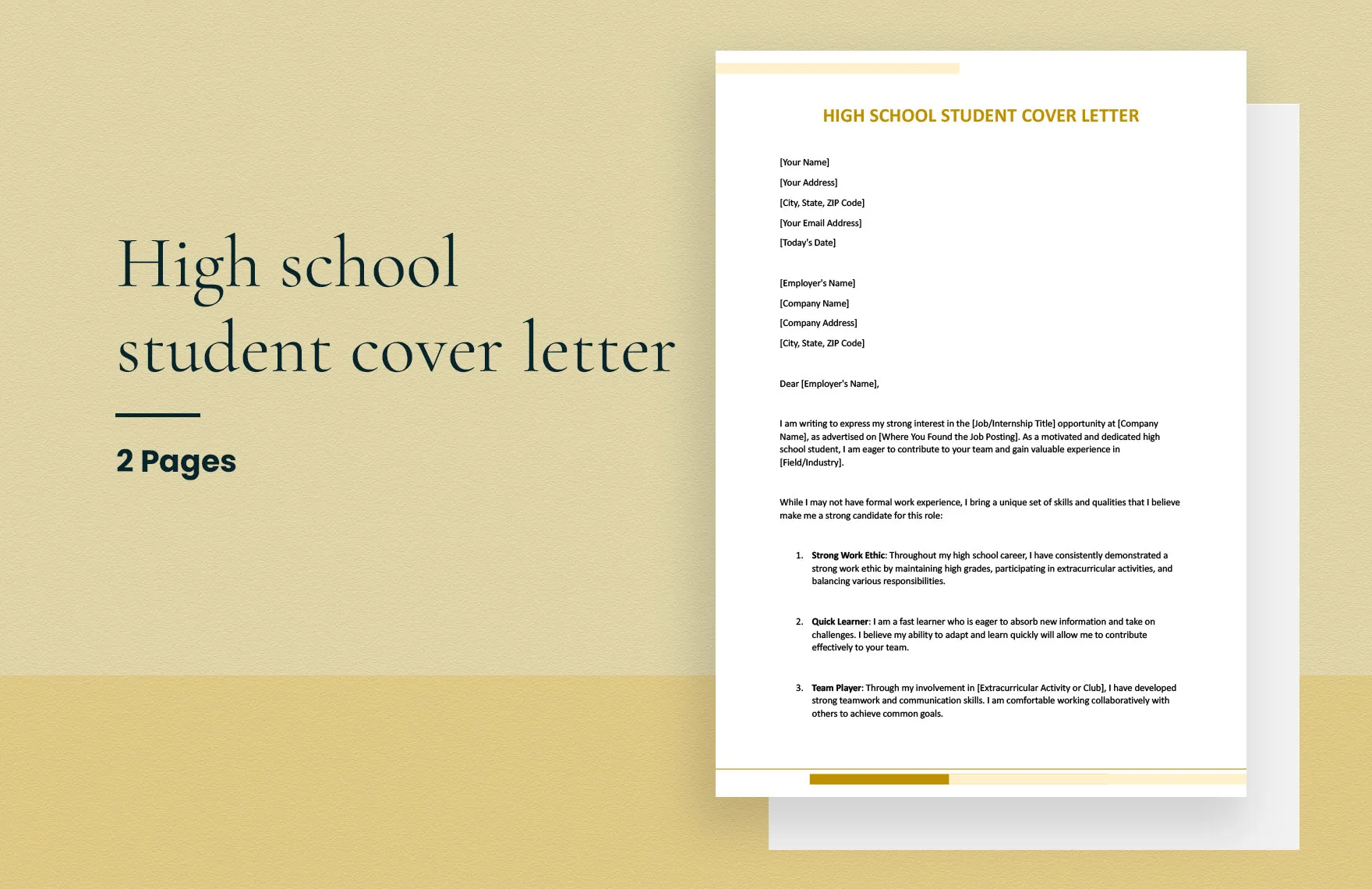
What is a Cover Letter?
A cover letter is a crucial document that accompanies your resume when applying for jobs, internships, volunteer positions, or scholarships. It serves as your introduction to the potential employer or organization, providing an opportunity to highlight your skills, experiences, and enthusiasm for the opportunity. Unlike a resume, which presents a factual summary of your qualifications, a cover letter allows you to express your personality, explain why you’re a good fit, and showcase your communication skills. For high school students, a well-crafted cover letter is especially important because it demonstrates your professionalism and initiative, which can set you apart from other applicants.
Why High School Students Need Cover Letters
High school students often have limited work experience, making a cover letter essential to showcase their potential. It allows you to emphasize your transferable skills, such as communication, teamwork, and problem-solving, which are valuable in any role. It also provides a platform to explain your academic achievements, extracurricular activities, and any relevant volunteer work. Furthermore, a cover letter demonstrates your attention to detail, writing proficiency, and genuine interest in the opportunity. By taking the time to personalize your cover letter, you show employers that you are serious about the position and willing to go the extra mile to secure it. This proactive approach can significantly increase your chances of getting noticed and landing an interview.
Key Components of a Cover Letter

A well-structured cover letter typically includes several key components that work together to create a compelling application. Each section serves a specific purpose, contributing to the overall effectiveness of your letter. It’s important to tailor each part to the specific opportunity you’re applying for, ensuring that your letter is relevant and engaging. A generic cover letter is unlikely to impress an employer, so personalization is key to making a positive impression. The following are essential parts of a cover letter.
Header
The header of your cover letter should include your contact information, such as your name, address, phone number, and email address. This allows the hiring manager to easily reach you. It’s also common to include the date and the employer’s contact information (name, title, company, and address) if you know it. Ensuring accuracy in this section demonstrates your attention to detail and professionalism. Formatting the header correctly sets the tone for the rest of the letter.
Greeting
The greeting should be formal and professional. If you know the hiring manager’s name, address your letter to them directly (e.g., “Dear Mr. Smith”). If you don’t know the name, use a general greeting like “Dear Hiring Manager” or “Dear [Company Name] Team.” Avoid overly casual greetings, as they can make a negative first impression. Always double-check the spelling of the name and title to show your respect and attention to detail.
Opening Paragraph: Grab Attention

The opening paragraph is your chance to immediately grab the reader’s attention. State the purpose of your letter and mention where you saw the job posting or how you learned about the opportunity. Briefly introduce yourself and express your enthusiasm for the position or organization. Show that you understand the company and what they do. Make the reader want to learn more about you and your qualifications by keeping the tone enthusiastic, concise, and informative. This initial impression is crucial for setting the stage for the rest of the letter.
Body Paragraph 1: Highlight Skills
In the first body paragraph, focus on highlighting your relevant skills and experiences. Analyze the job description and identify the key skills the employer is seeking. Then, explain how your skills align with these requirements. Provide specific examples from your academic achievements, extracurricular activities, or volunteer experiences that demonstrate your abilities. Use action verbs to showcase your accomplishments and quantify your achievements whenever possible. Connect your skills to the employer’s needs, showing them why you’re a strong candidate. Focus on the most relevant and impressive skills.
Body Paragraph 2: Show Enthusiasm
The second body paragraph should demonstrate your enthusiasm for the opportunity and the organization. Explain why you are interested in the specific role and what you hope to gain from the experience. Show that you have researched the company and understand its mission, values, and culture. Connect your personal goals with the company’s objectives, illustrating how your contributions can benefit them. This enthusiasm shows you’re genuinely invested in the opportunity, which is a key factor for employers. Share your passion and show them you want this opportunity.
Body Paragraph 3: Quantify Achievements

In the final body paragraph, focus on quantifying your achievements to provide tangible evidence of your capabilities. Use numbers and statistics to demonstrate your successes in previous roles or activities. For example, if you improved sales, mention the percentage increase. If you led a team, mention the number of team members and any specific outcomes. Quantifiable achievements make your claims more credible and show the employer the value you can bring. Focus on what you have achieved so that the employer can see your previous success and potential for future success.
Closing Paragraph
Summarize your interest in the position and reiterate your enthusiasm. Thank the employer for their time and consideration. Express your eagerness to hear back from them and mention your availability for an interview. This section should be brief and to the point, leaving the reader with a positive final impression. End with a strong statement that reinforces your interest in the opportunity and the company.
Complimentary Close and Signature
Use a professional closing like “Sincerely,” “Best regards,” or “Thank you.” Leave space for your signature, and type your full name below the closing. If submitting your cover letter electronically, you can either type your name or include a digital signature. Make sure your signature is clear and legible. This final step completes the letter and provides a professional finish.
Top 5 Cover Letter Examples for High School Students

Here are some example cover letters to help you better prepare your own:
Example 1 Summer Job
Dear Hiring Manager,
I am writing to express my interest in the summer job opportunity at [Company Name], as advertised on [Platform]. As a highly motivated high school student, I am eager to gain experience in a professional environment and contribute to your team. I have excellent communication skills and a strong work ethic. I am available to work full-time during the summer and am excited about the chance to learn new skills and take on challenges.
Sincerely, [Your Name]
Example 2 Volunteer Position
Dear [Name of Contact Person],
I am writing to apply for the volunteer position at [Organization Name]. I am a dedicated high school student with a passion for [Cause] and a desire to make a positive impact in my community. I am enthusiastic about assisting with [Tasks]. I am eager to offer my time and talents to support your mission and contribute to the organization’s success.
Sincerely, [Your Name]
Example 3 Internship Application

Dear [Hiring Manager Name],
I am writing to express my keen interest in the internship position at [Company Name]. I am a high school student passionate about [Field of Interest] with a strong academic record and experience in [Relevant Experience]. I am particularly excited about the opportunity to develop my skills and gain experience in a professional setting while contributing to [Company goals]. I am a quick learner and eager to take on new challenges.
Sincerely, [Your Name]
Example 4 Part-Time Job
Dear [Hiring Manager Name],
I am writing to express my interest in the part-time job opening at [Company Name]. As a motivated high school student seeking work, I am eager to contribute to your team and develop valuable professional skills. I possess strong customer service and communication skills, along with the ability to multitask and work well under pressure. I am available to work flexible hours, including evenings and weekends.
Sincerely, [Your Name]
Example 5 Scholarship Application
Dear Scholarship Committee,
I am writing to apply for the [Scholarship Name]. As a dedicated high school student with a strong academic record and involvement in [Extracurricular Activities], I am committed to pursuing my education and achieving my academic goals. I am passionate about [Area of Study] and eager to make a positive impact in the community through [Activities]. I believe that receiving this scholarship would greatly help me continue my studies.
Sincerely, [Your Name]
Formatting and Design Tips for High School Cover Letters

Effective formatting and design are crucial for making your cover letter easy to read and visually appealing. Use a professional font, such as Times New Roman, Arial, or Calibri, with a font size of 11 or 12 points. Maintain consistent formatting throughout the document, including spacing, margins, and alignment. Use clear and concise language, avoiding jargon or overly complex sentences. Break up long paragraphs into shorter ones to improve readability. Proofread your cover letter carefully to eliminate any grammatical errors or typos. Consider using a simple, clean template that is easy on the eyes and shows professionalism.
Proofreading and Editing Your Cover Letter
Proofreading and editing are essential steps in the cover letter writing process. Carefully review your letter for any spelling, grammar, and punctuation errors. Ask a teacher, parent, or friend to read your letter and provide feedback. Ensure that your content is clear, concise, and tailored to the specific opportunity. Check for inconsistencies in your information and make sure your tone is professional and enthusiastic. A well-edited cover letter demonstrates your attention to detail and commitment to quality, increasing your chances of making a positive impression. Ensure that you are happy with what you have written.