Why a CNA Cover Letter Matters
A Certified Nursing Assistant (CNA) cover letter is more than just a formality; it’s your first opportunity to make a strong impression on a potential employer. In a competitive job market, a well-crafted cover letter can significantly increase your chances of securing an interview. It allows you to personalize your application, highlighting your unique skills, experiences, and passion for patient care. Unlike a resume, which provides a factual overview of your qualifications, a cover letter gives you the space to tell your story, demonstrating your enthusiasm and commitment to the role. This is a critical tool in differentiating yourself from other applicants and showcasing your suitability for the position.
Highlighting Your CNA Skills and Experience
When writing a cover letter, focus on highlighting your relevant skills and experiences. Begin by reviewing the job description to identify the specific requirements and desired qualities. Tailor your cover letter to match these needs, emphasizing how your skills align with the employer’s expectations. Provide concrete examples of your past experiences, such as specific tasks you performed, patient interactions you managed, or any special training you have received. This will help potential employers quickly understand your capabilities. Use action verbs to describe your accomplishments, providing evidence of your ability to perform essential CNA duties. Remember, the more specific you are, the more impactful your cover letter will be, painting a clear picture of why you’re the ideal candidate.
Essential Skills for CNA Positions

CNAs require a diverse set of skills to provide effective patient care. These include physical skills for assisting with daily living activities, emotional intelligence for offering support, and communication abilities for interacting with patients, families, and healthcare professionals. Highlight these skills and how you have applied them in previous roles. Focusing on these key skills helps demonstrate that you possess the qualities needed to excel in the position. Consider including examples of how you have handled challenging situations or provided exceptional care in your previous roles. It’s important to showcase skills in patient care, along with effective communication and teamwork, and experience with medical equipment.
Patient Care and Compassion
Patient care is at the heart of the CNA role. Showcase your compassion and empathy, and how you have demonstrated these qualities in previous roles. Provide specific examples of how you have provided emotional support, assisted with personal hygiene, and ensured patient comfort. Emphasize your ability to maintain patient dignity and respect, creating a safe and caring environment. Include experiences where you have gone above and beyond to improve a patient’s quality of life. The ability to demonstrate compassion and a genuine care for the well-being of patients is a key quality that employers seek in CNAs, making it a crucial element to emphasize in your cover letter.
Communication and Teamwork
Effective communication and teamwork are essential for a successful CNA. Highlight your ability to communicate clearly with patients, families, and other healthcare professionals. Provide examples of how you have worked collaboratively within a team, sharing information and supporting colleagues. Detail instances where your communication skills led to better patient outcomes or improved team dynamics. Mention your experience with electronic health records or other relevant technologies, if applicable. Employers value CNAs who can build positive relationships, work efficiently, and ensure smooth operations within a healthcare setting. The ability to effectively communicate and contribute positively to a team is critical for demonstrating your overall ability.
Experience Examples for CNA
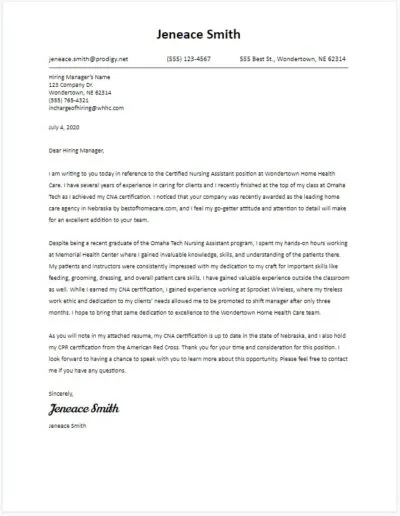
When providing examples of your experience, focus on specific tasks and responsibilities you have undertaken. Illustrate how you have performed duties such as taking vital signs, assisting with mobility, feeding patients, and documenting care. Use the STAR method (Situation, Task, Action, Result) to structure your examples. This helps employers quickly understand the context of your experience, the actions you took, and the positive outcomes. For example, describe a situation where a patient was experiencing discomfort (Situation), the task of assessing their needs (Task), the actions you took to alleviate their discomfort (Action), and the positive result of improved patient comfort (Result). Providing concrete examples makes your experience more relatable and demonstrates your competence as a CNA.
How to Showcase Your Certifications
Highlighting your certifications is vital. Clearly state your CNA certification and any other relevant credentials, such as CPR or First Aid. Include the name of the certifying organization and the date of your certification. If you possess any specialized training or additional qualifications, be sure to mention them. Detail any continuing education courses you have completed to keep your skills current. Emphasize any special skills that make you a valuable candidate. By listing your qualifications, you demonstrate your commitment to your profession and your ability to provide safe and competent care. Ensure that all certifications are up-to-date and valid.
Formatting Your CNA Cover Letter
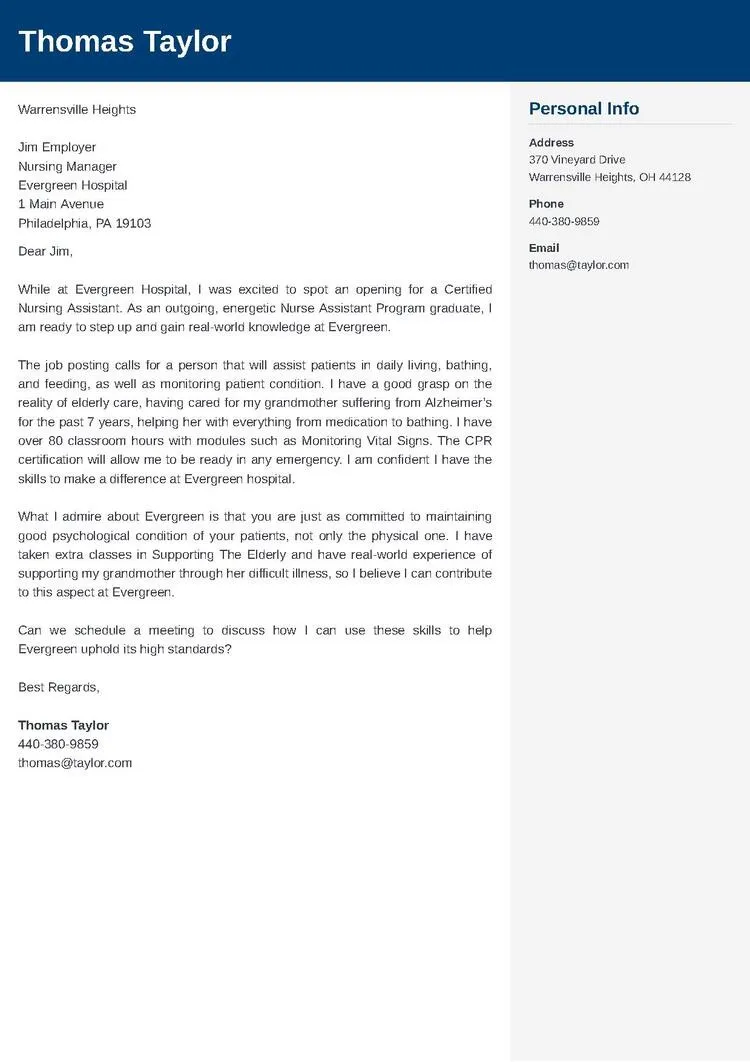
Proper formatting is crucial for creating a professional impression. Choose a clear and easy-to-read font, such as Times New Roman or Arial, with a size of 11 or 12 points. Use standard one-inch margins and double-space between paragraphs for readability. Divide your cover letter into logical sections, including a header, a professional salutation, an introductory paragraph, body paragraphs that highlight your skills and experiences, and a closing. Keep your letter concise, ideally within one page. Avoid grammatical errors and typos by proofreading your letter carefully. A well-formatted cover letter showcases your attention to detail and professionalism.
Header and Contact Information

Your header should include your full name, address, phone number, and email address. If you have a professional online profile, such as a LinkedIn profile, you can include a link to it. Ensure that your contact information is current and easy to find. Place the header at the top of your cover letter, typically aligned to the left or center. This allows employers to quickly access your contact information. Verify the email address is professional and appropriate for the healthcare environment.
Professional Salutation
Always use a professional salutation. If you know the hiring manager’s name, address the letter to them directly, using ‘Dear Mr./Ms./Mx. [Last Name]’. If you don’t know the name, use a general salutation like ‘Dear Hiring Manager’ or ‘Dear [Department Name] Hiring Team’. Avoid overly casual greetings. This sets a professional tone from the start. The salutation shows that you’ve taken the time to personalize your application. If the job posting specifies who to address the letter to, ensure that you follow the instructions carefully. This shows attention to detail and respect for the organization’s protocol.
Body Paragraph 1: Expressing Your Interest
The first paragraph is your opportunity to express your interest in the position and state where you saw the job posting. Briefly mention why you are applying for the role and what attracts you to the organization. Keep this paragraph concise and enthusiastic. Mention any personal connection you have with the organization or its mission, if applicable. Show your keen interest in becoming part of their team. Ensure that your opening is engaging and captures the reader’s attention immediately, motivating them to read further. Demonstrate a clear understanding of the role’s requirements and a genuine interest in contributing to the organization.
Body Paragraph 2: Highlighting Relevant Skills

In this paragraph, highlight your skills that directly relate to the job requirements. Review the job description and identify key skills, and then provide specific examples of how you have demonstrated those skills. Use action verbs to describe your accomplishments and quantify your achievements whenever possible. Focus on skills that are most important to the employer, such as patient care, communication, and teamwork. This section is where you translate your abilities into concrete examples, proving your suitability for the position. Demonstrate how your skills align with the needs of the employer, providing clear evidence of your competence and potential.
Body Paragraph 3: Showcasing Your Accomplishments
Showcase your accomplishments that demonstrate your value as a CNA. This can include instances where you improved patient outcomes, went above and beyond to provide exceptional care, or received positive feedback from patients or supervisors. Use the STAR method to structure your examples, providing the Situation, Task, Action, and Result of your actions. Quantify your achievements when possible; for example, mention the number of patients you assisted or any specific improvements you contributed to. Make sure the accomplishments directly relate to the requirements of the role to show your abilities and commitment to your profession. Highlight any awards or recognitions received and provide evidence of your success.
Body Paragraph 4: Demonstrating Your Passion
In this final body paragraph, demonstrate your passion for patient care and your commitment to the healthcare profession. Explain why you chose to become a CNA and what motivates you to provide excellent care. Mention any special areas of interest within the field, such as working with a specific patient population or focusing on a particular aspect of care. Show your genuine enthusiasm for the position and the organization. Express your desire to contribute to their team and make a positive impact on the lives of patients. Convey your dedication and enthusiasm for the role and convey your dedication to continuous learning and professional growth.
Closing Your CNA Cover Letter

Your closing should be professional and reinforce your interest in the position. Thank the hiring manager for their time and consideration. Reiterate your enthusiasm for the opportunity and express your eagerness to discuss your qualifications further. Use a professional closing, such as ‘Sincerely,’ ‘Respectfully,’ or ‘Best regards,’ followed by your typed name. Include your signature if you are submitting a physical copy of the cover letter. This gives you a chance to summarize your points and remind the employer of your commitment to your profession.
Expressing Gratitude
Expressing gratitude is a crucial part of your closing. Thank the hiring manager for taking the time to consider your application. Show appreciation for the opportunity to apply for the position, and for their time and consideration. A simple expression of gratitude can leave a positive impression. You should use a sincere and heartfelt tone to convey your appreciation. Including a thank you shows respect and courtesy and enhances the professional tone of the letter. This simple gesture can make a big difference.
Call to Action
End your cover letter with a clear call to action. State your willingness to be interviewed and reiterate your contact information. Provide your phone number and email address again to make it easy for the hiring manager to reach you. Express your enthusiasm for the opportunity and your desire to discuss your qualifications further. Make it easy for the employer to take the next step. A strong call to action prompts the employer to consider your application actively. Including this action makes it easier for them to initiate the next steps in the hiring process.
Proofreading and Editing Your CNA Cover Letter

Proofreading and editing are the final but essential steps. Carefully review your cover letter for any grammatical errors, typos, or inconsistencies. Ensure that your cover letter is clear, concise, and easy to read. Ask a friend or family member to proofread your letter as well. This helps you to catch any errors you may have missed. Proofreading ensures your application is polished and professional, showing the employer your attention to detail. It shows your commitment to the role, and the care you have taken in your application.