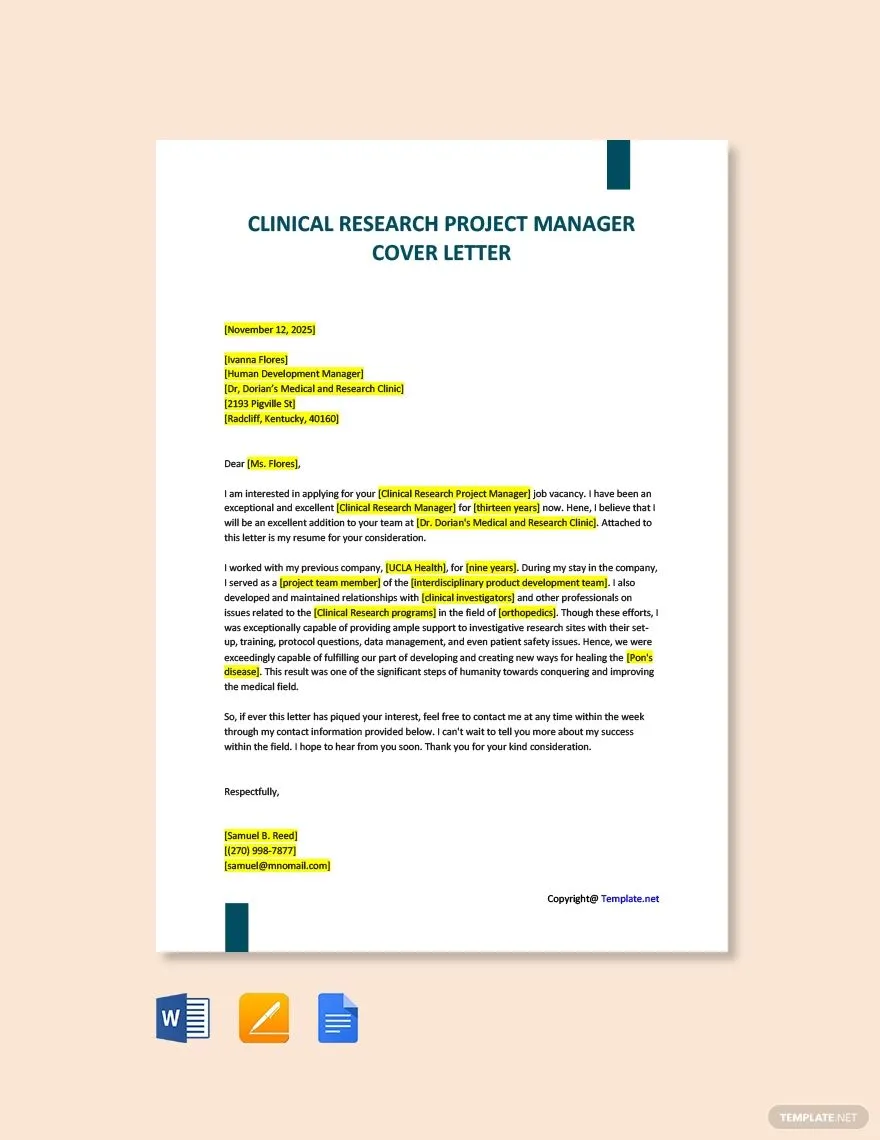
Crafting a Compelling Clinical Research Cover Letter
A well-crafted cover letter is your first introduction to a potential employer in the competitive field of clinical research. It’s not just a formality; it’s a crucial opportunity to showcase your skills, experience, and passion for the role. A compelling cover letter grabs the reader’s attention, demonstrates your understanding of the job requirements, and convinces them that you’re the ideal candidate. It complements your resume by providing context and personality, going beyond a simple list of qualifications. The goal is to create a lasting positive impression that leads to an interview and ultimately, your dream job in clinical research. Mastering the art of writing a cover letter is an investment in your career, setting you apart from other applicants and paving the way for success.
Understanding the Importance of a Strong Cover Letter
In the world of clinical research, attention to detail and clear communication are paramount. Your cover letter serves as the initial test of these qualities. A strong cover letter demonstrates your ability to articulate your value proposition concisely and persuasively. It allows you to explain why you are specifically interested in the position and the company. It provides the space to discuss your career goals and how they align with the organization’s mission. A well-written cover letter reveals your personality and enthusiasm, often missing from a standard resume. It can highlight your achievements beyond what is listed in your resume, giving you a significant edge. Recruiters often filter applications based on the strength of the cover letter, making it an essential tool in your job search arsenal. Neglecting your cover letter means potentially missing out on opportunities that you would be perfect for.
Highlighting Relevant Skills and Experience

Your cover letter is your chance to shine a spotlight on the skills and experiences that make you the perfect fit for the clinical research position. This isn’t just a repeat of your resume; it’s an opportunity to elaborate and provide context. Think about the key requirements listed in the job description. Identify the skills and experiences you possess that directly address those requirements. Quantify your achievements whenever possible. For instance, instead of saying “Managed clinical trials,” you could say, “Successfully managed three Phase III clinical trials, ensuring on-time completion and adherence to protocol.” This level of detail provides concrete evidence of your abilities and demonstrates your competence in clinical research. Tailor your language to match the tone of the job posting, using the same keywords and phrases to resonate with the hiring manager.
Key Skills to Showcase
Clinical research demands a specific set of skills that should be prominently displayed in your cover letter. Highlight your proficiency in areas like data analysis, regulatory compliance (GCP, HIPAA), protocol development, and patient recruitment. Emphasize your experience with clinical trial management systems and any relevant software or tools. Soft skills are equally important. These include strong communication skills, both written and verbal, as you will need to interact with various stakeholders. Detail orientation is vital to ensure accuracy in data collection and reporting. Problem-solving skills are crucial for addressing unexpected challenges that arise during clinical trials. Teamwork and leadership abilities are also valuable, especially if you have experience in managing or supervising a team. When describing these skills, provide concrete examples of how you’ve utilized them in past roles, demonstrating your ability to apply them effectively.
Experience to Emphasize
When highlighting your experience, focus on the roles and responsibilities most relevant to the target position. Even if your background is diverse, strategically emphasize experiences that align with the job description. Mention any experience you have with specific therapeutic areas if the job focuses on a particular field. If you’ve worked with specific phases of clinical trials (Phase I, II, III, or IV), make sure to include this information. Highlight your achievements within each role. For example, if you were responsible for patient recruitment, quantify your success, such as “Increased patient enrollment by 20% within six months.” If you have experience with data management, describe the systems you used and any improvements you implemented. Always frame your experience in a way that showcases your contribution to the success of previous projects and your potential to contribute to the company’s goals.
Tailoring Your Cover Letter to the Job Description

Generic cover letters are easily identified and often discarded. The most successful job applications are those that are tailored specifically to the job and the company. Start by thoroughly reviewing the job description. Identify the key requirements, desired skills, and company values. Then, use these insights to customize your cover letter, ensuring that your skills and experiences directly address the stated needs. This personalized approach shows that you’ve invested time and effort in understanding the role and are genuinely interested in the position. It demonstrates your attention to detail and your ability to match your qualifications to specific requirements. This level of customization will make you stand out and increase your chances of getting noticed by the hiring manager. Avoid the pitfall of using a generic template; instead, show that you have carefully considered the role and are an ideal candidate.
Analyzing the Job Posting for Keywords
One of the most effective ways to tailor your cover letter is to analyze the job posting for keywords. These are the terms and phrases the employer uses to describe the ideal candidate and the required skills and experience. Identify the most frequently mentioned skills, software, and responsibilities. Incorporate these keywords naturally throughout your cover letter. This helps your application get past automated screening systems (ATS) and ensures that your qualifications align with the job requirements. However, don’t simply stuff your cover letter with keywords. Instead, weave them into your descriptions of your skills and experiences, creating a cohesive narrative that highlights your suitability for the role. Make sure that the keywords you use accurately reflect your skills and experience.
Customizing Your Letter for Each Application
Customizing your cover letter for each application extends beyond simply incorporating keywords. It involves researching the company, understanding its mission, and demonstrating how your skills and experience align with their values and goals. Mention specific projects or initiatives the company is involved in that resonate with your interests. Show that you have taken the time to learn about the organization and its contributions to the field of clinical research. Address the hiring manager by name, if possible, and personalize the letter to show that you have genuinely considered the role and company. This level of personalization demonstrates your commitment and sets you apart from applicants who send generic cover letters. It showcases your genuine interest and makes a more lasting impression.
Formatting and Presentation Best Practices

The formatting and presentation of your cover letter are just as crucial as the content. A well-formatted letter is easy to read and visually appealing. Use a professional font like Times New Roman, Arial, or Calibri, and maintain a consistent font size (11 or 12 points) throughout the document. Keep your cover letter concise, ideally no more than one page. Use clear headings and bullet points to organize your information and make it easy for the reader to scan. Maintain consistent margins and spacing to create a clean and professional look. Proofread meticulously for any grammatical errors or typos, as these can create a negative impression. The overall presentation should reflect your attention to detail, professionalism, and respect for the hiring manager’s time. A well-formatted cover letter demonstrates that you pay attention to detail, a critical trait in clinical research.
Choosing the Right Tone
The tone of your cover letter should be professional, enthusiastic, and confident. Avoid sounding overly casual or informal. Use a tone that reflects your personality while maintaining a professional demeanor. Show your excitement for the position and the company, but avoid exaggeration or hyperbole. Be specific about your achievements and skills without being boastful. The tone should convey your genuine interest and your confidence in your abilities. It should strike a balance between being professional and expressing your personality. The tone should also reflect your ability to communicate effectively, which is essential in clinical research, ensuring that you can collaborate effectively with a team and present information clearly and concisely.
Proofreading and Editing for Perfection
Proofreading and editing are essential steps in the cover letter writing process. Even minor errors can undermine your credibility and make a negative impression. After writing your cover letter, set it aside for a day or two before reviewing it with fresh eyes. Read it aloud to catch any awkward phrasing or grammatical errors. Use a grammar checker and spell checker, but don’t rely on them completely. They may miss errors that a human reader would catch. Ask a friend or colleague to proofread your cover letter. Another set of eyes can provide a fresh perspective and catch any mistakes you might have missed. Make sure that all of your contact information is accurate and up to date. Perfecting your cover letter demonstrates your attention to detail, a crucial skill in clinical research.
Showcasing Your Passion for Clinical Research

Your cover letter is an excellent opportunity to showcase your passion for clinical research. This passion can set you apart from other candidates and demonstrate your commitment to the field. Briefly mention your interest in the specific area of research the company is involved in. Share your experiences that have fueled your passion for clinical trials, such as volunteering in a clinical setting or participating in research projects. Highlight what excites you about clinical research and why you are drawn to this specific role. You might mention the impact you hope to make on patients’ lives or the advancements in medical knowledge that inspire you. Showcasing your passion helps the hiring manager understand your motivations and your long-term commitment to the field, indicating that you are not simply looking for a job but a career.
Expressing Your Enthusiasm and Motivation
Expressing your enthusiasm and motivation is key to making a memorable impression. Demonstrate your eagerness to contribute to the company’s goals and your willingness to learn and grow within the role. Explain why you are interested in the specific company and the specific position. Mention anything that particularly appeals to you about the job or the company culture. Show that you understand the responsibilities of the role and are prepared to take them on with enthusiasm and dedication. If you know about the company’s recent achievements or values, weave those elements into your letter to show your understanding of the organization. Your enthusiasm will not only set you apart but also signal to the hiring manager that you are a proactive and engaged individual, ready to make a meaningful contribution.
Contact Information and Closing
Always include your contact information in your cover letter, including your name, phone number, email address, and optionally, your LinkedIn profile URL. Make sure your contact information is easy to find and read. In the closing, express your gratitude for the hiring manager’s time and consideration. Reiterate your interest in the position and your eagerness to discuss your qualifications further. Use a professional closing, such as “Sincerely” or “Best regards.” Avoid generic phrases and aim for a closing that is both professional and personalized. Confirming your contact information and writing a strong closing statement can reinforce your interest and leave the hiring manager with a positive impression.
Writing a Powerful Closing Statement

The closing statement is your final opportunity to leave a lasting impression. It should reiterate your enthusiasm and thank the hiring manager for their consideration. Consider adding a specific call to action. For instance, you could express your availability for an interview or your willingness to provide further information. Keep the closing concise and impactful. Avoid clichés and instead, strive for a statement that reflects your personality and the company’s culture. Make it a positive and memorable conclusion that reinforces your interest and confidence. A strong closing statement can solidify your position as a top candidate and increase your chances of landing the job. It shows your commitment to the application process and leaves a lasting positive impression.