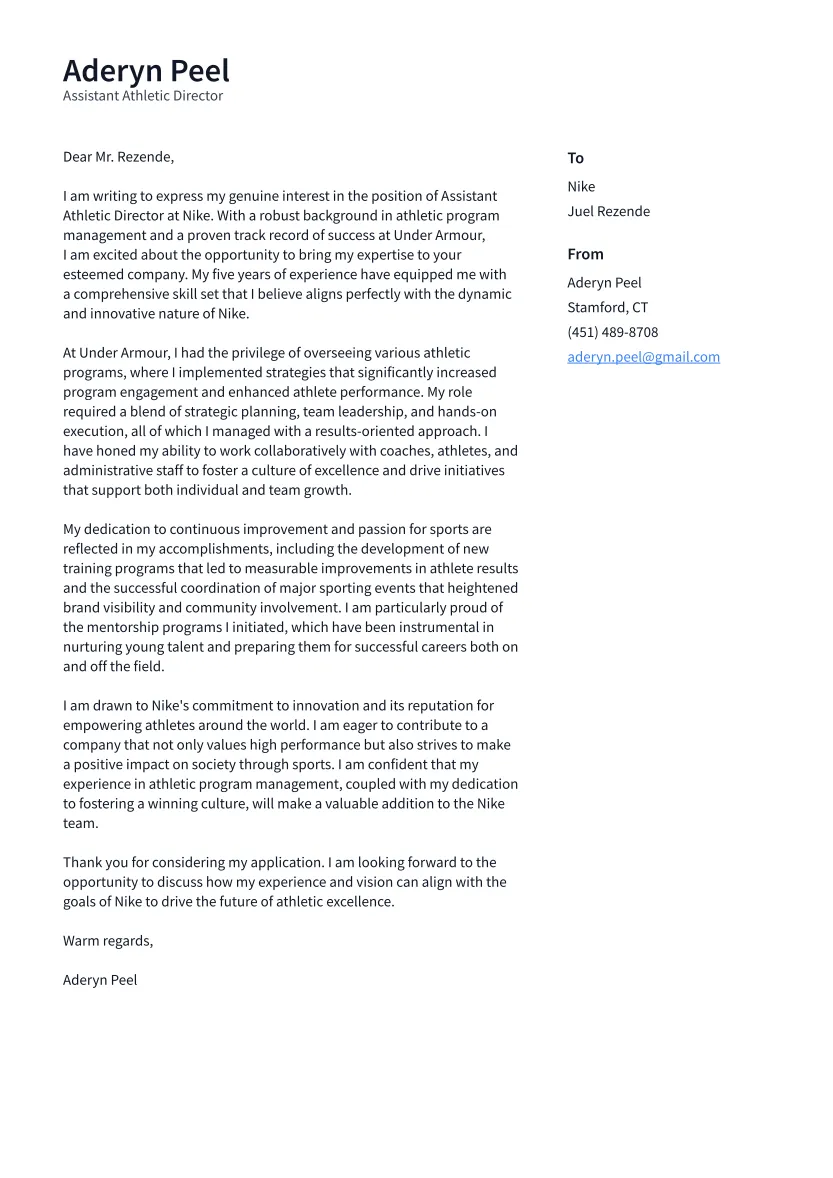
Crafting Your Assistant Athletic Director Cover Letter
Landing an Assistant Athletic Director position requires a compelling cover letter that grabs the attention of hiring managers. Your cover letter is your first impression, and it should effectively communicate your qualifications, experience, and enthusiasm for the role. This guide will provide you with a step-by-step approach to crafting a cover letter that highlights your strengths and increases your chances of securing an interview. Remember, a well-written cover letter is a crucial tool in your job search arsenal, so it is important to invest time and effort in making it perfect. It’s your chance to go beyond the resume and explain why you are the perfect fit for the role.
Understanding the Purpose of a Cover Letter
A cover letter is more than just a formality; it’s your opportunity to tell a story about yourself and your career aspirations. It should explain why you are the ideal candidate, connecting your skills and experiences to the specific requirements of the job. Your cover letter allows you to elaborate on the experiences listed on your resume. It should be customized for each position you apply for and should serve as a persuasive introduction, convincing the reader to review your resume and consider you for an interview. Think of the cover letter as a sales pitch, showcasing your unique selling points and highlighting your value to the organization. A great cover letter can significantly increase your chances of getting noticed and moving forward in the application process.
Highlighting Your Key Skills and Experience

When writing your cover letter, focus on the skills and experiences that are most relevant to the Assistant Athletic Director position. Identify the key requirements listed in the job description and demonstrate how your background aligns with those needs. It is essential to showcase your knowledge of athletic administration, including areas such as compliance, student-athlete welfare, event management, fundraising, and budget management. Use specific examples to illustrate your accomplishments, such as successful fundraising campaigns, improvements in student-athlete academic performance, or the effective organization of athletic events. Quantify your achievements whenever possible by using numbers and metrics to demonstrate the impact of your work.
Demonstrating Your Leadership Abilities
Leadership is a critical aspect of an Assistant Athletic Director role. Highlight your leadership skills by providing examples of how you have led teams, managed staff, and motivated others. Illustrate your ability to make decisions, solve problems, and take initiative. Describe situations where you successfully resolved conflicts, implemented new programs, or improved operational efficiency. Show your capacity to work collaboratively with coaches, athletes, administrators, and external stakeholders. Mention any leadership roles you have held, and provide details about your accomplishments in these roles. Your aim is to convince the hiring manager that you possess the leadership qualities necessary to thrive in the position.
Showcasing Your Relevant Qualifications
In addition to skills and leadership, your cover letter should highlight your qualifications, such as educational background, certifications, and specific industry knowledge. Mention any advanced degrees, such as a Master’s in Sports Management or a related field. List any relevant certifications you hold, such as those related to compliance, event management, or sports marketing. Demonstrate your understanding of NCAA regulations, conference policies, and best practices in athletic administration. Showcase your experience with specific software and technologies relevant to the role, like CRM systems, ticketing platforms, and social media tools. Clearly explain why your qualifications make you an ideal fit for the position and the organization.
Formatting Your Assistant AD Cover Letter

The format of your cover letter is as important as its content. A well-formatted letter is easy to read and presents a professional image. Use a clear, professional font like Times New Roman or Arial, and maintain consistent formatting throughout the document. Keep your letter concise, ideally no more than one page in length. Use clear headings and subheadings to organize your content and make it easier for the reader to follow. Proofread your letter carefully for any grammatical errors or typos before submitting it. Make sure your cover letter is visually appealing, uncluttered, and easy to scan.
Proper Letterhead and Contact Information
Always include your contact information at the top of your cover letter. This should include your full name, address, phone number, and email address. If you have a professional online presence, such as a LinkedIn profile, include a link to it as well. Use a professional-looking letterhead if you have one. If you don’t have one, simply format your name and contact information in a clear, easy-to-read manner. Make sure your email address is professional-sounding. Avoid using nicknames or informal language in your contact information.
Effective Opening and Closing Statements
The opening and closing statements of your cover letter are crucial for capturing the reader’s attention and leaving a lasting impression. In your opening paragraph, state the position you are applying for and briefly explain why you are interested in the role. Use a compelling hook to grab the reader’s interest immediately. In your closing paragraph, reiterate your enthusiasm for the position and express your gratitude for the reader’s time and consideration. Restate your contact information and indicate your willingness to discuss your qualifications further in an interview. End with a professional closing, such as “Sincerely” or “Respectfully.”
Customizing Your Letter for Each Application

One of the most common mistakes job seekers make is sending generic cover letters. It’s essential to customize your cover letter for each position you apply for. Research the specific requirements of the job and the values of the organization. Tailor your letter to demonstrate how your skills and experiences align with their specific needs. Highlight the most relevant qualifications and address any specific requests or questions mentioned in the job description. Customize your letter to show that you have taken the time to understand the position and the institution. Demonstrate to the hiring manager that you are not just sending out a generic application, but that you are truly interested in their specific job.
Researching the Athletic Department and Institution
Before you start writing your cover letter, thoroughly research the athletic department and the institution. Visit their website, review their mission statement, and learn about their athletic programs, values, and recent accomplishments. Identify the key individuals you may be working with, such as the athletic director and other administrators. Understand the culture of the athletic department and how it aligns with your own values. Demonstrate your knowledge of the institution in your cover letter by mentioning specific programs, initiatives, or goals that resonate with you. This research will help you personalize your cover letter and show the hiring manager that you are genuinely interested in the position and the organization.
Tailoring Your Letter to the Job Description
Carefully review the job description and identify the key skills, experiences, and qualifications the employer is seeking. Use the job description as a guide when writing your cover letter, and tailor your content to address those requirements. Address each of the key responsibilities listed in the job description and provide specific examples of how you have successfully handled similar tasks in the past. Use the same keywords and phrases that are used in the job description. By tailoring your letter to the job description, you will demonstrate that you have the skills and experience needed to excel in the position.
Proofreading and Editing Your Cover Letter

Proofreading and editing your cover letter is a critical step in the process. Ensure that your letter is free of grammatical errors, typos, and spelling mistakes. These errors can create a negative impression and undermine your credibility. Take the time to carefully review your letter, and consider having a friend or colleague review it as well. Use spell check and grammar check tools, but don’t rely on them entirely. Proofread your letter multiple times, and read it aloud to catch any awkward phrasing or errors. A polished and error-free cover letter demonstrates your attention to detail and your professionalism.
Ensuring Accuracy and Professionalism
Accuracy is essential in your cover letter. Make sure that all the information you provide is correct, including dates, titles, and contact details. Be truthful and accurate in describing your accomplishments and experiences. Use professional language and avoid slang, jargon, or overly casual language. Maintain a positive and enthusiastic tone throughout your letter. Use proper grammar and punctuation, and pay attention to sentence structure and flow. Ensure your cover letter presents a professional image of you.
Seeking Feedback from Others
It’s always a good idea to seek feedback from others before submitting your cover letter. Ask a trusted friend, colleague, or mentor to review your letter and provide constructive criticism. Ask them to look for any errors in grammar, spelling, or formatting. Ask for feedback on the clarity, organization, and overall effectiveness of your letter. Consider asking them to assess whether your letter is tailored to the specific job and whether it effectively highlights your skills and qualifications. Use the feedback you receive to improve your cover letter and increase your chances of landing an interview. Gathering a second opinion can help ensure that your cover letter is the best it can be.
By following this comprehensive guide, you can craft a compelling assistant athletic director cover letter that will grab the attention of hiring managers and help you advance in the application process. Remember to tailor your letter to each specific job, highlight your key skills and experience, and proofread carefully before submitting. Good luck with your job search!