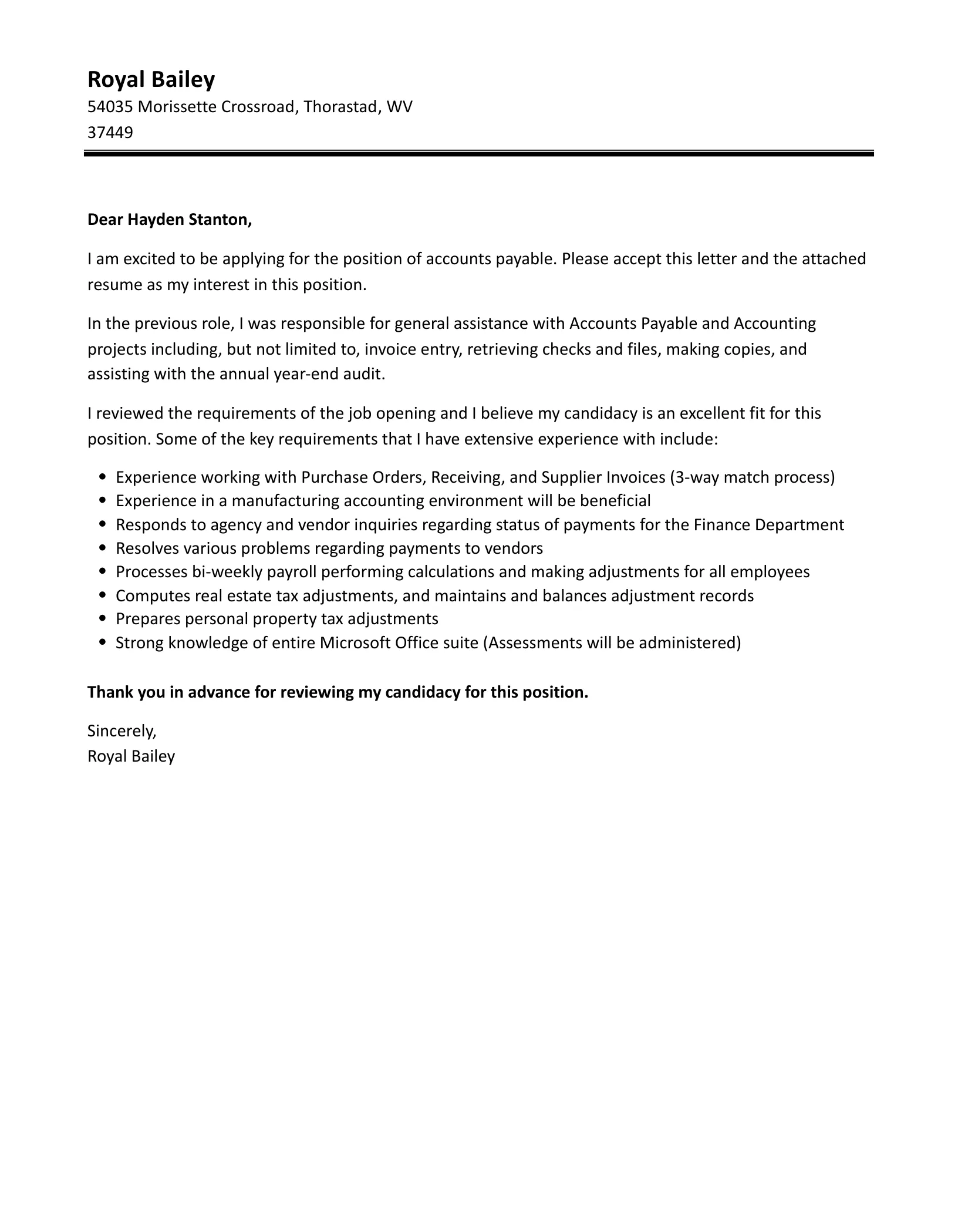
Understanding the Accounts Payable Role
Before diving into the secrets of crafting a stellar accounts payable cover letter, it’s crucial to understand the responsibilities inherent in the role. Accounts Payable (AP) professionals are the financial gatekeepers of an organization, managing and processing all incoming invoices, ensuring timely payments to vendors, and maintaining accurate financial records. This position is vital for maintaining good vendor relations and contributing to the overall financial health of a company. A well-written cover letter demonstrates your understanding of these responsibilities and your ability to excel in the role. Showing that you understand the core functions of the job is crucial for making a positive impression.
Key Responsibilities in Accounts Payable
The accounts payable role encompasses a variety of key responsibilities. Primarily, this involves processing invoices accurately and efficiently, which includes verifying and coding invoices, matching them with purchase orders and receiving documents, and resolving any discrepancies. Another critical aspect is ensuring timely payments to vendors, which directly impacts a company’s credit rating and vendor relationships. Maintaining detailed and organized records of all transactions is also a must, as this data is critical for financial reporting and audits. Furthermore, the AP professional must often communicate with vendors to address inquiries, resolve payment issues, and negotiate payment terms. This complex interplay of tasks requires a high degree of accuracy, organization, and attention to detail.
Why a Strong Cover Letter Matters

In a competitive job market, your cover letter is your first and often only opportunity to make a strong first impression. It’s where you can go beyond your resume and showcase your personality, your understanding of the role, and your enthusiasm for the opportunity. A compelling cover letter can significantly boost your chances of getting noticed by hiring managers, especially for accounts payable positions where precision and attention to detail are highly valued. A generic or poorly written cover letter, on the other hand, can instantly lead to your application being discarded. It’s your chance to stand out from other applicants, highlighting the unique value you bring to the table.
Highlighting Relevant Skills and Experience
Your cover letter is the ideal place to highlight the skills and experiences that directly align with the accounts payable role. While your resume provides a factual overview, your cover letter allows you to elaborate on specific achievements and demonstrate how your skills translate into tangible results. Focus on showcasing the skills most relevant to the job description. Providing specific examples of how you’ve successfully managed AP processes, resolved discrepancies, or improved efficiency can make a lasting impact. Quantify your achievements whenever possible – for example, state the number of invoices processed, the amount of money saved through negotiation, or the percentage of time saved in processing payments.
Financial Acumen
Demonstrate your understanding of accounting principles and financial processes. Mention experience with budgeting, financial reporting, or general ledger accounting if applicable. Illustrate your ability to analyze financial data and identify potential issues or errors. Show that you comprehend the financial implications of your daily tasks and how they contribute to the company’s bottom line.
Attention to Detail

Emphasize your ability to work accurately and meticulously. Share examples of your successes in catching errors, preventing fraud, or maintaining precise records. Mention any quality control measures you have implemented to ensure data accuracy, such as double-checking invoices or cross-referencing information with other documentation. Highlight any experience you have with automated AP systems.
Organizational Skills
Showcase your ability to manage multiple tasks simultaneously and prioritize effectively. Discuss the systems you have used to organize and track invoices, payments, and vendor information. Describe your experience with managing deadlines and ensuring timely payments. Mention any process improvements you implemented to streamline workflows and enhance efficiency.
Communication Skills
Highlight your ability to communicate clearly and professionally, both in writing and verbally. Share examples of how you have effectively communicated with vendors, colleagues, and management. Discuss your experience in resolving payment disputes or addressing vendor inquiries. Mention experience in negotiating payment terms or building strong vendor relationships.
Tailoring Your Cover Letter

A generic cover letter is often a quick way to get your application dismissed. The most successful accounts payable cover letters are tailored to the specific company and position. This demonstrates your genuine interest in the opportunity and your understanding of the organization’s needs. Tailoring your cover letter to the specific requirements of each job opening significantly increases your chances of success. It shows that you’ve taken the time to understand the role and the company, making you stand out from the crowd.
Researching the Company
Before you start writing, conduct thorough research on the company. Visit their website, read their “About Us” page, and review their social media profiles. Understand their mission, values, and the industry they operate in. Identify any recent news or developments related to the company. Use this information to personalize your cover letter and demonstrate your genuine interest. This also helps you understand what skills and experiences the company is looking for in an AP professional.
Customizing Your Letter
Once you have a good understanding of the company, customize your cover letter to reflect their specific needs. Review the job description carefully and identify the key requirements and preferred skills. Then, highlight your relevant experience and accomplishments in a way that directly addresses these requirements. Use keywords from the job description and demonstrate how your skills align with the company’s needs and values. Mentioning specific projects or initiatives that resonate with the company’s work can show your interest.
Formatting and Structure

A well-formatted cover letter is easy to read and leaves a positive impression. Pay close attention to the structure and organization of your letter. Avoid large blocks of text, and use clear headings and bullet points to break up your content and make it more digestible. Use a professional font and ensure consistent formatting throughout your letter. Ensure the layout is clean, and the information is easy to find. Proper formatting and structure can improve readability and showcase your professionalism, making a favorable impression on the hiring manager.
Proper Salutation
Start your cover letter with a professional salutation. If possible, address the hiring manager by name. If you can’t find the hiring manager’s name, use a professional greeting like “Dear Hiring Manager.” Avoid generic greetings like “To Whom It May Concern,” as they make your letter sound impersonal and less targeted. Researching the company can help you find the right person to address your letter to, which increases the chances of it being noticed.
Compelling Opening
Your opening paragraph should immediately grab the reader’s attention. State the position you are applying for and briefly explain why you are a great fit. Consider mentioning where you saw the job posting and why the company interests you. Make a strong first impression by demonstrating your enthusiasm and briefly highlighting your key qualifications. Avoid clichés, and make your opening paragraph concise, engaging, and relevant to the specific job. Make it clear why you are applying and what value you can bring to the company.
Body Paragraphs: Showcasing Achievements

Use the body paragraphs to provide specific examples of your skills and accomplishments. Support your claims with quantifiable results whenever possible. Describe your experience in processing invoices, managing vendor relationships, and resolving discrepancies. Provide concrete examples of how you have improved efficiency, reduced costs, or streamlined processes. Use the STAR method (Situation, Task, Action, Result) to structure your examples effectively. Each body paragraph should focus on a specific skill or achievement, providing concrete evidence of your capabilities.
Strong Closing
End your cover letter with a strong closing statement that reiterates your interest and highlights your key qualifications. Thank the hiring manager for their time and consideration. Reiterate your enthusiasm for the opportunity. Include a call to action, such as expressing your availability for an interview or encouraging the hiring manager to contact you. Make it clear that you are eager to learn more about the position and the company. The closing paragraph should leave a lasting impression, summarizing your value and making it easy for the hiring manager to take the next step.
Proofreading and Editing
Before submitting your cover letter, carefully proofread and edit it to ensure it is free of errors. Typos, grammatical errors, and spelling mistakes can undermine your credibility and make a negative impression. Errors demonstrate a lack of attention to detail, which is crucial in the accounts payable field. Take the time to review your letter carefully, and consider asking a friend, family member, or career counselor to review it as well. Proofreading can help you catch errors you might have missed and ensure that your letter is polished and professional.
Common Mistakes to Avoid

There are several common mistakes that can weaken an accounts payable cover letter. Being aware of these pitfalls allows you to create a stronger and more effective application. Avoiding these mistakes can significantly improve your chances of success.
Grammar and Spelling Errors
As mentioned, grammatical errors and spelling mistakes can undermine your credibility and make a negative impression. These errors demonstrate a lack of attention to detail, a critical skill in accounts payable. Always proofread your letter carefully and use a grammar and spell checker to avoid these issues. If possible, ask someone else to review your letter for errors as well. A well-edited letter demonstrates your professionalism and attention to detail, leaving a positive impression on the hiring manager.
Generic Language
Avoid using generic phrases that could apply to any job. Instead, tailor your cover letter to the specific requirements of the position and the company. Use specific examples to showcase your skills and accomplishments. Generic language makes your cover letter sound impersonal, which can lead to it being overlooked. Focus on demonstrating your unique value and showing why you are the best fit for the role. Customizing your letter for each opportunity enhances your chances of success.
Ignoring the Job Description

One of the biggest mistakes is failing to address the specific requirements and keywords listed in the job description. Hiring managers often use the job description as a guide to identify qualified candidates. Carefully review the job description and highlight your relevant skills and experience. Use keywords from the job description throughout your cover letter. Ignoring the job description can lead to your application being overlooked. Tailoring your letter to the job description demonstrates your attention to detail and understanding of the role.
The Power of Keywords
Keywords play a crucial role in getting your cover letter noticed. Applicant Tracking Systems (ATS) often scan cover letters and resumes for specific keywords. Including relevant keywords can increase your chances of your application being selected for review. Strategic use of keywords can help your application get past the initial screening and into the hands of the hiring manager. Integrating the right keywords throughout your cover letter can significantly boost your chances of securing an interview.
Keywords from the Job Description
The job description is a goldmine of keywords. Identify the key skills, qualifications, and responsibilities mentioned in the job description. Incorporate these keywords naturally into your cover letter. Using the same language as the job posting signals to the hiring manager that you have the qualifications they are seeking. This is a simple and effective way to make your application more relevant and improve its chances of success. Make a list of keywords as you read the job description, and then work to incorporate them into your cover letter.
Where to Place Keywords
Keywords should be strategically placed throughout your cover letter. Include them in your opening paragraph, body paragraphs, and closing statement. Use them to describe your skills, experience, and accomplishments. However, avoid keyword stuffing, which can make your letter sound unnatural and detract from your message. The key is to integrate keywords naturally and seamlessly into your writing. A well-placed keyword is more effective than a forced one. Focus on writing a compelling letter while incorporating the right keywords to enhance your application’s effectiveness.
Call to Action
Always include a call to action in your cover letter. This prompts the hiring manager to take the next step. Your call to action is the final chance to encourage the hiring manager to contact you. Express your availability for an interview and your enthusiasm for the opportunity. A clear call to action makes it easy for the hiring manager to respond. Including this final step can significantly increase your chances of being contacted for an interview. This helps to close the deal and move your application forward in the hiring process.
Expressing Enthusiasm and Availability
In your call to action, express your enthusiasm for the opportunity. Reiterate your interest in the position and the company. State your availability for an interview, including any specific days or times you are available. Provide your contact information, including your phone number and email address. End on a positive note, thanking the hiring manager for their time and consideration. Expressing your availability makes it easy for the hiring manager to contact you and can make you stand out. A positive closing can help you make a lasting impression, boosting your chances of getting an interview.